
How Much Protein for Muscle Gain
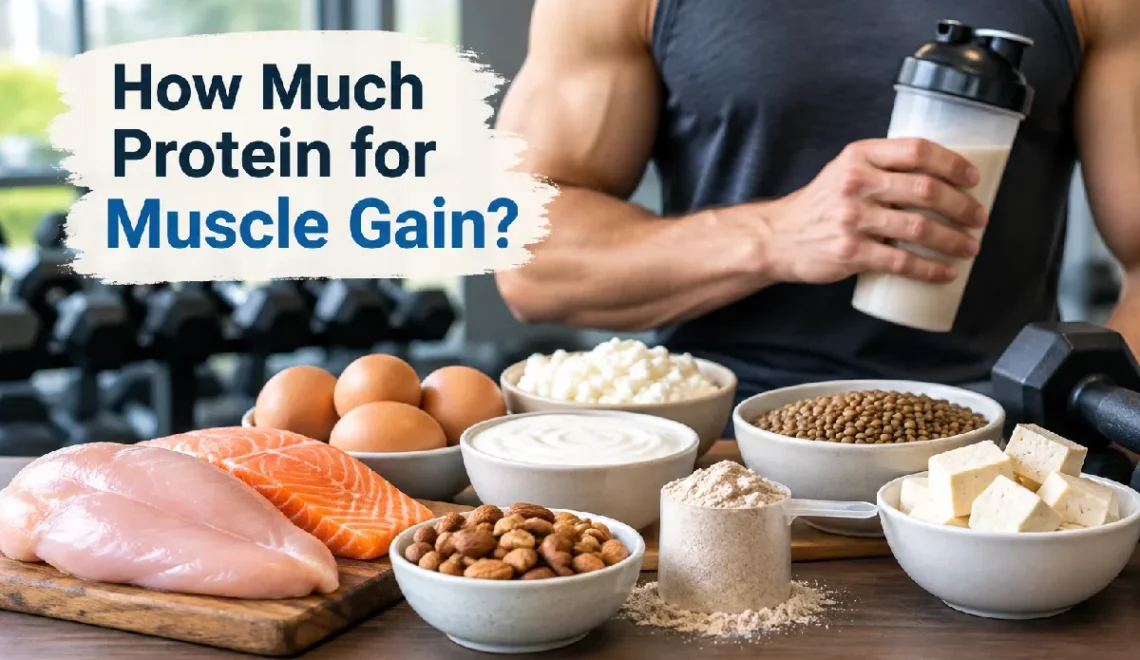
The main component involved in muscle growth is protein as it supplied your body with the raw materials that it uses to build and repair your muscles. When you perform weight training your muscles undergo a training stimulus that is responsive to change and enough protein intake in addition to calories and recovery helps with this stimulus and leads to adaptation. Eating a huge number of grams of protein per day won’t lead to the fastest growth as optimal intake varies by individual; on weight, training history and volumes performed, age, calorie intake and individual goals. For most people consuming a moderate and regular amount of protein is suffice.
This Article Is Part of the Protein Guides Hub
Explore protein needs, sources, benefits, supplements, nutrition tips, and other useful information in our Protein Guides Hub.
How Much Protein Is Actually Needed to Build Muscle?
If you regularly partake in resistance training as an adult you will likely find the range of 1.4g-2.0g/kg bodyweight quite a helpful indicator for your daily protein requirements.
For the majority people 1.6g/kg bodyweight is quite a practical guide to follow.
This means if you’re 60kg and following the 1.4g/kg recommendation you would aim to ingest 84g (1.4×60), or 96g (1.6×60) if using 1.6g/kg, while 120g (2.0×60) if you are going all out with your protein supplementation.
If you are 70kg, the recommended targets will lie between ~98g-140g/day, again depending on your individual circumstances and goals.
Please keep in mind that these are only indicators, there is not any magic or strict requirement to ingest such amounts on every single day to stimulate protein synthesis.
Why you Need Protein to Gain Muscle
It’s also worth knowing that muscle tissue is not static and it undergoes catabolism and anabolism, which is both breakdown and rebuilding. Resistance training will enhance this process through increases in repair and adaptation demand. This demand will be met by the provision of amino acids via the diet to promote the process of muscle protein synthesis (MP synthesis).
If protein intake is insufficient it’s likely the body may be limiting the amount of available amino acids for optimum muscle repair and maintenance. However protein is just a component of the whole equation. Resistance training provides the stimulus and is accompanied by calories, carbohydrates, fat, sleep and rest to create the optimal environment for adaptation.
Beginner protein requirements
At the beginner stage of training, you dont necessarily need very high protein intake in order to start making progress with muscles.
To start off with resistance training, using about 1.4-1.6 g/kg of bodyweight daily may be reasonable. There’s really no need to supplement this amount with protein supplements, and can instead be done using regular meals.
As an example a 65 kg beginner, to be taking 1.5 g per kg, would need to be eating approximately 98g protein on a daily basis. A beginner should be using the exercise technique just as much as a program, the program, the food etc, and consistency.
Experienced Lifters protein requirements
Experienced trainees may have slightly more refined nutritional needs though. This is especially the case if experienced individuals are training frequently or actively trying to build muscle. It appears that the most experienced trainees responding well to resistance training need about 1.6–2.0 g/kg per day, but perhaps leaning toward the higher end if an individual is undergoing fat-loss in a calorie deficit.
For evidence-based guidance on protein intake and muscle growth, the International Society of Sports Nutrition (ISSN) provides research-based resources on sports nutrition and exercise.
Does More Protein Give you More Muscle?
There is a point where more protein offers additional benefit.
If an individual is already consuming a suitable amount of protein, they will most likely not be able to build a greater volume of muscle by consuming double the amount. Similarly excessive levels of protein can also impact an individual’s capacity to consume sufficient amounts of carbohydrates, healthy fats, fruits, vegetables and whole grains, which can potentially hinder resistance training performance, as carbohydrates play an integral role in fuelling it. In addition dietary fats are vital for physiological processes. As a result, moderate protein intake as opposed to maximum protein levels, is desired.
Protein and Calorie intake for muscle building

You can’t build muscle only with protein intake; you still require extra energy for building muscle. An individual on a perennial too low calorie diet might not be able to optimally build muscle despite a high protein diet.
A slight calorie surplus can fuel muscle building aspirations particularly when an individual is somewhat lean and has adequate exercise routines. A substantial calorie surplus is not recommended as fat build-up will be excessively.
How to estimate your protein intake
A simple starting point can be calculated:
Body weight (kg) protein target = Daily protein requirement
e.g.:
70 kg 1.6 g/kg = 112 grams of protein per day
This gives us a simple guide for a 70 kg person who trains resistance regularly. In individuals with a higher body fat percentage simply using total body weight might deliver an overly ambitious protein target. In these circumstances an ideal body weight or an assessment by an expert may be better suited.
How to spread protein intake during the day
Your full requirement of protein does not need to be in a single meal. Spreading protein over multiple meals may help meet your requirement. A simple method is including a protein source at breakfast, lunch, snacks and dinner.
E.g.
- Breakfast: eggs and yoghurt
- Lunch: fish/ chicken/ beans/ lentils or tofu along with carbohydrates and vegetables
- Snacks: yoghurt/ milk/ protein rich snack food
- Dinner: fish/ lean meat/ beans/ tofu along with carbohydrates and vegetables
Size of portions can depend on energy and other nutrient requirements.
Muscle Building: Best Proteins
There are many animal and plant based foods that can help support the muscle building diet. An effective list of the animals based foods available to include are; eggs, milk, yogurt, cottage cheese, chicken, fish, meat, and lean meats. The effective plant based proteins are; pulses, legumes and nuts (which all include lentils, chickpeas, beans, and peas), nuts and seeds.
A wide range of these different foods contain valuable protein along with the vitamins and minerals essential for a healthy lifestyle and work out.
Vegetarians and vegans are able to gain the required amount of protein for a building muscle mass using food stuffs from the plant based category but it needs to be continually eaten to support that diet.
Do I need Protein Powder?
You don’t need protein powder for muscle building. It can be a supplement to increase the total protein intake if it’s hard to reach the daily goal in terms of food. Protein shakes can often be found useful post workout and after busy days.
Any of a whey, casein and plant based protein powder can supplement the intake into your diet.
However, foods that provide you with protein along with other nutritional benefits should form the basis of the diet and protein powder should just be an easy extra:
Protein timing and training:
The daily quantity of protein is what matters, not whether it was taken one hour post-workout or not. The post-workout consumption of protein around training can be practical but doesn’t require strict immediacy of time. What is a long-term and profitable strategy is consistency with daily consumption of protein in a meal, together with regular resistance training sessions and proper rest and recovery.
Protein for men and women
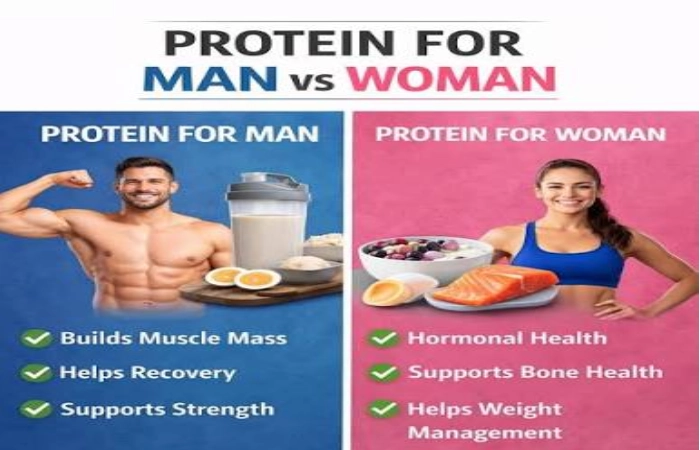
Recommendations for protein for muscle growth do not differ so much based on sex. Instead recommendations are based on body weight, training history and individual circumstances.
Males and females undertaking strength training can use the same ratio of grams per kilogram as a rough guide when determining a protein target.
Ladies who are pregnant or lactating and anyone with kidney or other health concerns would be best to seek personalized professional advise regarding nutritional needs.
Conclusion
Now for the protein: how much should you take for muscle building? For a majority of adults engaged in consistent resistance training a range of roughly 1.4-2.0 grams protein/kg body weight daily should be the target for most people; for the general population trying to grow, taking 1.6g protein/kg daily should be a reasonable target.
A 70kg individual would therefore take around 112g protein daily targeting 1.6g/kg.
The optimal protein intake will likely not involve consuming as many grams as one potentially can but rather taking an appropriate amount each day and not necessarily distributing equally throughout meals, along with proper progressive resistance training, an appropriate total caloric intake, carbohydrate sources, quality fats, decent sleep and recovery.
How Much Protein Should I Eat a Day Hub
Explore the complete guide to daily protein intake, including protein needs by body weight, muscle gain, weight loss, women, athletes, and signs of too much or too little protein.