
Daily Protein Needs for Women
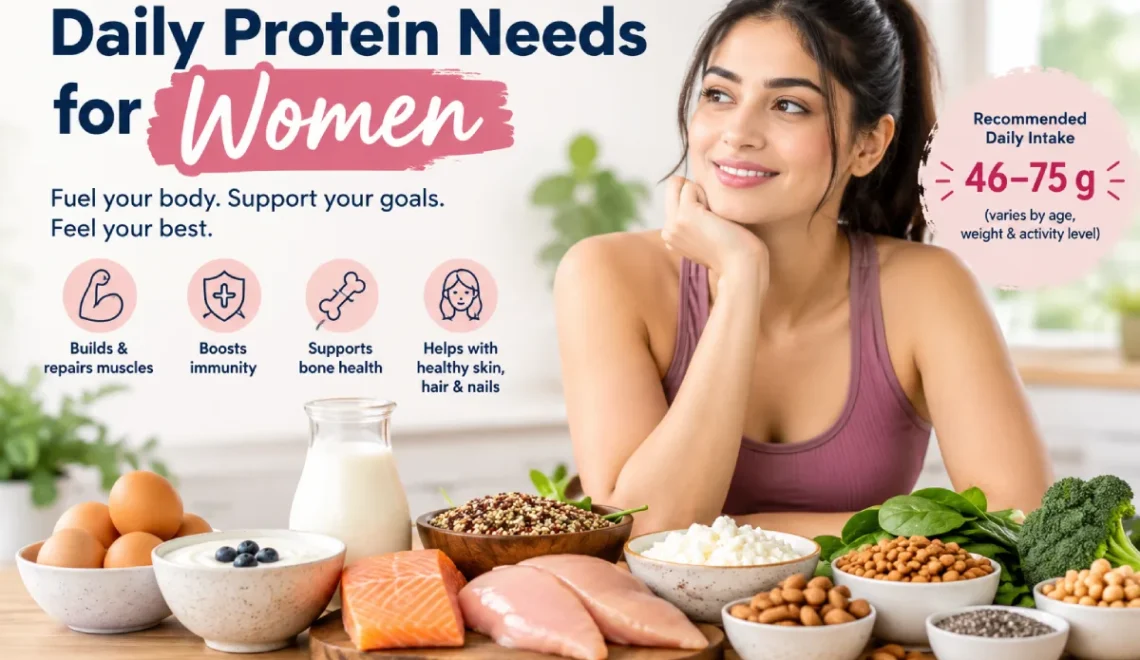
It is crucial that women at all stages of their life make sure they are receiving enough protein. Essential in many aspects, protein assist to maintain muscle, assist to build and restore the muscles and keep bones and connective tissues healthy, along with immune functions, hormone and enzyme creation. However, this need does vary between woman to woman depending on many different factors.
Things such as age, body weight, activity levels, and also pregnancy or breast-feeding can influence your required protein intake along with the body’s fitness goal, but there are general guides that can be followed.
Knowing that the daily required intake of protein for women in general can be helpful in planning adequate and nutritious meals without receiving either an excess or insufficient amount.
This Article Is Part of the Protein Guides Hub
Explore protein needs, sources, benefits, supplements, nutrition tips, and other useful information in our Protein Guides Hub.
How much protein do women need?
Women as a whole and for overall health are generally advised to aim for about 0.8g/kg of body weight per day. This should be regarded as a floor for avoiding deficiency not necessarily an optimal level.
If a woman is active or participates in sports, women can generally benefit from higher intake between 1.2-2.0g/kg per day dependent on training goals.
A 60kg woman as a basic reference intake would require around 48g per day while an active woman of this weight might require around 72-120g per day.
Figures should also be used more as a suggestion and a starting guide.
Protein for active women
Active women training through weight-bearing exercises, cycling, running, sports etc usually need more nutrients compared to less active ones. For many active women between 1.2-1.6g/kg day might be realistic, helping muscles with repair and adapt after intense physical activity.
The high end could be targeted if you do a resistance type of workout and your goal is muscle growth.
For a woman weighting 65kg for example, and following regular programs the protein need would fall between approximately 78-104g day with her training and overall diet accounted for.
Protein for women building muscle
Just eating protein doesn’tbuildmuscle- it provides the building blocks. Resistance exercise gives the signal to grow, while adequate intake of calories, carbs, protein, fats, and recovery facilitates the response.
For women aiming to build muscle, the typical range you’ll see in the research, and a convenient number to work with in practice is about 1.6 grams of protein per kg of bodyweight per day. Some people may benefit from slightly higher protein amounts, perhaps under very demanding training circumstances or with significant calorie restriction.
However, you can overdo protein! Eating vast amounts won’t cause you to pack on muscle at an accelerated rate once the body’s needs are satisfied. As energy and nutrient intake more than covers the baseline requirements for training, progressive overload within the stimulus (resistance training), and appropriate levels of rest and recovery become the most important variables for hypertrophy.
Protein for Fat Loss
The amount of calories consumed is reduced for the majority of females striving to reduce body fat. Maintaining a sufficient intake of protein whilst undergoing calorie restriction can be supportive in protecting lean muscle mass as body fat decreases. Protein can be an appetite satiating nutrient and may lead some people to feel fuller whilst restricting calorie consumption.
Increased protein may therefore be beneficial when calorically restricted but optimal quantities vary depending on body weight, fitness level and health and body composition.
Dieting aimed at weight loss should primarily revolve around habits which may be sustained rather than using very low cal diet foods.
For evidence-based guidance on protein intake and nutrition for women, the National Institutes of Health (NIH) provides reliable health and nutrition resources.
Protein in pregnancy
The recommended intake of protein increases during pregnancy as the body needs to support both the development of the growing baby and also changes in the body of the pregnant women themselves. Pregnant women can gain protein from an all round healthy diet from sources of protein that may include fish, dairy, eggs, meat, poultry and vegetables which may include beans, lentils and seeds. Pregnancy is a nutritional status where an individual nutritional approach may be most beneficial to women whom are pregnant and requirements should be discussed with a doctor, registered dietitian or other qualified professional, particularly if the pregnant women had a poor intake, restrictions to their diet or a health problem prior to becoming pregnant.
Protein During Breastfeeding
The protein in breast milk is responsible for making sure that mothers tissues don’t dwindle while making milk and also that mothers tissues build new tissues with the help of nutrition to make new tissues. By making sure a healthy and nutritional diet which is rich with protein, carbs, healthy fats, vegetables, fruit and whole-wheat grains is maintained then it’ll cover all these needs. Protein powders and ‘dieting’ should be attempted to be avoided by the mothers, instead they should fuel themselves with foods rich in all necessary nutrients and ensure plenty of fluids too. In worries about mothers nutrition, or even milk supply mothers should consult a professional.
Protein Requirements in Aging Women
Protein particularly assumes a role as women age, due to the possibility that with increased age, an individual’s muscle mass and strength will decrease. The losses of both can contribute to declining physical functionality, including balance and autonomy. The combination of consistent strength training along with a sufficient protein intake will assist with the preservation and maintenance of muscle mass.
Older women are perhaps better served with intakes higher than that of the average adult reference level, dependent on health status and overall physical activity; protein should be spaced out throughout the day rather than eaten almost exclusively for dinner.
Easily incorporated into meals are the sources of protein such as eggs, yogurt, beans, tofu, chicken, and fish.
Optimal protein sources for women:
No supplements need to be taken to achieve protein requirements for women. Plenty of foods from the food groups provide protein and also provide sufficient requirements of various nutrients: Animal sources: eggs, milk, yogurt, cottage cheese, fish, chicken, lean red meat. Plant sources: lentils, chick peas, beans, peas, tofu, tempeh, soy foods, nuts, seeds. By eating variety of plant based protein sources, may facilitate amino acid coverage during a day and also contain Fiber and other nutrients.
Do women require protein powder?

Protein powder is not a necessity. Protein powder is useful when a woman does not take adequate amounts of protein in her diet, her lifestyle is too busy or she is looking for a fast snack post her training session.
However it should not be viewed as an answer to build muscles or to lose weight.
It’s a supplement as a part of food and it can provide protein along with other nutrients that food already provides so as much as possible we should look into a healthy diet.
A way to roughly estimate this amount is:
Body weight kg protein factor body weight kg protein need daily
Using the example a 60kg woman with a protein factor of 1.4:
1.4x 60= 84 grams of protein per day
This can only be used as an estimate: women are advised to seek health professional for personalized advice, if they are pregnant, breastfeeding, suffer from kidney illness and the likes
Final Takeaway
Women have different daily requirements of protein depending on their age, weight, activity and lifestyle status, such as if the woman is training. A general guideline could be 0.8 g/kg body weight per day if looking to only meet basic needs for most women, however very active women may need a greater portion between 1.2-2.0g/kg depending on their desired outcome. For active individuals gaining musclemass it is recommended a well-rounded diet where it contains plenty of protein, together with training to gain muscle, consuming enough calories and plenty of recovery in between sessions.
In weight loss appropriate protein levels may maintain muscle.
Nutrition for pregnancy, breastfeeding and elderly women changes. There is no need to have more protein if you are training. Simply having enough to maintain or gain muscle depending on training, a variety balanced diet with a sufficient portion of protein is optimal for you both health wise and performance.
How Much Protein Should I Eat a Day Hub
Explore the complete guide to daily protein intake, including protein needs by body weight, muscle gain, weight loss, women, athletes, and signs of too much or too little protein.