
Workplace Wellness Program Benefits
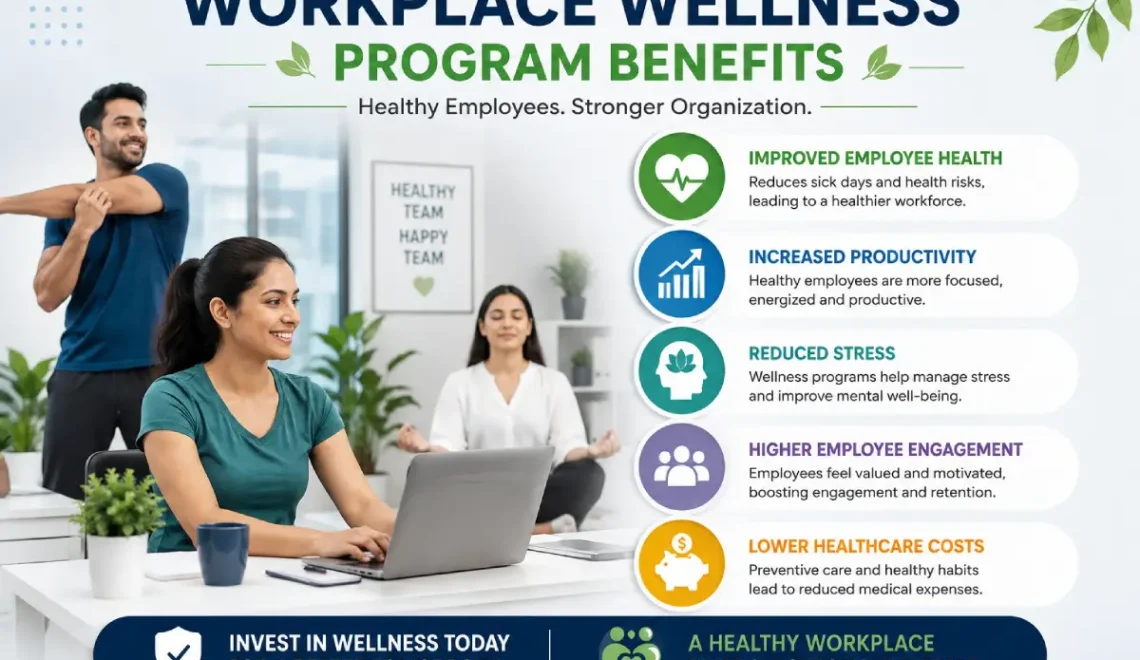
However, the advantages of workplace wellness programs are not simply restricted to fitness: A good workplace wellness program can provide employees with greater ease of access to health education, sport and exercise opportunities, stress reduction tools, and alternative programs. Workplace wellness programs could encourage a stronger culture of health and employee well-being for employers. However, it’s important to have reasonable expectations.
A wellness program can’t eliminate every problem and workplace challenge and definitely not offer guaranteed reductions to health costs or workplace productivity.
The most effective will usually be those that are developed, reflecting the needs of employees; offer accessibly planned activities; and are assessed over the years. These programs could improve employees’ awareness about well-being, encourage employees to be more active, offer improved access to wellbeing programs, and result in a workforce that is more involved in their company.
The successes depend upon their participation rate in programs; however, the quality of a wellness program, and the circumstances of an organization’s working environment are equally significant to their potential.
This Article Is Part of the Fitness Events Hub
Discover proven fitness strategies, workout plans, strength training techniques, cardio exercises, recovery tips, and healthy lifestyle advice in our Fitness Events Hub.
Workplace Wellness Programme Definition
A workplace wellness program is a planned series of activities, services or resources to promote well-being among employees in an organization. Types can vary depending on the organization’s size and type; typical forms include:
- Fitness classes
- Walking challenges
- Nutrition education
- Stress-management workshops
- Ergonomic assessments
- Health education
- Preventive health initiatives
- Employee assistance resources
- Mental well-being support
- Flexible activity opportunities
The program needn’t be big, though; smaller businesses would benefit from the walking groups, health talks, and taking short active breaks, while bigger companies may bring in professional suppliers and computerized wellbeing programs.
Advantages of employee wellness programmes

Benefits of employee wellness programmes may be viewed from an employee and an organizational perspective
1. Enhanced health information
Employees could also have better access to physical activity information, nutritional information, sleeping, stress relief, and other health matters.
The importance is not just offering the information; it’s giving me the chance of retrieving valuable information throliableugh a re source easily.
2. Promotes a Physical Life Style
Workplace fitness activities will give employees with an accessible opportunity to use more during the workday
Examples include:
- Walking groups
- Stretching sessions
- Fitness classes
- Stair-use initiatives
- Movement challenges
- Online exercise sessions
Variety of activities will help to ensure participation programmes are more inclusive, as not all employees will wish to join in the same activity.
3. Aids in Employee Wellbeing
Wellbeing programs can offer employees advice in ways to cope with stress, relax, stay healthy and obtain a positive work life balance. However, these shouldn’t be offered instead of actual medical care but instead as a supplement.
4. Enhances social connection Social opportunities
Often through a variety of fun, relaxed activities and games, grouping together allows employees to get to know their peers without having work present on the minds. This might come handy for hybrid teams and employees working remote too – participation should always be voluntary though.
Benefits of Workplace Wellness to Employers
There are additional ways a program of workplace wellness can benefit the organization.
| Potential advantage | How it may help |
| Health education | Improves access to useful information |
| Fitness opportunities | Encourages regular movement |
| Social activities | Creates opportunities for connection |
| Wellbeing resources | Supports employee access to assistance |
| Engagement | Provides additional workplace participation |
| Health culture | Reinforces organisational commitment to wellbeing |
They’re potential rather than guaranteed results workplace culture workload how you’re managed your pay your job security the working environment can impact on employees overall health. So that means any wellness initiative should enhance healthy working practices not compensate for bad ones.
Advantages of Employee Health Programme
A variety of health aspects may form the basis of your employee health program:
- Physical wellness—This might encompass the organization of walking groups, walking challenges, fitness classes, prevention advice and also workstation adjustments to support ergonomically aligned working spaces.
- Mental wellness—this could include stress management training, employees’ support programs, and assistance when access is desired with suitable providers.
- Dietary—workshops with an emphasis upon a “healthy balanced life,” “hydration and nutrition strategies as practical food-choice based guidance’ could also be supplied
- Workplace environment—Provision may be offered of ergonomic workstation evaluation and recommendations on the optimum workstation setup.
Ergonomic workstation analysis and work advice to ensure staff gain knowledge about organisation their workspace in the best format. Specific services need to be adapted to employees and local conditions’.
Employee Well-Being and Productivity What is the link?
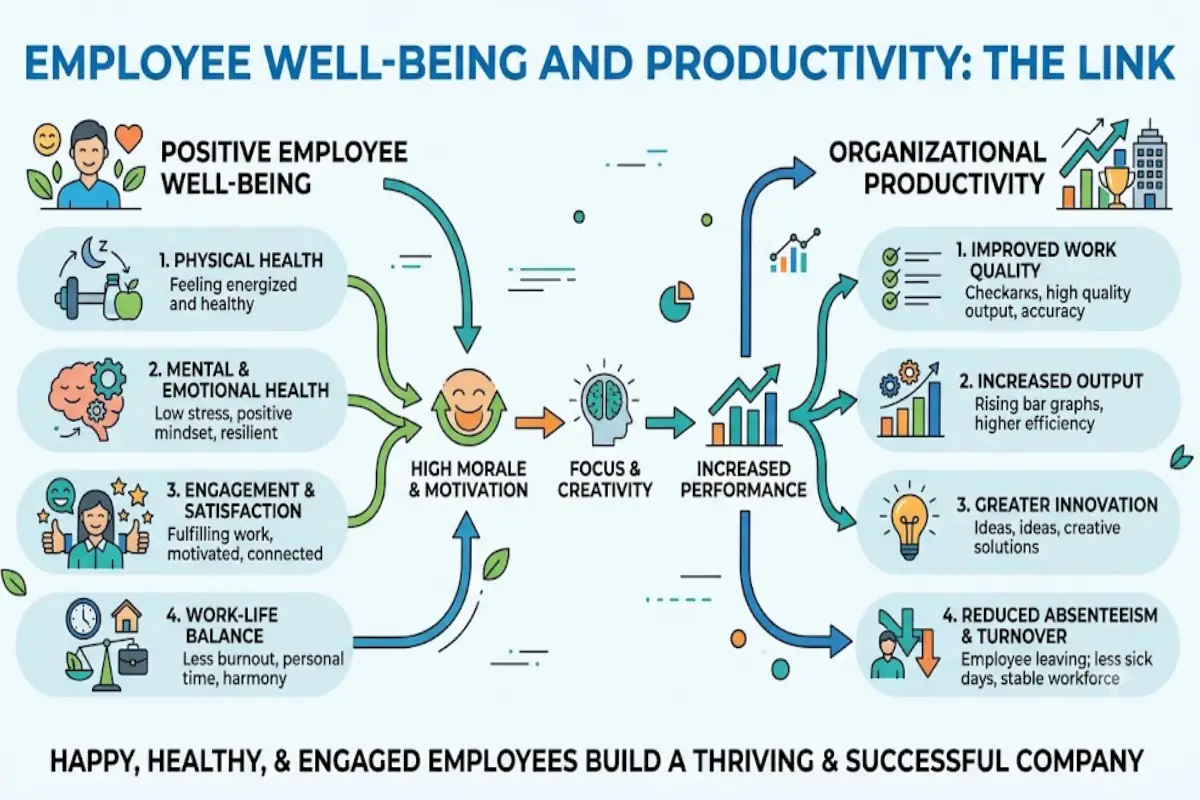
A wellness plan may benefit employees to a certain extent, especially in the management of few areas of their health. But other factors can also determine a worker’s productivity, as it may depend on the load of work, how the worker is being handled, the design of the workplace, the working environment and organizational culture, and so on.
Therefore, employers should not guarantee that a wellness program will ultimately result in an increase in workers’ productivity.
Instead, consider whether the program:
- Meets employee needs
- Is easy to access
- Has reasonable participation
- Provides useful resources
- Receives positive employee feedback
- Fits into the working day without creating additional pressure
For a busy worker already dealing with countless added items, even a health initiative could end up making things worse, adding even more things on their to-do list.
What is wellness program ROI?
Workplace wellness programs have return on investment (ROI), which is a measure of what an organisation receives for everything it invests in a health and wellness program, but it’s complicated to do so because numerous factors play a role in workplace well-being outcomes.
Possible measures include:
- Programme participation
- Employee satisfaction
- Cost per participant
- Absence trends
- Employee engagement
- Use of wellbeing resources
- Programme retention
- Healthcare-related measures where appropriate and lawful
It will not suffice for employers to make a simple assertion about the influence of a programme in directly causing changes to the productivity or expenditure on healthcare.
According to the CDC Workplace Health Promotion program, well-designed workplace wellness initiatives can improve employee health, productivity, and job satisfaction.
The value compared to ROI.
All well-being programm elements are not economic:
An organisation may value:
- Better access to health education
- Employee experience
- Workplace culture
- Social connection
- Easier access to wellbeing resources
It’s worth putting these findings together along with a normal financial RIO.
Measuring Workplace Wellness Program Success
Here’s a useful simple measurement framework
- Step 1: Take a baseline Look at existing employee engagement with your programs, existing wellbeing resources, and associated organisational metrics.
- Step 2: State objectives Be clear about what the program aims to deliver.
- Step 3: Track participation Focus on uptake and engagement levels but avoid asking sensitive health information.
- Step 4: Solicit feedback Ask employees anonymously what they liked.
- Step 5: Assess the trend Aim for consistent, noticeable improvements over time rather than an instantaneous change.
- Step 6: Modify Your Program Remove low-value components and focus your efforts where participants use your programs.
Are workplace wellness programmes effective?
It’s not safe to assume any programme will result in specific health or economic benefits. For participation to be high, programmes must be readily available, clearly communicated and genuinely responsive to the needs of workers.
You wouldn’t want to create a challenge on running, just to attract the active workers while other interested employees in wellbeing and nutrition remain unsupported.
The idea is to encourage choice, not to put pressure on workers. As with most of these programmes the employer must give assurances of privacy by defining the information you gather, what it is for, and what people can get access to.
Pros and Cons
| Potential benefits | Limitations |
| Improves health awareness | Participation varies |
| Encourages healthy activities | Requires ongoing management |
| Supports wellbeing resources | Costs can vary |
| Can improve workplace engagement | Not every activity suits everyone |
| Can provide social opportunities | ROI can be difficult to isolate |
| Adaptable to different workplaces | Privacy requires careful handling |
Which companies can benefit from a workplace wellbeing program?
These programs can be tailored for:
- Small businesses
- Large organisations
- Remote teams
- Hybrid workplaces
- Educational institutions
- Healthcare organisations
- Non-profit organisations
- Fitness and health businesses
A small company may launch a few low-cost initiatives but a large organisation might design a comprehensive programme involving several service providers. The crucial factor is not the scope of the programme but whether it meets genuine employee needs.
FAQs
What benefits to workplace wellbeing programs?
Main likely benefits: The key benefits for a workplace wellness program include, for example:
– Enhanced health awareness
– Additional opportunities to participate in physical activity
– Access to wellbeing tools, resources and supports
– Socialising/team building and – Increased engagement.
What are the benefit of a wellbeing program?
The benefits of employees’ well-being programs may also arise:
– Greater opportunities to take part in health education and fitness events.
– Access to wellbeing programs and tools.
– Additional workplace supports
– the results differ across programs.
What is workplace wellness from the perspective of employers?
Workplace wellness from the view point of the employer can help support more committed staff members; encourage a positive culture and increase the available health resources. However outcomes should be evaluated for Financial.
What are the advantages to an employee health program?
An employee health program benefits consist of health education, physical activity and an appropriate nutritious resource with ergonomic suggestions and wellness understanding.
How do I calculate workplace wellness program ROI?
When looking to justify the costs of a wellness program, ROI will compare programme costs to relevant measures. These may include levels of participation, employee feedback and surveys, employee engagement, and some organisational performance metrics. it’s not always easy to establish definitive causation for financial performance.
Does workplace wellness enhance productivity?
It’s a great idea to support conditions that influence employee wellness, but many different factors contribute to individual productivity, and a workplace program shouldn’t be the sole factor relied upon.
Conclusion
Beyond the gym and one-off ‘healthies,’ potential business benefits of an employee wellness program: Providing a pathway to health education, prompting activity, fostering overall well-being, and creating avenues for connection at the office. While that may be compelling, employers need to have realistic expectations regarding the impact of an employee wellness program on worker ROI and worker well-being or worker productivity.
Strong programs will focus on workforce needs, promote voluntariness, secure privacy, and undergo ongoing evaluation. An initial launch can begin with a few modest, tangible activities, then gage their effectiveness to employees and gradually expand.
Wellness Program Hub
Explore the complete Wellness Program guide, including employee wellness programs, corporate wellness ideas, workplace wellness benefits, program creation, activities, and examples.