
Wellness Program: Benefits, Components, Examples and Implementation Guide
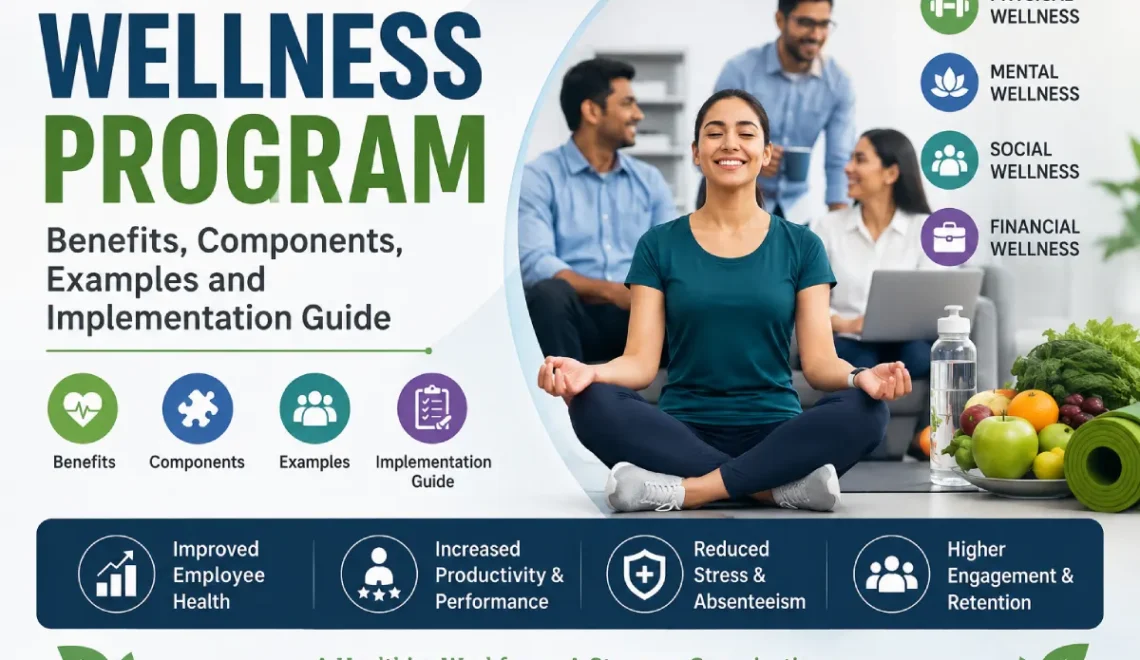
The term “wellness program” doesn’t always have to refer to a workplace step competition or a discounted gym pass. When implemented properly, a program includes a combination of tangible practices, workplace support and access resources to support the journey towards wellbeing. For employers, workplace health often includes implementing a comprehensive wellness program.
The same principles can be applied to our personal lives through a series of healthy behaviours like sleep patterns, dietary habits, stress management, exercise routines, and preventive health care behaviours.
Your program should be relevant and accessible. An exercise program replete with difficult or unappealing exercises, that people don’t have time for, will be largely ineffective.
This Article Is Part of the Fitness Events Hub
Discover proven fitness strategies, workout plans, strength training techniques, cardio exercises, recovery tips, and healthy lifestyle advice in our Fitness Events Hub.
What Is a Wellness Program?
A wellness program is a comprehensive method of promoting health and well-being through a combination of programs, services, policy changes, education, employee involvement and appropriate work practices and incentives. It can be designed in many different configurations depending on who it is targeting.
For example:
- An employee wellness plan can promote health training, physical training sessions, psychological wellness supplies as well as ergonomics.
- A school program might include physical fitness, healthy diet regimen and psychological well-being.
- A community program could comprise wellness screenings, walking teams and also wellness training.
- A personalized wellness plan could integrate workout, food digestion and also rest in addition to stress management techniques.
Health for work the WHO perspective: For the World Health Organization health at work includes physical, mental and social well-being and work environments. It makes sense that health would not mean that employees must be fit; instead it would also encompass working environment, work place’s cultures, work environment’s workload, and available facilities in a work place for well-being.
Why health and wellness programs are important
On average, workplaces are responsible for nearly a third of an employee’s waking day. These workplaces are therefore the ideal environment to promote health. Wellness programs a wellness programme, the CDC says employees may develop a better understanding of their health-related actions, identify health-enhancing resources and establish healthy lifestyles.
In addition, the research suggests that healthy work sites may have benefits related to culture, employee morale and worker absence, but there is also potential health gain associated with their implementation in other settings.
But there’s a caveat Here is why health and wellness programs, like yours, won’t make workers healthier: Not all employees will be affected by worksite wellness initiatives The benefits derived from health and wellness initiatives shouldn’t be taken for granted. Wellness program is not a magic wand.
Employee Wellness Program: Essential Features
A wellness program at the workplace needs to cover multiple health-related areas.
Typically included aspects are:
-
Physical Activity
Activities can include:
- Walking groups
- Workplace stretching sessions
- Yoga or mobility classes
- Fitness challenges
- Access to gyms or fitness facilities
- Exercise education
- Active commuting initiatives
Be inclusive, activities don’t need to assume that everyone can partake in high intensity exercise.
-
Nutrition Education
Nutrition support might include:
- Healthy eating workshops
- Balanced meal guidance
- Cooking demonstrations
- Workplace cafeteria improvements
- Nutrition consultations
- Hydration education
We need more sustainable diets and less “diet”.
-
Mental Well-Being
Other things that can help your mental health.
- Stress-management workshops
- Mindfulness sessions
- Counselling or employee assistance services
- Mental health education
- Quiet or recovery spaces
- Training for managers on recognising workplace stress
A health program should never substitute for professional mental health treatment when there is a need for evaluation or therapy.
-
Sleep and Recovery
Sleep education can cover:
- Consistent sleep schedules
- Healthy sleep environments
- Managing screen use before bed
- The connection between a daily life routine and sleeping habits.
Employees can reflect whether work shifts and the employee work load are flexible enough that they may take sufficient times for rest between.
-
The connection between a daily life routine and sleeping
Habits Employees can reflect whether work shifts and the employee work load are flexible enough that they may take sufficient times for rest between.
Workstation assessments
- Ergonomic education
- Appropriate desk and chair setup
- Movement breaks
- Safe lifting education for physical roles
This area overlaps with occupational health and should be treated as a practical workplace health issue rather than simply an employee lifestyle choice.
-
Preventive Health
Depending on the organisation and local healthcare system, programmes may provide access to:
- Health education
- Preventive screening information
- Vaccination awareness
- Health-risk assessments
- Medical referrals
- Blood pressure or other basic screening initiatives
Health screening should always be handled responsibly, with appropriate privacy and qualified professionals where medical interpretation is required.
Workplace Wellness Program Benefits
The potential workplace wellness program benefits are both individual and organisational.
Potential benefits for employees
A well-planned programme may help employees:
- Become more physically active
- Improve awareness of healthy behaviours
- Develop healthier routines
- Access health information
- Learn stress-management techniques
- Improve confidence around exercise and nutrition
- Connect with colleagues through appropriate group activities
Potential benefits for organisations
Employers may use wellness programmes to support:
- A stronger health-conscious workplace culture
- Employee engagement
- Staff well-being
- Health education
- Absence-management strategies
- Recruitment and retention initiatives
The CDC’s work site wellness model emphasizes co-ordinated, systemic, and comprehensive strategies rather than fragmented efforts. This difference matters. Giving workers one-month gym passes is an activity. Implementing an ongoing strategy with goals, support, policies, and evaluation is a comprehensive wellness strategy.
Practical corporate wellness program ideas
What corporate wellness program ideas can you start with. Ideas that are simple and fairly available.
Low-cost ideas
- Weekly walking groups
- Stretching breaks
- Hydration awareness campaigns
- Healthy recipe exchanges
- Wellness newsletters
- Guided breathing sessions
- Screen-break reminders
- Stair-use challenges where appropriate
Moderate-investment ideas
- On-site fitness classes
- Ergonomic assessments
- Nutrition workshops
- Mental health workshops
- Employee counselling support
- Fitness facility partnerships
- Health education sessions
More comprehensive ideas
Larger organisations may develop programmes combining:
- Health assessments
- Fitness resources
- Nutrition services
- Mental well-being support
- Preventive health initiatives
- Occupational health
- Flexible work policies
- Environmental improvements
However, will make the best match will be based upon; workforce size, cost and value, the work environment, and workplace issues and employee expectations.
Wellness program activities to consider.
Activities within a wellness program should be chosen based on the intended employee group as opposed to based on a trend.
| Activity | Main focus | Suitable for |
| Walking challenge | Physical activity | Most office-based teams |
| Yoga session | Mobility and relaxation | Mixed fitness levels |
| Nutrition workshop | Healthy eating | General workforce |
| Ergonomic assessment | Workplace comfort and safety | Desk-based employees |
| Stress-management workshop | Mental well-being | Most workplaces |
| Health screening | Preventive health | Where professionally managed |
| Fitness class | Physical activity | Employees who can participate safely |
| Sleep education | Recovery | General workforce |
Provide multiple options Providing options means more people will be catered for. For example some of your staff members might not want to join a group fitness class and you’ll find others will prefer an education session or one-on-one guidance.
How to Implement a Wellness program
If you don’t know how to create a wellness program, your answer should be ‘don’t go listing a long string of activities’.
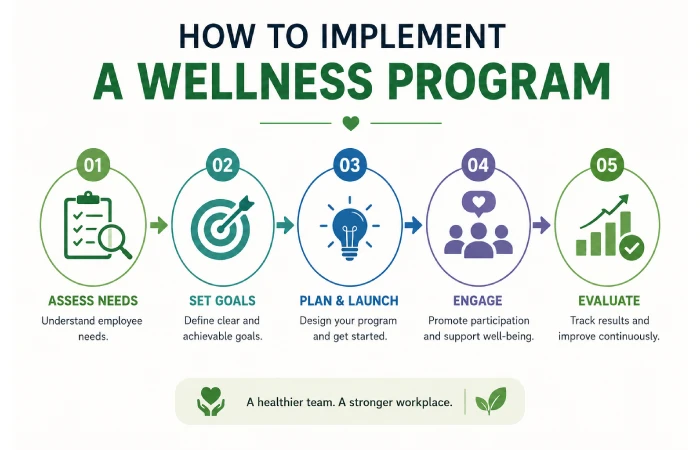
Work to establish the program around an overall strategy/clear process that allows it to develop naturally and build from
Step 1: define the audience
Identify:
- Age and demographic characteristics where relevant
- Work patterns
- Common workplace challenges
- Existing health resources
- Employee interests
- Accessibility requirements
Employee feedback can help identify what people actually want.
Step 2: Define realistic goals
Examples include:
- Increase participation in physical activity opportunities
- Improve awareness of available health resources
- Increase participation in preventive health education
- Improve access to mental well-being resources
- Reduce avoidable workplace barriers to healthy behaviours
Where appropriate, targets should be measurable
Step 3; Plan interventions
Match activities to the identified needs.
A typical weight loss contest might be less applicable if employees spend most of their time in chairs. If so, instead of promoting less weight, an emphasis on activity breaks and ergonomics would be more in line with employee well-being.
Step 4: Make participation accessible
Consider:
- Different fitness abilities
- Shift workers
- Remote workers
- Employees with disabilities
- Language requirements
- Cultural preferences
- Time constraints
Not being able to form all groups with specific formats as everyone cannot participate in each format etc..programme should not at any point excludes the disabled.
Step 5: Communicate clearly
Explain:
- What the programme offers
- Who can participate
- How to participate
- Whether activities are voluntary
- How personal information will be handled
- Where employees can obtain professional help if needed
Step 6: Measure and improve
Track appropriate measures such as:
- Participation
- Satisfaction
- Programme reach
- Activity completion
- Employee feedback
- Changes in relevant health behaviours
Avoid collecting unnecessary personal health information.
The CDC recommends assessment, planning, implementation and evaluation as part of a systematic workplace health programme approach.
Wellness Program Implementation Workflow
Here’s a simplistic workflow:
Assess needs → Define objectives → Select activities → Provide access → Communicate → Launch → Measure participation → Evaluate outcomes → Improve the programme
And it ensures that there is a cycle of improvement and sustainability not a quick campaign based approach to wellness.
Example
Consider this: A company learns, via a anonymous employee survey, that many are sitting all day and struggling to fit exercise into their routines. What if the solution wasn’t a weight loss challenge, but:
- Introduce short movement breaks.
- Provide ergonomic education.
- Offer optional walking groups.
- Provide beginner-friendly exercise resources.
- Offer flexible participation times.
- Collect feedback after several weeks.
- Adjust the programme based on participation.
This solution covers the specific need, not a need that assumed every single employee would be working towards the very same health and fitness and wellness desired outcomes.
Wellness Plan Expectations: What Should I Anticipate When a Wellness Program Is implemented?
The other typical mistake concerning wellness programs is to anticipate rapid success; After a small variety of workout sessions, dietary wellness classes, stress-reduction strategies or whatever yourWellness Program may entailshort-phrase, the organization may’t plan for transforming their total working populace; however, there should always be expectations for development, which could be measured by attendance in the activities offered, reduced insurance premium claims and the reduction in wellness plan utilization; an important measurement that employees would see and respect.
Realistic outcomes may include:
- Increased awareness
- Better access to resources
- Higher participation in healthy activities
- Improved knowledge
- Gradual behaviour changes
- Greater engagement with available health services
Long term health effects will have plenty of uncontrolled confounding in them out of the program’s reach. Employers need to be suspicious of the suggestion that their new wellness program will result in short-term cost reductions as well. Measuring the program, at least, should include things such as participation, process, user experience, and genuine changes in health, not just ROI.
Different Types of Wellness Programs
| Programme type | Main purpose | Typical activities | Main consideration |
| Employee wellness programme | Workforce welfare | Fitness, mental health, ergonomics, nutrition | Privacy & Accessibility |
| Corporate wellness programme | Organisational health strategy | Multiple coordinated interventions | Requires management support |
| Community wellness programme | Population health | Walking groups, screenings, education | Community needs |
| Personal wellness plan | Separate well-being | Exercise, nutrition, sleep | Personal consistency and goals |
| Fitness-centred programme | Physical activity | Gym, classes, challenges | Should accommodate different abilities |
There isn’t a “best” model, as these can be adapted to suit who is involved, how and with what tools, and the particular desired goals and objectives.
Who Can Benefit From a Wellness Program?
Wellness programmes can be useful for:
- Office employees
- Remote and hybrid teams
- Shift workers
- Students
- Community groups
- Fitness-centre members
- Organisations seeking structured health-promotion activities
- Individuals who want a more organised approach to healthy habits
It should be recognized that, for people with particular conditions and with significant symptoms or complicated health requirement not rely on a general wellness program, since not substitute for medical consultation.
Common Faults to Avoid
Making wellness obligatory
Requiring people to participate can have a contraceptive effect and may intimidate individuals from talking about personal health.
Focusing only on weight
Weight is one element of health. More comprehensive programmes might include fitness, nutrition, mental health, sleep, safety and social belonging.
Using one activity for everyone
A marathon challenge may be attractive to some employees and not to others. Provide for different levels and formats.
Ignoring workplace conditions
Sometimes employees are not able to offset overburdened jobs, unfavourable conditions or insufficient ergonomics by taking up lifestyle activities.
The WHO healthy workplace framework emphasizes that both the physical and psychosocial working conditions, as well as individual health resources, are important.
Collecting excessive health data
Sensitive health information. An organisation should only collect what it needs to know. Tell the individual why you need the information and use all protection measures available.
Treating wellness as a temporary campaign
One week challenge may generate fleeting enthusiasm. Programmes must be reviewed and supported on an ongoing basis.
How to Measure a Wellness Program
Evaluation should be built into the programme from the beginning.
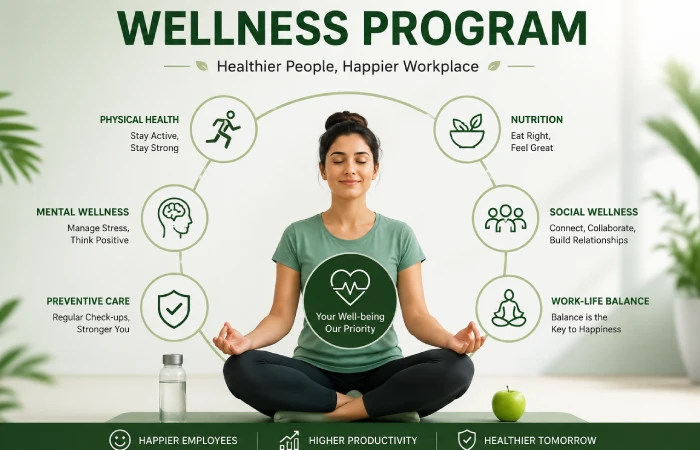
Useful measures can include:
Participation metrics
- Registration numbers
- Attendance
- Repeat participation
- Programme reach
Experience metrics
- Employee satisfaction
- Feedback
- Perceived usefulness
- Accessibility concerns
Behaviour-related metrics
Where appropriate and ethically collected, organisations may monitor changes in relevant behaviours such as physical activity participation.
Organisational metrics
Depending on the programme, employers may examine:
- Absence patterns
- Engagement measures
- Retention indicators
- Use of available health resources
These should all be considered with a great deal of scrutiny. Similarly an improvement in absenteeism cannot be seen to the credit of a Wellness programme, as this can be influenced by so many factors. The wellness programs and their associated technology
When technology isn’t involved in the Wellness program
Wellness programs do not need the involvement of technology to be implemented with success. A wellness program may utilize, or the technology can make management of wellness initiatives possible.
- Fitness tracking devices
- Mobile wellness applications
- Online exercise platforms
- Virtual classes
- Digital health education
- Employee portals
- Activity dashboards
- Online surveys
Technology such as platforms or apps could help you with tracking attendance, but with any digital solution organisations must consider data security, privacy, ease of access and equipment compatibility. There are a lot more complicated digital solutions than the simplest programme your team may actually use.
Is a wellness programme actually worth it?
When they solve the right problems, have reasonable goals and are genuinely accessible to those most in need, a wellness program can be incredibly valuable. For organisations, however, it is typically better to consider employee wellness as an intrinsic element of their overall health and safety approach as opposed to some kind of an extra perk.
The same is true for us as individuals – the constant, intentional and proactive pursuit of physical exercise, nutrition, sleep, nutrition and healthcare can be more impactful than the short-term adoption of numerous wellness ‘trends.’
Likewise, WHO’s document on workplaces focuses on how to optimize working health against backdrop including security, working conditions, mental health and also bodily wellbeing.
FAQs About Wellness Program
Defining wellness programs
Wellness programs – a set of related policies, services, information, and resources-some designed for residents in an area, or a group, of policies services information and activities designed to health well and improve wellness programs can focus on the prevention physical activity, and improved working environments one, more, more health-related and improve health and well and an overall group of organizations to improve the physical activity workplace safety and the of to to prevention policies and information health and safety, and wellness improvement programs for physical and many health conditions, etc.
What kinds of employee wellness initiatives or program options are examples?
Examples would include walking or running groups, fitness activities and classes, education sessions on nutritional options, work-station or chair setup evaluations called ergonomic evaluations, training to facilitate stress relief activities or techniques, workshops for overall education around health and wellness, and availability to professional health services.
What benefits can a wellness program in the workplace produce?
The primary health benefits are likely to be raised awareness, increased access to resources, healthier practices and better overall workplace well-being. Organisational impacts are likely to be widely variable and depend on design and participation in the program.
How should you design a wellness program?
Begin by looking at the needs of your population, setting SMART goals, selecting activities that will fit, ensure accessibility and promote effectively and evaluate outcomes over time.
What can a wellness program offer?
1) Physical and exercise challenge such as walking or step challenges
2) Nutrition
3) Stress management and mindfulness training
4) ergonomics
5) wellness screens
6) healthy sleep
Should wellness programs be used by all people?
Wellness programs can be applicable to all people but the exercises should be adaptable to individual abilities, inclinations and medical needs. Any individual in need of medical intervention or assessment should seek that through the appropriate medical channel.
Conclusion
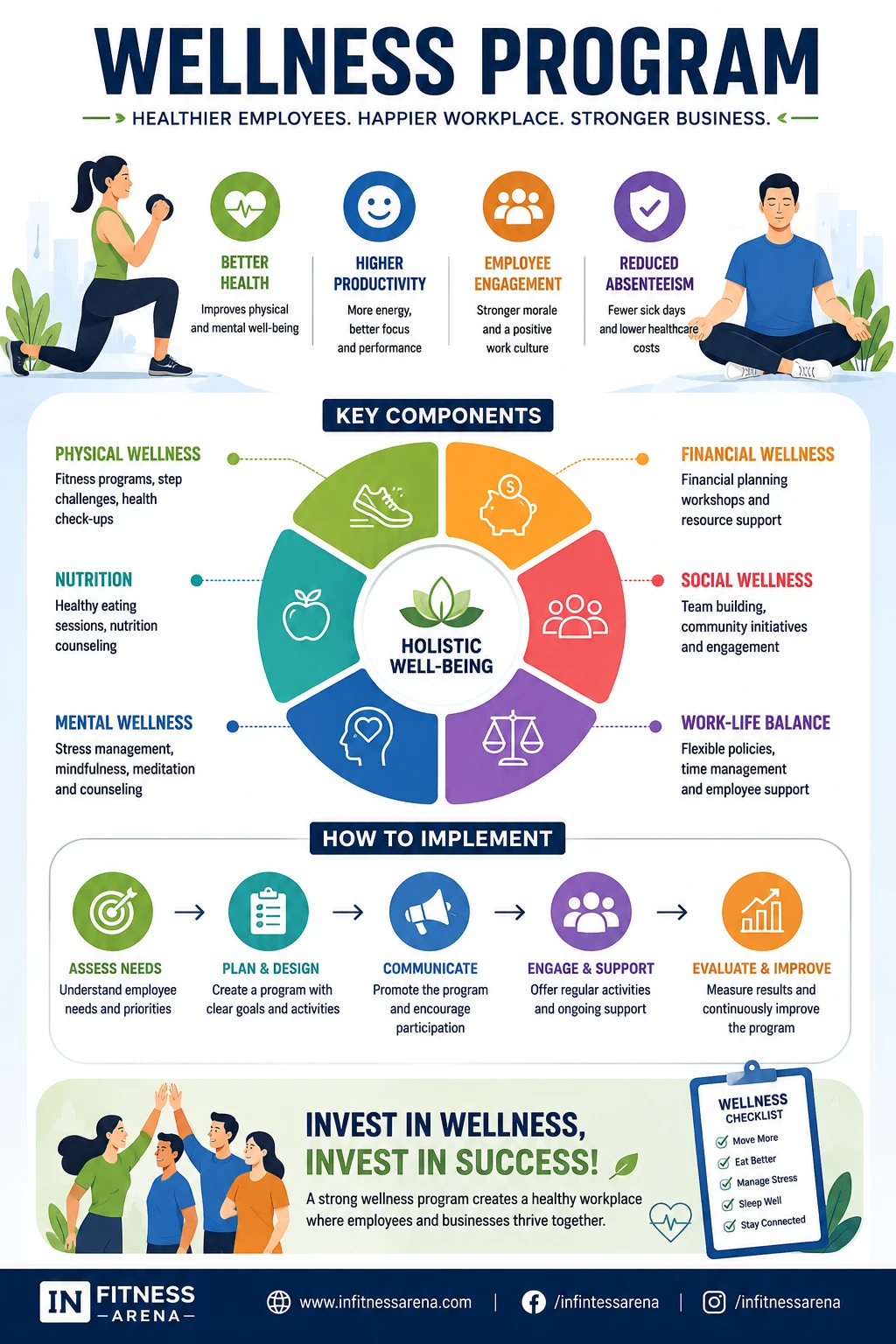
The most successful wellness program is accessible, practical and responsive to real health challenges. This applies whether a wellness program is for employees, a corporate project, a community venture or a personal ambition. The focus needs to be on establishing lasting habits and building a healthy social ecosystem – rather than a ‘blitz approach’.
By the same token, you first need to find out what is required, select fitting activities to do, ensure people get the most out of participation and find out what people value and continue with the wellness activities.
There are many excellent examples and guidance on how best to embed sustainable wellness.
Wellness Program Hub
Explore the complete Wellness Program guide, including employee wellness programs, corporate wellness ideas, workplace wellness benefits, program creation, activities, and examples.