
Whey Protein vs Food Protein for Muscle Gain
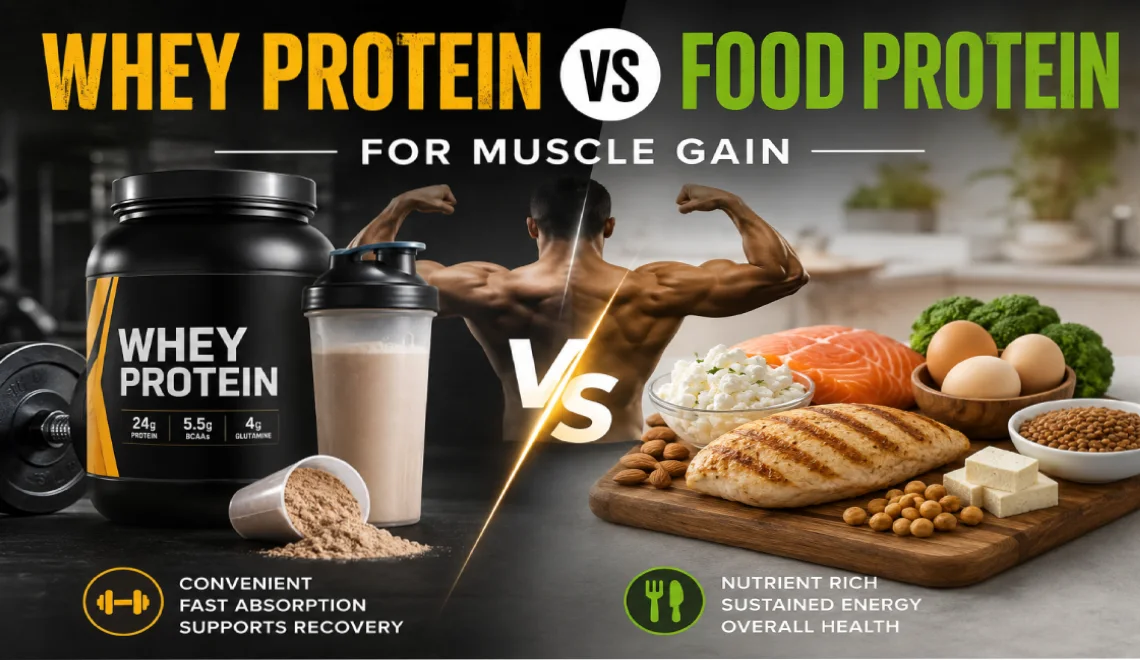
So, have you also recently started working out with strength training and have asked yourself if a protein supplement like whey is necessary or if you should rely purely on consuming protein-rich foods? With such a wide selection of supplements on the market, it’s more than likely you might have thought that for your muscles to grow effectively, protein powder is absolutely essential. That, however, is just not the case, as you are able to achieve this just as effectively with whole foods as well as protein powder.
Let’s help you decide between whey protein vs food protein for muscle gain by helping you differentiate between the two, so you can decide what makes the most sense to you based on factors other than just what appears on the label.
This Article Is Part of the Fitness Tips Hub
Discover proven fitness strategies, workout plans, strength training techniques, cardio exercises, recovery tips, and healthy lifestyle advice in our Fitness Tips Hub.
Whey Protein Versus Food Protein For Gains
“Whey vs. food protein” comparisons look at both different options to achieve your daily recommended protein allowance. Here, whey protein is milk-based and extremely quick-digesting and has great amino profile. Food options consist of things such as Eggs, chicken, seafood, milk and its derivatives, lentils, or soy food and protein sources. Both options of food protein for your goals of obtaining musculature with either a balanced total day-to-day diet of necessary protein along with your weight training program.
Why Protein May Support Muscle Growth
The protein in your food you will consume post workout provides amino acids to help repair the muscles that broke down during exercise.
Adequate protein intake can help:
- Support muscle protein synthesis
- Improve recovery after workouts
- Preserve lean muscle mass
- Maintain strength during weight loss
- Support long-term training adaptations
But remember – protein is only a component. Progressive overload weight training, getting enough calories, good sleep and making sure you exercise regularly are all fundamental to building a better physique.
Whey Protein Vs. Whole Foods
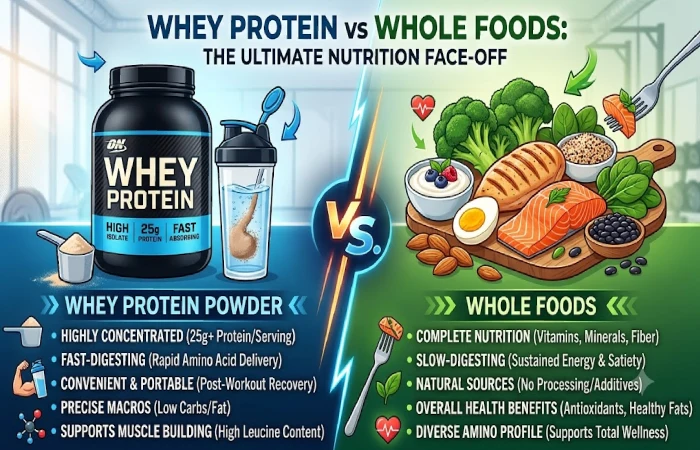
Different strokes for different folks This debate is never really “better than”, because both are needed in varying degrees but they play very different roles.
Whey Protein
WHEY Protein produced by concentrating whey, a liquid by-product of cheesemaking.
Characteristics:
- Complete protein
- Rich in leucine
- Fast digestion
- Convenient to prepare
- Easy to carry
Whole Food Protein
It happens that proteins happen to be one thing whole foods contain-and they bring loads of others!
Examples include:
- Eggs
- Chicken
- Fish
- Paneer
- Greek yoghurt
- Milk
- Lentils
- Chickpeas
- Tofu
- Soy chunks
Whole foods deliver fiber, healthy fats, vitamins, and minerals – nutrients often stripped from commercial protein powders.
Whey Protein Benefits
The field of sports nutrition supplements has arguably generated more research interest regarding whey protein than any other single agent.
Potential Benefits
- Convenient after workouts
- High-quality complete protein
- Quickly digested
- Helps increase daily protein intake
- Easy to include in busy schedules
- Available in various flavours
The field of sports nutrition supplements has arguably generated more research interest regarding whey protein than any other single agent.
What Are Natural Protein Sources?
Most individuals ought to still get the majority of their healthy protein from natural protein sources.
While whey can be a convenient source of protein, you can also meet your protein needs through nutritious whole foods, as explained in this Harvard Health guide to protein and supplements.
Good options include:
Animal-Based
- Chicken breast
- Eggs
- Fish
- Greek yoghurt
- Milk
- Paneer
Plant-Based
- Lentils
- Kidney beans
- Chickpeas
- Tofu
- Soy chunks
- Quinoa
- Mixed nuts
- Seeds
Compared to the protein supplement, they represent a broader nutrient contribution.
Protein Supplements vs Food
| Feature | Whey Protein | Whole Food Protein |
|---|---|---|
| Protein Quality | Excellent | Excellent |
| Digestion Speed | Fast | Moderate |
| Vitamins & Minerals | Limited | Rich |
| Fibre | No | Often yes |
| Healthy Fats | Minimal | Depends on food |
| Convenience | Very high | Moderate |
| Cost per Meal | Moderate | Varies |
| Satiety | Moderate | Higher |
| Meal Replacement | No | Yes |
Either option would help to promote muscle growth as long as part of an overall nutritious diet
Which Option Fits You?
| User Type | Better Choice |
|---|---|
| Beginner | Whole foods first |
| Busy professional | Whole foods + whey if needed |
| College student | Budget-friendly whole foods |
| Vegetarian | Paneer, tofu, soy + whey if required |
| Athlete with high protein needs | Combination of both |
Morning Routine Suitability
Whole Foods
Ideal if you have time for breakfast.
Examples:
- Eggs
- Paneer bhurji
- Greek yoghurt
- Milk with oats
Whey Protein
Useful when you’re short on time.
Examples:
- Whey shake with banana
- Whey mixed into oats
- Smoothie with milk and fruit
Good for Evening Whole Foods
Whole food sources can be a realistic go-to for many people after dark because they release nutrients at a steady pace.
Examples:
- Paneer
- Greek yoghurt
- Milk
- Lentils
- Fish
Whether or not a whey protein shake are good is depend on that whey could meet your goals that is, will you satisfy your need for that protein in whole day? If the answer are right, yes it good for you .
Sensitive User Guidance
Some people should choose carefully.
Whey Protein May Not Suit
- Individuals with milk protein allergy
- People with certain digestive conditions
- Those who dislike dairy-based products
Whole Foods May Require Planning
Increase your protein intake You want to incorporate variety to make sure all of these essential amino acids are covered through your diet (for any vegetarians and vegans).
If you are restricted on protein intake in the event that your medical condition is characterized, as may be the case with medical and health disorders that feature a diagnosis with kidneys disease, consider finding expert healthcare practitioneradvice.
Cost Comparison
| Option | Approximate Cost (India) |
|---|---|
| Whey Protein | Higher upfront cost |
| Eggs | Affordable |
| Paneer | Moderate |
| Chicken | Moderate |
| Lentils | Very affordable |
| Milk | Affordable |
If your family eat a lot of natural protein in the course of their daily lives, supplement with a cheap scoop of whey now and then – that way both sides get something from them, without the price of whole family supplementation.
Which is The best for muscle gain?
No such thing exist but is highly based on personal preference .
Choose Whole Foods If
- You enjoy cooking.
- You can meet your protein target through meals.
- You want additional nutrients.
- You prefer minimally processed foods.
Choose Whey Protein If
- You’re busy.
- You struggle to meet daily protein goals.
- You need a convenient post-workout option.
- You travel frequently.
The boths seem to cover most and many. The over-60 group would cover one most of the time.
How much protein do you need every day?
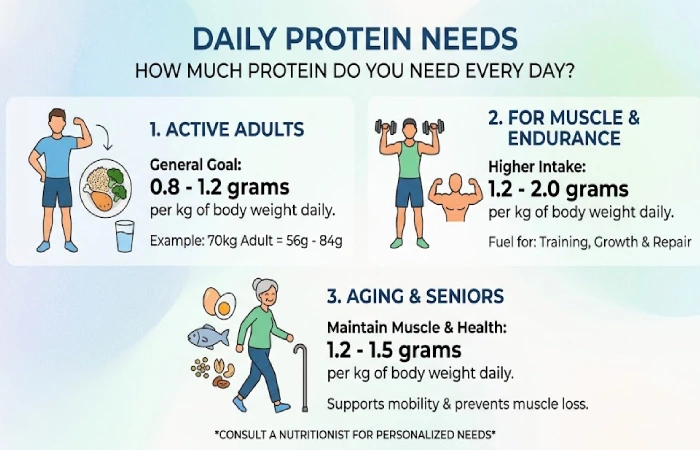
To help build lean muscles, recover better and aid metabolism, know how to work out how much protein to consume. Follow 5 steps.
1. Determine how much you actually need. This differs from every person.
2. Evaluate your actual diet. Find out how many grams of protein do you already consume through the various meals throughout your day.
3. If you are pretty sure that you’re getting enough protein out of your food on an everyday basis, then it’s probably quite okay to don’t try to go for a supplement.
4. If, you can say in fact, that there is some space or room left to consume some extra and you should in fact, in view of fitness or physique building, then Whey Protein is actually among the best supplemental proteins to consume.
5. Then review whether it is enough for you and adjust the portions from meal or supplemental options that will match the fitness aspirations of yours.
Whey Will Build Muscle FASTER Than Food?
One of the common mistakes many people make in their pursuit to build a lot more muscles fast, this is: believing that simply eating Whey Protein meal shakes for meals will make a muscles grow more faster than any other protein food sources in the entire planet.
Current evidence suggests that muscle growth depends primarily on:
- Total daily protein intake
- Progressive resistance training
- Overall calorie intake
- Sleep quality
- Recovery
- Training consistency
Both a whole foods approach and whey protein can be effective for muscle growth with the same amount of total protein.
Whey Protein
Pros
- Highly convenient
- Fast digestion
- High-quality protein
- Easy to consume after exercise
Limitations
- Doesn’t replace balanced meals
- Usually contains fewer micronutrients than whole foods
- Not suitable for everyone
Whole Food Protein
Pros
- Nutrient-rich
- Greater satiety
- Supports overall health
- Widely available
Limitations
- Requires meal preparation
- Less convenient immediately after training
- Some foods digest more slowly
FAQs
Which Protein Supplement is better whey vs food?
It depends what you mean but for people trying to increase or gain muscle protein supplements such as whey, milk protein concentrate/isolates etc is ideal as you are unable to consume such amounts or so easily from food. But at the core of your day food should be key and whey could be used to assist with day’s high output.
Can I Put on Muscle Without a Whey Protein Supplement?
Yes – there are many, many ways to gain a healthy muscle mass using nothing but real foods. Things like eggs, chicken, fish, milk and dairy products (if tolerated), beans, lentils and even tofu work well!
Is it safe to take?
Whey protein It is widely considered safe for healthy adults within acceptable limits, combined with an already balanced diet, but be sure to select brands tested by a quality-checked manufacturer.
Are Whole Food Proteins Better than the Supplement?
Protein foods often also provide other nutrients such as fiber, vitamins and minerals so also have a role to play within your overall meal pattern.
Are whey protein supplements good for beginners?
No. As a beginner you need to train consistently, eating plenty of protein through normal foods, and ONLY consider supplements when that hasn’t worked sufficiently.
Conclusion
Whey Protein vs Food Protein There seems to be a long-standing debate between whether food sources of protein, or whey protein is the optimal way to fuel your musculature, but what’s often forgotten in the quest to boost muscle is the larger picture. Your muscle gain will be more closely related to your total protein requirement being met, the inclusion of a progressive training regime and adequately refraining, than it will ever be in relation to having consumed milk vs. Real cheese.
For individuals, protein should originate primarily from real foods, whereas whey is a supplement used when the need or inconvenience arises, and what makes the best sense from an ethical, economical and lifestyle standpoint will be more effective in the long run that simply focusing on supps alone.
How Much Protein to Gain Muscle Hub
Learn how much protein you need to build muscle, calculate your daily protein intake, discover the best high-protein foods, optimise post-workout nutrition, compare whey vs food protein, and avoid common protein mistakes.