
Protein Intake for Beginners Building Muscle
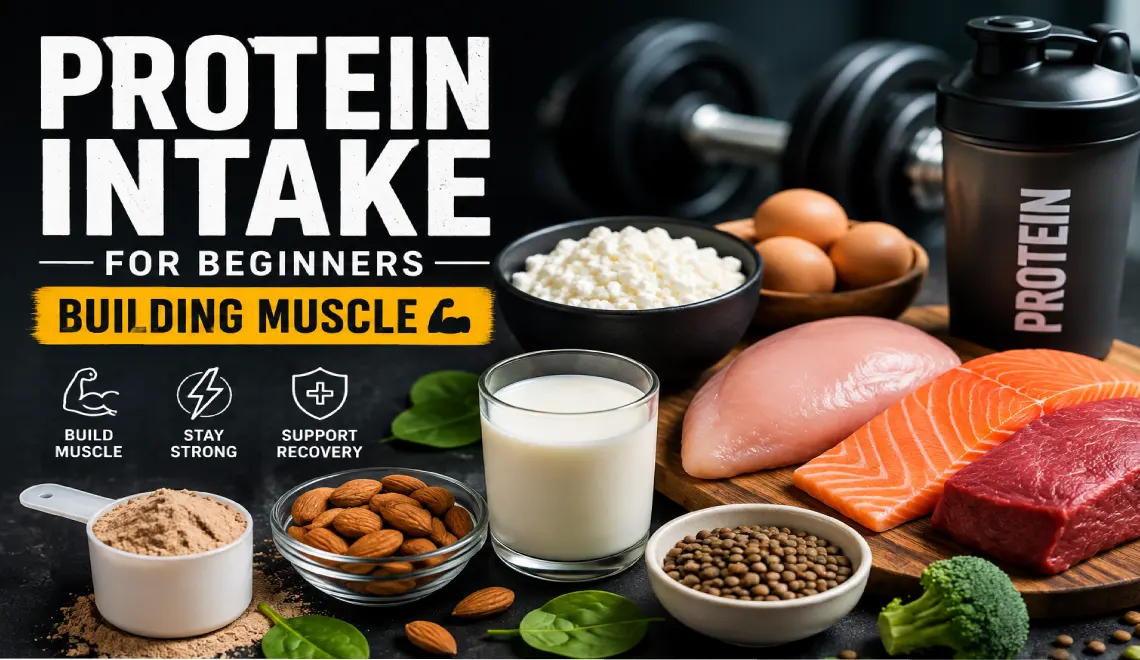
Getting started with building muscle can seem confusing and a large number of beginners may prioritize training. The protein required to help you build muscle is often discussed in terms of supplements. Nevertheless, your main aim first thing is to eat enough protein during your entire day.
Determining what a beginner requires by the way of protein, might facilitate with recovery, promote retaining healthy lean muscle mass and gradual improvements in your strength. You’ll be able to achieve your protein needs and gain strength even without an expensive diet or complex menu plan.
The below will offer help in finding out much protein can a beginner be expected to intake for building muscle mass, foods higher in protein to focus on, planning meals and what you can reasonably expect through building muscle.
As you begin weight training, you’ll also need to ensure that you’re getting an adequate amount of protein to help your muscles recover and repair, and that’s usually around 1.2-2.0g per kilogram per day of body weight for the beginner. Just be sure that you’re also getting your calories, workouts, and sleep in the right place.
This Article Is Part of the Fitness Tips Hub
Discover proven fitness strategies, workout plans, strength training techniques, cardio exercises, recovery tips, and healthy lifestyle advice in our Fitness Tips Hub.
Protein for new lifters
When you challenge your body with resistance exercises, such as weights and resistance bands or your own body weight, tiny cracks may be formed in the fibres of your muscle. Over time these damage sites your body fixes then makes your muscles larger and stronger.
What’s needed: protein amino acids are good for:
- Muscle repair
- Muscle protein synthesis
- Recovery after exercise
- Preserving lean muscle
- Supporting strength gains
- Improving satiety during healthy eating
Muscle will not only be built through protein in and of themselves – proper progressive training, solid rest, and a sensible nutrition will lead the way.
How Much Should Beginners Eat Each Day
The amount of protein we should actually be eating.
| Activity Level | Suggested Daily Protein Intake |
|---|---|
| Sedentary adult | Around 0.8 g/kg body weight |
| Beginner exercising 2–3 days/week | 1.2–1.6 g/kg |
| Regular strength training | 1.4–1.8 g/kg |
| Advanced strength athletes | Up to 2.0 g/kg depending on training demands |
These are generic numbers. Everyone has different protein intake based on your age, weight, training intensity level, intake of calories and physical fitness level and overall condition.
Beginner Muscle Building Diet: Foods That are Important
For a novice whose looking to pack on pounds, the nutrition blueprint should rely on solid food nutrition plus optimal protein intake.
Animal Sources Of Protein
- Chicken breast
- Eggs
- Fish
- Lean beef
- Greek yoghurt
- Milk
- Paneer
Plant-Based Protein Sources
- Lentils (Dal)
- Chickpeas
- Kidney beans (Rajma)
- Tofu
- Soy chunks
- Quinoa
- Mixed nuts
- Seeds
Adding in foods like different cuisines will supply, besides protein, the healthy food and good qualities as vitamins. And other good qualities like protein and so on.
Protein for the beginner – Real Foods vs. Supplements
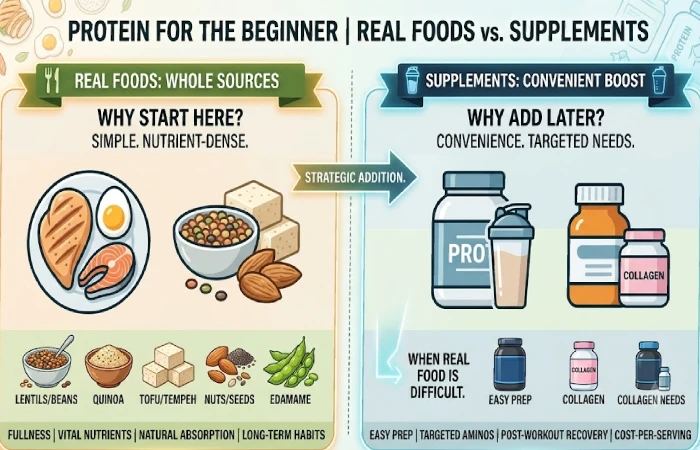
Most of our beginners ask: do I really need protein powder?
| Feature | Whole Foods | Whey Protein |
|---|---|---|
| Protein Quality | Excellent | Excellent |
| Convenience | Moderate | High |
| Vitamins & Minerals | High | Limited |
| Fibre | Often Present | None |
| Cost | Affordable | Moderate |
| Meal Replacement | Yes | No |
| Suitable for Everyday Meals | Yes | Supplement Only |
Whole foods should be central to most beginner diets. Protein supplements are beneficial for anyone who finds it difficult to hit their daily required protein intake by eating from the meal plan directly.
A Guide To Muscle Building nutrition Building a Balanced Plate:
It’s just not all you can take in of 1 of your nutrients although protein has an important role.
Aim to include:
- Protein-rich foods
- Whole grains
- Fruits
- Vegetables
- Healthy fats
- Plenty of water
Balanced meals will not only help build healthy muscle tissue but the muscles will recover much quicker after your workouts.
If you are new to strength training, understanding both your overall protein needs and the role of resistance exercise can help you build a more balanced muscle-gain routine, as outlined by ACSM’s protein intake guidance
Example Plate
- ¼ protein
- ¼ whole grains
- ½ vegetables
- Healthy fat source such as nuts or seeds
Newbie Bodybuilding Diet Guide – Meal Plan
Breakfast
- Vegetable omelette or paneer bhurji
- Whole wheat toast
- Glass of milk
Protein: 25–30 g
Mid-Morning Snack
- Greek yoghurt
- Fruit
Protein: 15–20 g
Lunch
- Grilled chicken or tofu
- Brown rice
- Dal
- Mixed vegetables
Protein: 30–35 g
Evening Snack
- Roasted chickpeas
- Curd
Protein: 15–20 g
Dinner
- Fish or paneer
- Whole wheat roti
- Vegetable curry
Protein: 25–30 g
Best Protein Foods for Beginners
| Food | Protein (Approx.) | Suitable for Vegetarians |
|---|---|---|
| Eggs (2) | 12 g | No |
| Chicken (100 g) | 31 g | No |
| Fish (100 g) | 22–25 g | No |
| Paneer (100 g) | 18–20 g | Yes |
| Greek Yoghurt (100 g) | 10 g | Yes |
| Tofu (100 g) | 15–17 g | Yes |
| Lentils (100 g cooked) | 9 g | Yes |
| Chickpeas (100 g cooked) | 8–9 g | Yes |
Daily Protein Workflow for Beginners
- Step 1: Take a look at your total body weight.
- Step 2: Guess your recommended daily target per kg of your weight.
- Step 3: Aim to eat three to five meals spread throughout your day and include at least one each day after training.
- Step 4: Consume the protein source soon after completing resistance training.
- Step 5: Monitor your progress, and adjust your protein if necessary.
Typical Mistakes of Beginners
Without realizing it, you as a beginner retard your progress through nutrition blunders and stupid and easily avoidable mistakes. These can look like this:
- Eating too little protein
- Skipping breakfast
- Depending completely on supplements
- Avoiding carbohydrates
- Missing meals
- Drinking too little water
- Expecting rapid muscle growth
Practice and patience trumps looking for perfection.
How much time for muscles is needed at the gym?

Building muscles take time
Most beginners may notice:
- Notice increased strength gains in just a few weeks
- Improve performance during your workouts after just a few weeks of training
- See significant gains in muscle mass in just months (when combined with Proper Diet & Exercise)
Progress varies depending on:
- Genetics
- Age
- Training quality
- Recovery
- Daily calorie intake
- Sleep
There’s no shortcuts to sustainable muscle gain.
Pros and Limitations of Higher Protein Intake
Benefits
- Supports muscle repair
- Helps preserve lean muscle
- Improves recovery after workouts
- Helps increase fullness after meals
- Supports long-term training goals
Limitations
- More protein alone won’t build muscle without exercise.
- Excess intake beyond your body’s needs may simply increase calorie consumption.
- Overall dietary quality remains essential.
FAQs
Protein Needs: A Perfect Mix For New Muscle Building Beginners:
Typically, most newbies see great success when they can pack 1.2–2.0 g of protein per kilogram of their body weight per day – and the amount you eat should be adjusted for exercise, activity, and diet overall.
Are you able to develop muscle while still at beginning by having to eat healthy and nutritious foods?
Most individuals would consume foods consisting of poultry, cheese, hens, seafood, lentils and soy merchandise can easily obtain their body protein standards and thus don’t necessitate the utilisation of protein items.
How often should I eat protein as beginner?
It could benefit muscle protein synthesis to consume three or five protein meals/feedings throughout the day rather than only one protein feeding per day.
But the more protein, the more benefit?
No, getting more protein than what is needed by your body doesn’t mean that you will build muscle faster. The key is that there is both progressive strength training and a balanced diet.
Conclusion
Among the easiest things a beginner training to gain muscle can achieve for their recuperation and progress in the long run is to meet their protein requirements, which consist of from 1.2-2.0 G Protein-weight per, for most active beginners on a day. That said, this total quantity differs based on the type and size body, its amount of physical exercise and your overall diet plan as an entire and how it might differ greatly based on just how much it differ it comes down.
Build a consistant routine that consists of not just a plan containing enough protein-rich, whole meals and resistance training with the aim of building the correct routine including normal workout sleep, but real expectations too. Supplements aren’t a concern however it certainly doesnt pay it; they can assist once the training plan makes it harder.
How Much Protein to Gain Muscle Hub
Learn how much protein you need to build muscle, calculate your daily protein intake, discover the best high-protein foods, optimise post-workout nutrition, compare whey vs food protein, and avoid common protein mistakes.