
How to Create a Wellness Program
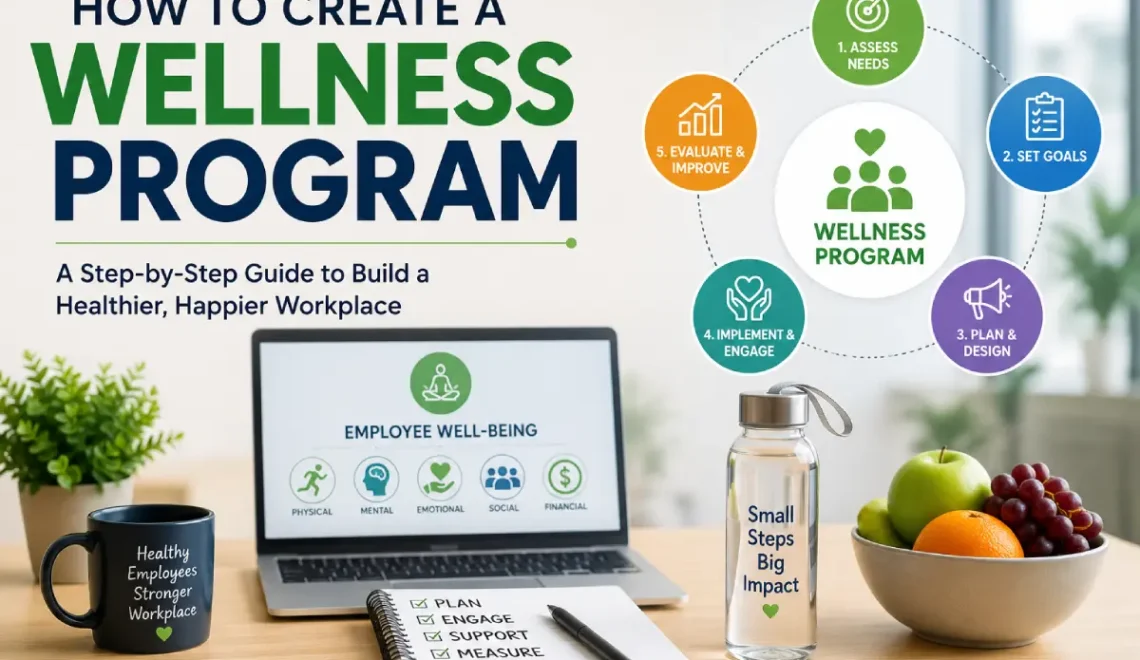
Setting up a wellness program 10 May 2018 You don’t have to put in place a complex health strategy at the start in order to develop wellness. You could put in place a few key activities at first and develop it over time as you identify the needs of your team.
Smart, and therefore good, planning is therefore essential, as our staff will have different interests, abilities, times, needs, and expectations. Interests can range from fitness to nutrition, relaxation techniques, work stress management, mental health, and healthy work practices, and the list goes on! This guide walks you through from the planning stage right through to reviewing the initiative
The top tips to build a successful wellness plan are to find out about the workforce, create a few smart objectives, have the right activity to offer employees, determine the costs, share the news, and launch a program incrementally and measure its effectiveness by assessing uptake and employee comments. The workplace wellness plan must be evaluated periodically so as to better address the employee’s needs.
This Article Is Part of the Fitness Events Hub
Discover proven fitness strategies, workout plans, strength training techniques, cardio exercises, recovery tips, and healthy lifestyle advice in our Fitness Events Hub.
What Is a Workplace Wellness Program?
A workplace wellness program comprises an organized series of actions, services, or help to help your workers’ health and overall health. For example:
- Fitness classes
- Walking programmes
- Nutrition education
- Stress-management workshops
- Mental well-being resources
- Ergonomic guidance
- Health education
- Sleep education
- Workplace challenges
- Employee assistance resources
Not all the categories must be part of a wellness program; organizations may want to focus on a few that are practical and relevant to their employees.
Planning a Wellness Program: Start with what your employees want.
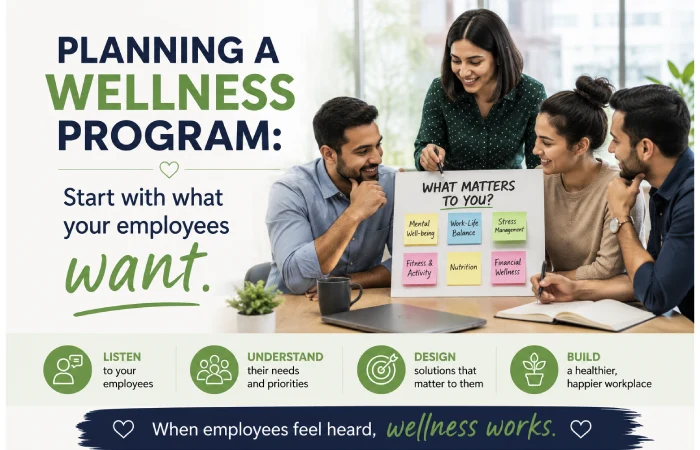
When you are planning a wellness program, you must first determine what your employees need and desire. Don’t assume that management already knows which activities workers will utilize.
Methods of gathering employee feedback can include:
- Anonymous surveys
- Employee questionnaires
- Focus groups
- Suggestion forms
- Existing engagement surveys
- Informal feedback sessions
Questions might include:
- Which wellness activities interest you?
- What prevents you from participating?
- Would you prefer online or in-person activities?
- What time of day would work best?
- Which well-being topics would you like to learn about?
- What could make the program more accessible?
Keep health questions reasonably tailored and avoid gathering any more sensitive information.
A Steps to Create a Wellness Program
The basic framework for developing a wellness program in most organizations is detailed in the steps below.
Step 1: Establish the objective
Write up the program that you wish to develop. It could be a program that aims to:
- Encouraging physical activity
- Improving health awareness
- Supporting employee wellbeing
- Providing educational resources
- Encouraging healthier workplace habits
- Creating opportunities for social connection
Your objective should be to be real—don’t promise your clients a miracle result or a cure in terms of productivity.
Step 2: Find the employees that you are looking for
The characteristics that people within an organization will have include, for instance, an organization’s team may include
- Office-based employees
- Remote workers
- Shift workers
- Employees working across multiple locations
- Different age groups
- Different levels of physical activity
A program that suits your office team might not be ideal for shift workers.
Step 3: Pick Wellness Activities
You can choose what wellness activities you want depending on the results you’d like to see from it and employees’ suggestions.
| Wellness area | Example activities |
| Physical activity | Walking groups, fitness classes |
| Nutrition | Healthy eating workshops |
| Mental well-being | Stress-management sessions |
| Workplace environment | Ergonomic education |
| Social well-being | Team activities |
| Education | Health and wellness seminars |
A wider audience could be attracted if there were a few choices to cater for different preferences.
Create Employee Wellness Programme
Checklist: Prevent any loose ends by using this checklist.
- Planning checklist
- Identify employee needs
- Define programme objectives
- Choose wellness activities
- Establish a budget
- Identify programme leaders
- Select external providers if required
- Set a launch date
- Create communication materials
- Establish participation guidelines
- Consider accessibility
- Establish privacy procedures
- Decide how success will be measured
This check list can be scaled depending on the organization size and resources.
Create a Workplace Wellness Strategy
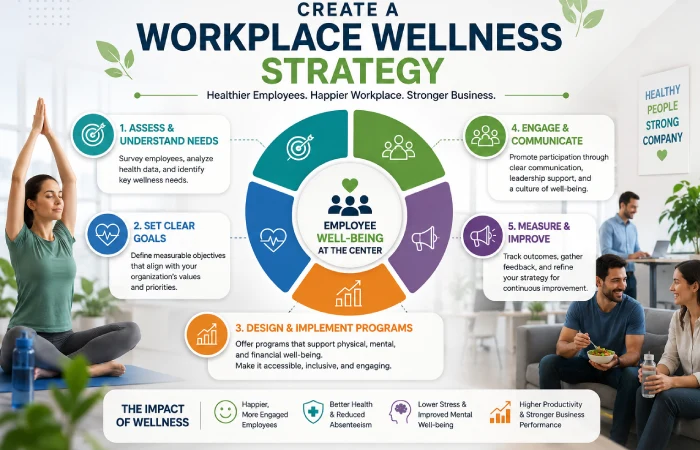
A Workplace Wellness Strategy Links Individual Actions and Work Environment Practices For example, the weekly yoga class might be a good offering, but if every meeting is during the employees’ lunch hour, the workers may not be able to go take it. A well-developed wellness strategy takes the broad workplace environment into consideration as well.
Workplace wellness initiatives could look like the following:
- Physical health: Help people achieve physical health by promoting physical movement and physical health.
- Mental health: Provide accessible, adequate, and relevant mental health services.
- Good working conditions: Provide ergonomics guidance and establish good working space and healthy working conditions.
- Education: Provide reliable health and well-being-related information.
- Working culture: Allow voluntary and non-threatening participation.
Workplace welfare should supplement appropriate supervision rather than replacing excess work hours and bad working conditions.
Set a Realistic Wellness Programme Budget
Your wellness program doesn’t have to be as costly as it is high. Check out several lower-budget options.
- Walking challenges
- Stretching breaks
- Educational newsletters
- Employee-led activity groups
- Online wellbeing sessions
- Healthy recipe sharing
- Higher-budget options
- Professional fitness instructors
- Health education providers
- Gym membership support
- Digital wellness platforms
- Ergonomic assessments
Professional well-being services
Take more than the base price of the program into account when budgeting for a trip.
Include:
- Staff time
- Equipment
- Venue costs
- Professional fees
- Communication
- Technology
- Programme administration
Wellness programme implementation
Wellness program implementation is where the plan comes to life as an ongoing workplace activity. A simple outline workflow would look something like this:
Plan → Communicate → Launch → Monitor → Evaluate → Improve
-
Communicate clearly
Explain:
- What the programme offers
- Who can participate
- When activities take place
- How employees can register
- Whether participation is voluntary
- What information is collected
-
Start with a pilot
Why open ten things at a time? Don’t make 10 simultaneous activities into one, as you would opening two or three at a time.
For example:
- Weekly walking group
- Monthly nutrition workshop
- Short workplace stretching sessions
What the employees use can be tested first by the pilot before spending anymore on these resources
-
Monitor participation
Log fundamental program details, including attendance and registration. Do not collect or track more personal health information than is required.
Ways to assess program success.
A wellness program should be reviewed as much as implemented. Useful measures might include:
- Participation rates
- Repeat participation
- Employee feedback
- Activity satisfaction
- Cost per participant
- Awareness of available resources
- Suggestions for improvement
Do not rely solely on participation High attendance cannot automatically imply effectiveness; conversely, a lack of participation for one activity does not imply the staff are against wellness in general; that one activity perhaps was timed poorly or was not suited to that specific employee cohort.
How Long Does A Wellness Program Take To Start Yielding Results?
There is no exact timeframe that everyone can point to. Some results (like an awareness of the support programs available in the organization) might show themselves fairly quickly.
Changes in participation levels, workplace outcomes, or business-critical indicators might need to be observed over a longer period of time.
Many determinants beyond what a program alone can achieve could be influencing business health. Therefore, employers should resist making guarantees about cost reduction, lower rates of absenteeism, or guaranteed performance increases and instead focus on baseline establishment and monitoring relevant indicators in the medium to longer term.
Mistakes when building a wellness programme
Offering too much choice of activities
Trying to manage a large number of options can be too much of an undertaking and potentially bewildering to employees.
Not consulting employees
Programs developed without consideration to employee interests are less likely to attract participation.
Making all aspects competitive
While challenges motivate some employees, they can act as a deterrent to others. Other options may be presented that are non-competitive.
Excluding off-site workers
Wellness should always have space for those working away from the central workplace.
Fostering the idea of instant solutions
Wellness activities are not substitutes for proper management practices, manageable workload, safety practices at the work place and competent medical care.
Pros and Limitations
| Advantages | Limitations |
| Can support employee wellbeing | Requires planning |
| Flexible for different workplaces | Participation varies |
| Can start with a small budget | Some activities require professional providers |
| Encourages health awareness | Results can take time |
| Can support workplace engagement | Privacy needs careful consideration |
FAQs
How can we write a wellness program?
Here is a breakdown for creating a successful wellness program—the planning part: Before you start creating a wellness program, you need to conduct an employee wellness assessment, identify wellness objectives, and plan your wellness program. Once you know exactly what your employees want, know their goals, and know what activities suit them, it is time to develop a budget for your wellness program.
Finally, after you create a wellness program, you need to determine how you will let employees know about it and how it will be measured.
What is wellness program planning?
The planning stage in your wellness program involves determining employees’ needs and objectives for their wellness goals, choosing particular wellness programs that might appeal to employees, and figuring out the resources required and the plan of action your employee assistance program should undergo.
What are the steps involved in the development of employee wellness programs?
The key steps in designing an employee wellness program include assessment of the needs, defining target goals, choosing activities, setting the budget, announcing the program, launching it, and evaluating the outcome.
What needs to be in a wellness program checklist for employee workplaces?
A wellness program checklist for employee workplaces should contain employee research, objectives, activities, budget, providers, communication plan, accessibility, confidentiality, launch event, and evaluation criteria.
What is a workplace wellness strategy
A workplace wellness strategy is much wider, linking physical activity, education, or access to care to workplace culture and environment.
When does wellness program implementation start?
The implementation of wellness programs can start with a small pilot where only a couple of activities are put in place. The response and input gained then inform future actions.
Conclusion
If we want to know how to build a wellness program, we really should listen to the employees and not just pick some trendy workplace wellness activities. If wellness is planned well, we’ll ensure we set clear goals, and we’ll plan realistic activities and implement them based on a workable budget, good communication, and continuous review.
The method to put in place a program may differ based on the organization, but an employee wellness program template is a great to-do list, and this can contribute to overall workplace wellness strategy too.
To sum up, the implementation must be treated as ongoing, not an individual event.
Let’s scale up gradually, identify those initiatives that help, listen to our employees, and do things better.
Wellness Program Hub
Explore the complete Wellness Program guide, including employee wellness programs, corporate wellness ideas, workplace wellness benefits, program creation, activities, and examples.