
Wellness Program Examples
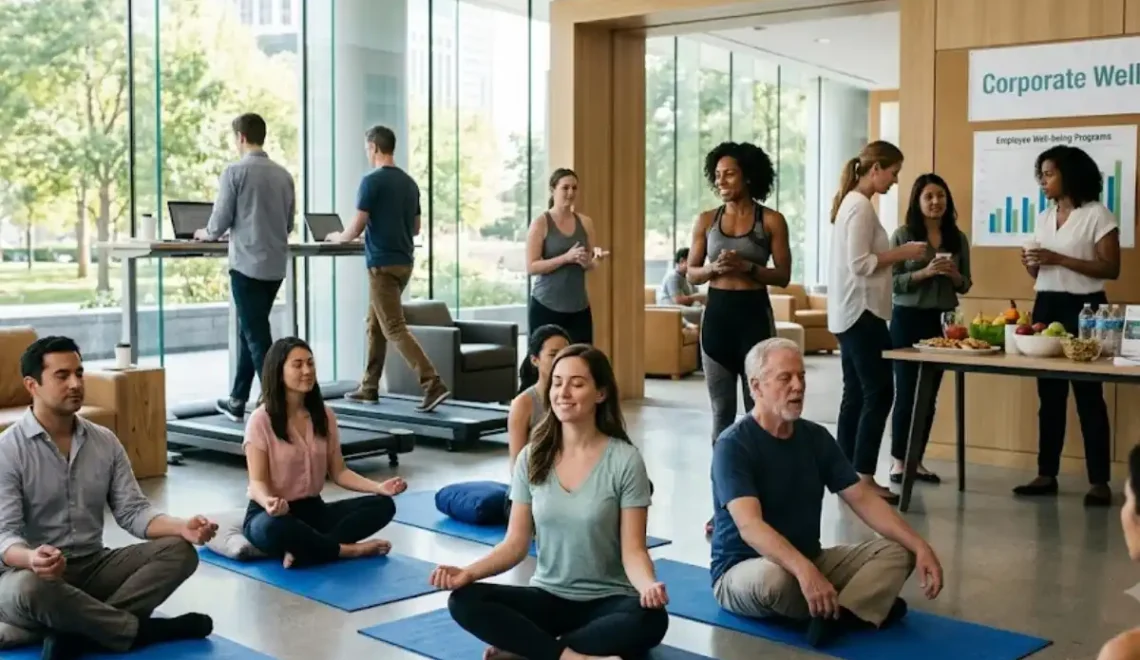
A workplace wellness program can vary enormously from one business to another. A small business might start out with activities such as walking groups or healthy eating education sessions, and a large company might have an inclusive program covering not only physical well-being but also mental well-being, nutrition, financial well-being, and the provision of professional resources.
The best examples of workplace wellness programs are not necessarily the most expensive or the most complex. It is programs designed on the basis of employee need, with support provided by relevant workplace policies.
In this guide, a series of popular examples for workplace wellness programs, employee led wellness projects, corporate wellness frameworks and company wellness programs are illustrated for you to incorporate within your business and adapt to your own employees.
A wellness program could be aimed at physical activity, mental health awareness, nutritional counseling, health check-ups, flexible working and introducing team well-being activities. Wherever possible this must be on a voluntary, available, inclusive basis.
This Article Is Part of the Fitness Events Hub
Discover proven fitness strategies, workout plans, strength training techniques, cardio exercises, recovery tips, and healthy lifestyle advice in our Fitness Events Hub.
What is a workplace wellness program?
A workplace wellness program is a comprehensive approach—consisting of activities, resources, and policies – that supports employee wellness. Depending on an organisation, a workplace wellness program may aim to:
- Physical activity
- Nutrition
- Mental well-being
- Stress management
- Healthy workplace habits
- Social connection
- Work-life balance
- Financial well-being
- Preventive health education
There isn’t a one-size-fits-all model. An office with 20 employees might require completely different facilities management solutions to a multinational corporation with thousands of employees in many different places.
Examples of workplace wellness programs

Here are a variety of common workplace wellness programs that organizations might adapt:
-
Workplace Fitness Programme
A company could provide optional fitness activities such as:
- Walking groups
- Yoga
- Stretching sessions
- Mobility classes
- Group exercise
- Sports activities
It can be a before work program, suitable breaks at work, or a program after working hours.
For hybrid teams there may also be the option to deliver program online.
The program must be available in a variety of intensities and for different levels of fitness and physical capacity.
-
Mental Wellbeing Programme
A mental wellbeing programme could provide employees with educational and practical resources.
Examples include:
- Stress-management workshops
- Mindfulness sessions
- Breathing exercises
- Mental health awareness sessions
- Employee assistance resources
- Manager training
- Quiet or recovery spaces
Wellness is distinct from clinically recognized mental illness support and counseling. When support is required professionally, healthcare or counselling should be implemented entirely independently.
-
Nutrition and Healthy Eating Programme
Nutrition is another common component of workplace wellbeing.
A company might provide:
- Healthy eating workshops
- Nutrition talks
- Healthy recipe sessions
- Better workplace food options
- Hydration education
- Healthy cooking demonstrations
Instead, it was supposed to be based on effective training, not crazy dieting and impossible weight-loss goals.
Some examples of employee wellness initiatives include:
Walking challenge: Teams or individual employees could walk together at their pace over a set period. This costs little, and employees can take part in teams or on their own tracking activity using steps or simply monitoring where employees have walked.
Movement-break initiative: This type of initiative may not initially be noticed, for example, small nudges such as emails to take movement breaks from the computer at intervals during the working day, reminding employees where there is good mobility, or making space or equipment available, such as the suggestion of stretching to break up seated work.
Healthy Workplace Challenge: This could be implemented over a one-month period where focus is drawn to an aspect of health such as adequate hydration or movement to prevent ill health.
This could be through fun competitions encouraging healthy habits through balanced meals or ensuring employees are adequately hydrating themselves by providing a suitable workplace and encouraging drinking water.
Learning sessions: Short informative sessions could be held relating to healthy eating, good sleep, adequate exercise, or stress management with short sessions of mindfulness, relaxation, or any related issue pertinent to employee well-being.
All of the above examples can be altered on the basis of employee needs.
For practical examples of workplace wellness initiatives, employers can explore the CDC’s workplace physical activity strategies and examples, including walking clubs, movement breaks, and active commuting programmes.
What Makes a Successful Corporate Wellness Program?
There really is no “correct” answer to what a successful corporate wellness program looks like, and looking just at numbers of participants doesn’t tell the whole story, as you can still have an unsuccessful program even with great participation numbers.
A program may also be evaluated through:
- Employee feedback
- Participation trends
- Satisfaction surveys
- Accessibility
- Engagement with resources
- Retention of programme participation
- Changes in relevant workplace indicators
What not to say to a stakeholder of a well-being initiative. Don’t say your initiative will definitely cut healthcare costs and boost productivity by X. Your initiative is just one of dozens of factors that affect well-being outcomes.
How to be effective
Programs that tend to work often have in common:
- Employee involvement – employees can and do give input.
- Accessibility – activities for different employee groups and ways of working.
- Management support – management permits employee activity to a reasonable extent.
- Choice – employees choose their activities based on their own need.
- Sustained – the activity is an ongoing program, not a single shot.
- Confidentiality—sensitive health details handled properly.
Models for a Health and Wellness Programme
Various organizations might use various health and wellness program models.
| Model | Main focus | Example |
| Fitness model | Physical activity | Walking and exercise sessions |
| Nutrition model | Healthy eating | Nutrition workshops |
| Mental wellbeing model | Psychological wellbeing | Stress-management resources |
| Preventive health model | Health education | Screenings and awareness |
| Holistic model | Multiple wellbeing areas | Fitness + nutrition + mental wellbeing |
| Team wellbeing model | Social connection | Group activities |
| Flexible model | Individual choice | Wellness allowance or resource platform |
A whole package means choice but could be more demanding on planning resources as well as the number of resources needed.
Company Wellbeing Programme Examples

Company well-being program examples are also more than just physical health and fitness.
- Flexible working: If appropriate for the role, flexible work options can aid individuals in balancing work and home responsibilities.
- Workplace ergonomically education: Employees could be educated in setting up their workstations, their posture, the position of the monitor, and movement at the desk.
- Workplace financial education: In generalist sessions the employer may offer the employees sessions on finances like financial planning, budgets, or workplace benefit schemes.
- Building social connection: Providing lunches, team social events, or volunteering can aid connectivity and inclusion.
- Giving time to recover/rest: Companies could endorse rest breaks and healthy working practices rather than expect employees to work uninterrupted.
The Small Business Example Employee Wellness Plan
Your small company could implement a fairly straightforward monthly program like
| Week | Initiative | Focus |
| Week 1 | Group walk | Physical activity |
| Week 2 | Nutrition workshop | Healthy eating |
| Week 3 | Stress-management session | Mental well-being |
| Week 4 | Team well-being activity | Social connection |
Then the program could be measured by using a short, anonymous employee survey. If your people are very enthusiastic about the walking group but much less keen to participate in any other activity, then that could be adapted for the following month’s program.
Example Corporate Wellness Programme
A larger organization may use a broader model:
Physical wellbeing
- Fitness sessions
- Walking programmes
- Ergonomic education
Mental well-being
- Counselling or employee assistance resources
- Mental health education
- Stress-management workshops
Nutrition
- Nutrition education
- Healthy food choices
- Hydration initiatives
Social well-being
- Team activities
- Volunteering
- Community events
Financial well-being
- Financial education
- Benefits education
- Planning resources
Deciding how to Select the Right Wellness Program Model
A sensible workflow should involve:
Assess needs → Set goals → Select activities → Plan delivery → Communicate → Measure → Improve
Workplace Wellbeing Programme Steps
Step 1: Know your employees Conduct anonymous surveys, hold employee group sessions, or utilize your workspace information.
Step 2: Determine your attainable goals What’s the goal of your programs?
Step 3: Find a suited action Choose a program suited for your employees and your company resources.
Step 4: Deliver planConsider timing, venue, access, and budget.
Step 5: Communicate Clearly communicate what the program is and what participating involves.
Step 6: Measure Evaluate participation and get feedback.
Step 7: Iterate. Use your learnings to adapt the program and activities for the future.
Expectations and Limitations
A wellness program can’t just be used as the remedy to any and all problems present in the organization. An organization can’t just assume one weekly yoga session will
- Excessive workloads
- Poor management
- Inadequate staffing
- Unsafe working conditions
- Lack of rest
- Poor communication
However, it is worth noting that any well-being activities or benefits are more effective if they support good office practice. Also, employee uptake will always vary.
But a low uptake doesn’t automatically indicate that something is of no use. The timing, promotion, content, or format can always be reviewed and adapted.
Pros and Cons
| Potential benefits | Potential limitations |
| Encourages healthy habits | Participation varies |
| Provides useful education | Requires planning |
| Can improve access to resources | Some activities require funding |
| Supports social connection | Results can be difficult to measure |
| Can suit different employee needs | Poor design can exclude employees |
| Can strengthen wellbeing culture | Cannot solve wider workplace problems |
Conclusion
These wellness program examples show that workplace well-being doesn’t need to adopt one singular style or structure. Workplaces might take the focus around physical, mental, and social wellness to healthier living, finance management, and practices.
The best workplace wellness program examples and employee wellness initiative examples will be able to address the real needs of people in business, so, depending on company size, a smaller business might enjoy a less complex wellness program, while a bigger establishment could have a comprehensive health and wellness program example model on hand.
Instead of borrowing, an organization should consider employee needs before adopting any programs, begin with practical approaches, and get the opinion of employees to modify their workplace well-being models.
Any decent company program should encourage the workplace condition and should not replace the existing condition.
Wellness Program Hub
Explore the complete Wellness Program guide, including employee wellness programs, corporate wellness ideas, workplace wellness benefits, program creation, activities, and examples.