
Can You Eat Too Much Protein?
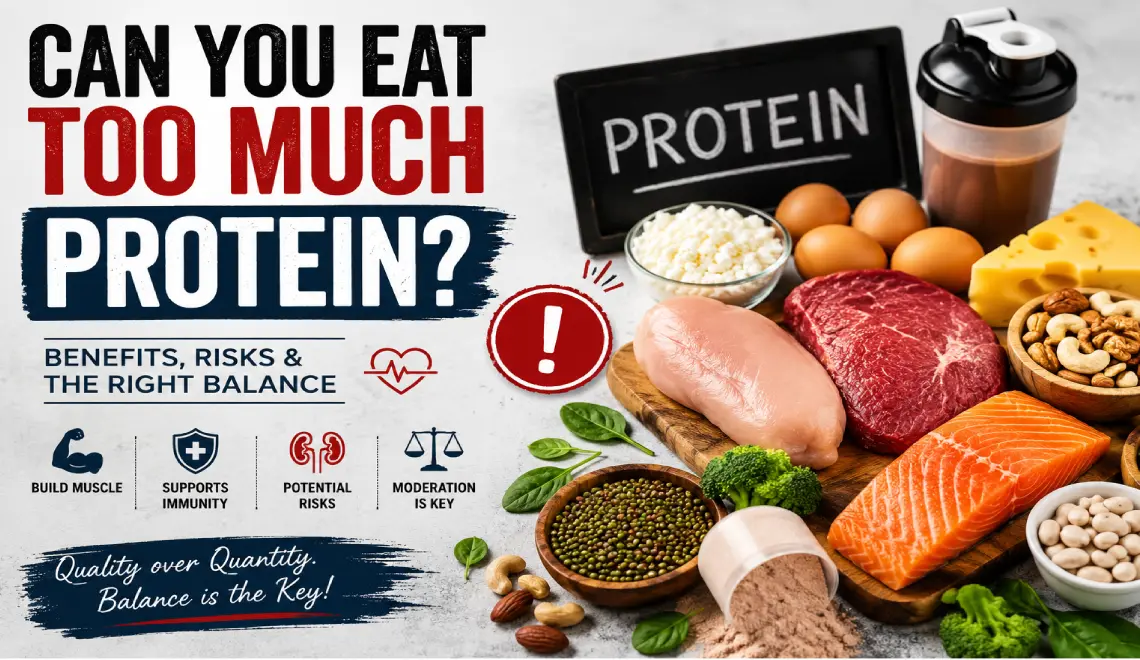
Protein is most often spoken about in connection to muscular growth, weight loss and improved fitness. With the prevalence and popularity of high protein diets, many people question; can you eat too much protein?
The answer is yes. Although a vital nutrient, the more than the recommended amounts of protein will not make you healthier or more muscular. In extreme cases it can cause problems of digestion, lead to the consumption of unwanted extra calories, and result in a lack of other vital food groups.
This guide looks at the science behind what protein intake should be, the side affects that consuming too much protein can lead to, and what exactly amounts of protein are too much.
This Article Is Part of the Fitness Tips Hub
Discover proven fitness strategies, workout plans, strength training techniques, cardio exercises, recovery tips, and healthy lifestyle advice in our Fitness Tips Hub.
What too much protein mean?
Protein is the major macro nutrient among the 3 major (protein, carb and fat that we derive from nutrients that assist us in repairing tissues, producing new cell, developing new protein, healing wound, supporting a healthy hormone function and immune functionality).
When you eat way beyond required amount with some specific health condition, for athletic reason etc. Is something that can be define as taking more than what is adequate in order to perform day-to-day activity without specific health problem or sports performance need, then it can be consider.
For example:
- 180g – 220g is 70g with something else, someone still needing 70g can eat something which has some grams of protein then it’s not a huge jump to add more
While a few high-protein meals shouldn’t cause problems for healthy people, eating a diet of regularly over-the-top protein may not do you a lot of good.
Quick Fact: While carbohydrates and fat can be stored by your body, protein can not. Anything extra will simply be converted to amino acids and used as energy or extra calories can be converted into body fat.
Effects Of Too Much Protein
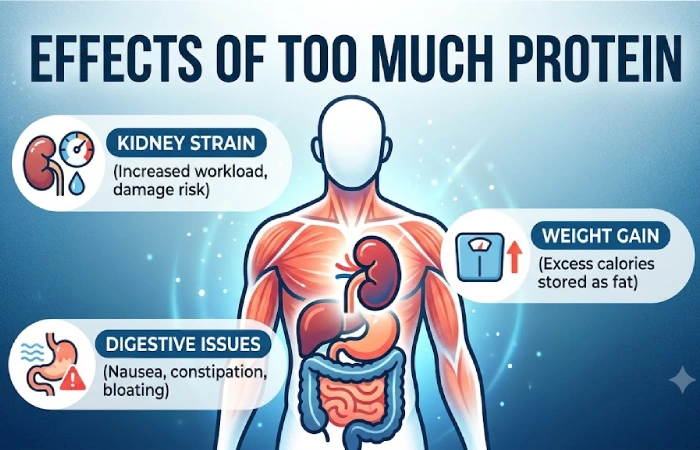
Something that you really have taken up one of the largest concerns surrounding negative side effects of too much protein is considering protein alone and not on the whole.
Digestive discomfort
Getting lots of protein without enough fibre can result in:
- Constipation
- Bloating
- Reduced bowel regularity
More than typically will take place if you are consuming low levels of fruits, whole vegetables and whole grains .
High caloric value
Even protein contains calories. Protein has 4 calories per ounce. A diet containing normal calorie levels along with additional Protein is likely to provide weight gain if overconsumed to amounts exceeding the energy requirements.
Dehydration risk
You produce nitrogen waste when protein breakdown comes up, and this must leave the body through the kidneys. You really have to be drinking your water when you’re eating high-protein meals or consuming an over-the-top amount of protein.
Nutritional imbalance
You cut out entire foods Group One may limit healthy carbohydrates and fats to maximize protein. You may decrease your intake of:
- Fibre
- Vitamins
- Minerals
- Healthy fats
Kidneys-focused side-effects
Existing information implies that a diet plan rich in protein for any given person isn’t going to Harm Their Kids Kidneys. Should You have a prior kidney problem, you have been informed as what the best amount of protein really are.
Why is having too much protein bad in your diet?
When you consume protein:
- The protein breaks down into amino acids.
- The amino acids are used to replace tissue, building muscle proteins.
- Excess amino acids are transformed into fuel or another use within the body, with excessive calories possibly resulting in fat storage.
Adding more protein alone won’t force your body to build limitless muscle. These are factors besides calories on muscle development too:
- Resistance training
- Recovery
- Adequate calories
- Sleep
- Overall nutrition
Safe Daily Protein intake
Knowing safe, reasonable protein amounts is more beneficial than reaching overly higher protein levels.
| Person | Recommended Daily Protein |
|---|---|
| Average healthy adult | Around 0.8 g per kg body weight |
| Recreational exercisers | 1.0–1.4 g/kg |
| Strength training | 1.4–2.0 g/kg |
| Older adults | Often 1.0–1.2 g/kg (depending on health advice) |
For example
An individual of 70kg may require: Sedentary: ~ 56g of protein daily Active gym member: 98-140 g daily Eating significantly higher then this has typically very small returns when looking to grow muscle
High Protein Diet Risks
Many people find that an increase in protein is useful, but reading up about the risks of a high protein diet to helps with the establishment of a healthy eating plan.
Possible concerns include:
- Less fiber in take
- Too low vegetable and fruit in take
- May get saturated fat increase because of consumption of preserved meat
- May get higher calorie because the variety of healthy meal is not very good.
Where your protein comes from is as important as how much.
More protein is not always better, and very high intakes may create dietary imbalances or pose concerns for some people, so see this Harvard Health guide on how much protein is too much for a balanced overview.
Good protein choices include:
- Lentils
- Chickpeas
- Eggs
- Fish
- Chicken
- Low-fat dairy
- Tofu
- Paneer in moderation
- Greek yoghurt
Protein Myths And Facts
Most people have heard plenty of myths concerning consuming protein.
| Myth | Fact |
|---|---|
| More protein always builds more muscle | Muscle growth has a limit and depends on exercise and recovery. |
| Protein damages healthy kidneys | Current evidence suggests healthy kidneys generally tolerate higher protein intake, but existing kidney disease requires medical guidance. |
| Protein shakes are essential | Whole foods can easily meet protein requirements for many people. |
| Carbohydrates should be avoided | Carbohydrates provide energy for workouts and recovery. |
| Everyone needs 200g protein daily | Protein needs vary according to age, activity and body weight. |
Protein Management Routine
How to have proper intake. If you take in Protein, follow a proper routine.
Step 1
Estimate your body weight.
Step 2
Identify your activity level.
Step 3
Calculate your approximate protein requirement.
Step 4
Spread protein across 3–5 meals.
Step 5
Review the progress and adapt as needed.
In the beginning, don’t be focused on getting a higher intake; on establishing a good baseline.
Balanced vs Excessive Protein Intake
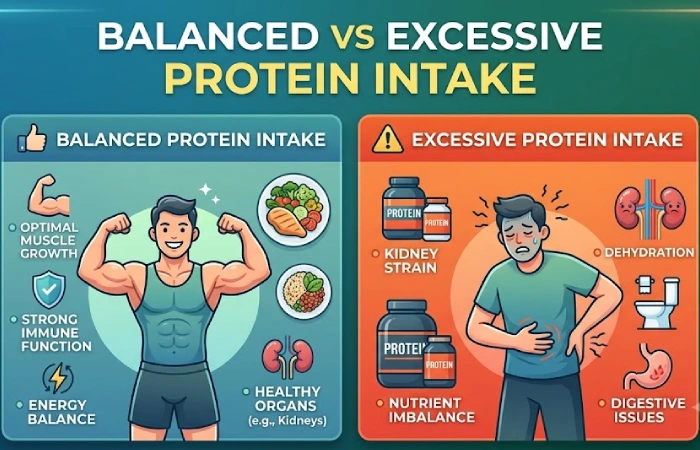
| Factor | Balanced Protein Intake | Excess Protein Intake |
|---|---|---|
| Muscle support | Excellent | No significant additional benefit after requirements are met |
| Digestion | Usually comfortable | Higher chance of bloating or constipation |
| Nutrient balance | Better | May reduce intake of other nutrients |
| Weight management | Easier to control | Extra calories may contribute to weight gain |
| Long-term sustainability | High | Often difficult to maintain |
Expectations: Protein Can and Protein Can’t
When the truth is Many fitness advertisements often suggest that by consuming more protein one simply and automatically burns up to twice as much fat per serving and builds muscle more quickly.
Realistically:
Protein can:
- Support muscle recovery
- Help maintain lean muscle
- Improve satiety
- Support healthy ageing
Protein cannot:
- Replace exercise
- Build muscle without resistance training
- Offset poor sleep
- Compensate for an unhealthy overall diet
Good and tasty results are achieved only in conjunction with exercise, normal amounts of protein, and sleep.
Signs you may be getting too much protein, then
You may wish to review your diet if you notice:
- Frequent heartburn/digestive problems
- Many protein supplements during the day though eating proper food
- High levels of fruit and vegetables extremely
- Low if even a little bit on a high protein diet
- Thirst is a persistent companion to excess calorie consumption of a very large, calorie intense high protein meal.
However, it’s best to have discussions with a health care professional, particularly if you have kidney, liver disease, or any other condition where large dietary adjustments can complicate treatment.
Healthy Ways to Eat Protein
- Put a bit of each to each meal of the day don’t focus on a big chunk on your evening meal.
- Have the choice between plant based or animal based proteins, drink plenty of water and make sure the bulk of your carbs come from fibre content.
- Don’t solely rely on supplements.
- Adjust intake according to goals with training.
FAQs
Is there too much protein in a day?
Yes. … It is more likely that you are overeating in calories and undereating other food groups as well if you are routinely eating in a large amount more protein in a day than is beneficial and you might experience some issues that come with digestive imbalances.
What if I eat protein over and above what I need?
Your excess protein will just be converted into the normal body metabolites. This may do no more harm than any, for a normal individual, however it is a far more complicated answer but the body converts protein into body fat if it is in excess of it needs for repair and rebuilding!
When is Too Much Protein, Too Much?
On Your Body Size. Activity level, goals.. Some athlete requires up to 150g per day but this goes outside the average intake for people that do not engage much physical activity .
Is a high-protein diet safe?
If you’re a healthy adult on most medical diets, a balanced high-protein diet is fairly safe. You should always check with your doctor first before you use it if you have any underlying health problem, kidney problem.
Will protein help with weight loss?
While protein is satiety stimulating and can help spare body muscle mass when dieting, the bottom line for weight loss will always be on the balance of calorie intake vs, output.
Conclusion
So to answer the question… is it possible to over consume on protein? Yes, it’s just a matter of what “ too much” means to the individual, to their activity levels and their current dietary pattern. While a decent protein intake is crucial for health, performance and recovery, excessively high protein intakes in most people (at least over and above a balanced diet) probably yield minimal additional returns.
Instead of striving for peak protein levels, simply shoot for what’s a reasonable safe intake per day, opt for good protein choices, include whole foods for other nutrient sources (veg/fruit/whole grains) and you will more than likely have greater sustained long term results then going crazy on the protein intake alone.
How Much Protein to Gain Muscle Hub
Learn how much protein you need to build muscle, calculate your daily protein intake, discover the best high-protein foods, optimise post-workout nutrition, compare whey vs food protein, and avoid common protein mistakes.