
Best High Protein Foods for Muscle Growth
Muscles develop as they’re forced to cope with your increased effort. What also enables the muscles’ growth and replenishment is having the right nutrients after each of your workout sessions. When speaking of these essential components for the health of muscles, the hero is undoubtedly protein. Protein supplies the amino acids needed by your body for muscle protein synthesis.
The quest for foods with high protein doesn’t imply consuming high priced supplements or adhering to any rigid dietary regimen; we can derive it from a variety of available in common Indian markets, which will do justice to your gym goals. This guide for high-protein foods will benefit regardless of the fact that you are on an exercise for the first time, are already in a regimen or are recuperating after a sabbatical.
This Article Is Part of the Fitness Tips Hub
Discover proven fitness strategies, workout plans, strength training techniques, cardio exercises, recovery tips, and healthy lifestyle advice in our Fitness Tips Hub.
Best High-Protein Foods for Muscle Building
The best high-protein foods for muscle building are food sources rich in protein and that contain healthy fats, vitamins, minerals, to maintain your well-being.
Protein helps:
- Repair muscle fibres after training
- Support muscle growth
- Maintain lean body mass
- Increase satiety
- Support recovery between workouts
Protein is not everything to build your muscles, on top of that, a structured progressive workout program, enough calories and sleep. Consistency is the key to build up muscle on the long haul.
Top Protein Foods for Growing Muscles
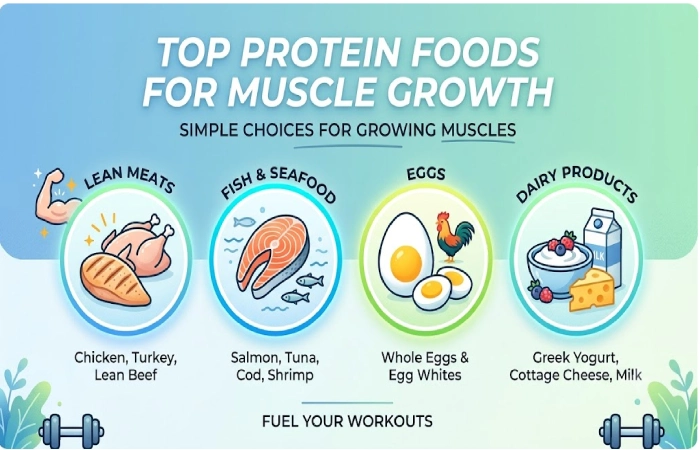
There’s no need to follow any diet as these food sources are plentiful with this muscle building nutrient.
| Food | Protein | Benefits |
|---|---|---|
| Chicken breast 100 g | 31 g | Lean, complete protein |
| Eggs 2 large | 12 g | Rich in leucine and vitamins |
| Fish | 20–25 g | Protein plus omega-3 fats |
| Greek yoghurt | 10 g per 100 g | High protein, probiotics |
| Paneer | 18–20 g | Excellent vegetarian option |
| Tofu | 15–17 g | Plant-based complete protein |
| Lentils Dal | 9 g per 100 g cooked | Fibre and protein |
| Chickpeas | 8–9 g | Good for vegetarian diets |
| Kidney beans Rajma | 8–9 g | Protein and iron |
| Milk | 8 g per cup | Protein plus calcium |
High-Protein Food:
Animal-based foods (such as meat, eggs and dairy foods) are usually called ‘complete’ proteins since they contain all nine essential amino acids.
Chicken Breast
The ever so popular high-protein food that most of our lives contain in more forms of consumption then the average body should admit to; here, is a light and easy one too, “Chicken Breast”.
Benefits:
- Low fat
- High protein
- Rich in vitamin B6
- Supports muscle recovery
Eggs are some of the highest protein qualities available!
Advantages include:
- Complete amino acid profile
- Affordable
- Easy to cook
- Rich in vitamin D and choline
Unless you or some healthy person just needs to have healthy, Whole eggs can definitely be included into a healthy diet.
Fish Salmon, tuna, or Indian mackerel provides:
- High-quality protein
- Omega-3 fatty acids
- Vitamin D
- Selenium
Fatty fish might also reduce the workout caused inflammation
Dairy Products
Options include:
- Milk
- Greek yoghurt
- Cottage cheese
- Paneer
Both have the protein (casein and whey), which builds the muscles in.
Choosing the right Lean Proteins Foods Your Diet Needs
Some people don’t want fat content high. You need lean protein foods for your food program since many supply you with adequate levels of the necessary protein while not an excessive amount of fat.
Examples include:
- Skinless chicken
- Turkey
- White fish
- Egg whites
- Low-fat Greek yoghurt
- Low-fat paneer
- Low-fat milk
- Tofu
Choose a leaner choice of protein If you are working at eating more protein without increasing total calorie intake, you should consider choose a leaner option.
From eggs and dairy to beans, lentils, fish and nuts, there are plenty of nutritious options to increase protein intake, as highlighted by Harvard’s guide to protein foods
Top Food Choices for Building Muscle (Vegetarian)
If you are vegetarian, there are plenty of choices that you can take advantage of while still helping you build muscle!
- Paneer
- Tofu
- Soy chunks
- Lentils
- Kidney beans
- Chickpeas
- Quinoa
- Greek yoghurt
- Milk
- Mixed nuts
- Seeds
For example: A combination of cereal and pulses (like rice with dal) may improve amino acid patterns in a meal.
High-Protein Foods Indian Diet Plan Foods
A protein-packed meal doesn’t need to be tricky to follow!
Breakfast
- Vegetable omelette
- Greek yoghurt with fruit
- Paneer bhurji
- Moong dal chilla
Approximate protein:
20–30 g
Lunch
- Grilled chicken
- Brown rice
- Dal
- Mixed vegetables
Or
- Rajma
- Rice
- Salad
- Curd
Approximate protein:
30–40 g
Evening Snack
- Roasted chana
- Protein smoothie
- Boiled eggs
- Sprouts salad
Approximate protein:
10–20 g
Dinner
- Fish curry
- Paneer curry
- Tofu stir-fry
- Dal with vegetables
Approximate protein:
25–35 g
Popular High-Protein Foods
| Food | Protein Quality | Suitable for Vegetarians | Budget Friendly | Easy to Prepare |
|---|---|---|---|---|
| Eggs | Excellent | No | Yes | Yes |
| Chicken | Excellent | No | Moderate | Yes |
| Fish | Excellent | No | Moderate | Moderate |
| Paneer | Excellent | Yes | Moderate | Yes |
| Tofu | Excellent | Yes | Yes | Yes |
| Lentils | Good | Yes | Excellent | Yes |
| Chickpeas | Good | Yes | Excellent | Moderate |
| Greek Yoghurt | Excellent | Yes | Moderate | Yes |
Muscle Building Protein Workflow
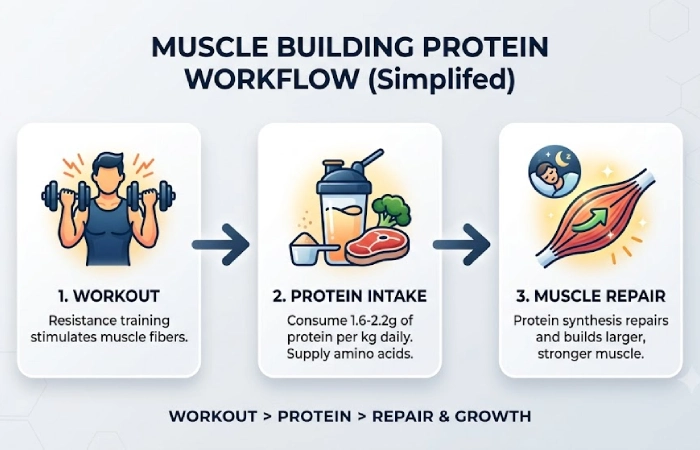
Step 1
Determine your Protein needs for the day.
You will often find most physically active people wanting muscle gain consuming somewhere in the region of 1.2 – 2.0 grams of protein per kg of body weight. The protein quantity that would fit best within each of these categories will come into account due to your training intensity, overall level of health, and so on.
Step 2
3 to 5 protein-consuming instances a Day
Step 3
Consume Protein Post-Resistance Training
Step 4
Resistance train consistently
Step 5
Focus on sleep and adequate rest.
Best Protein For Quick Muscle Gain
Building muscle takes time and you wont do this by just filling your basket with these best protein for muscle building foods!
Results depend on factors including:
- Training quality
- Workout consistency
- Total calorie intake
- Genetics
- Sleep
- Age
- Recovery
Some beginners see an improvement in their strength after only a few weeks, with noticeable gains in size in muscle over a couple of months of regular training and proper eating.
Avoid Some Bad Habits
- Relying too heavily on only protein supplements
- Ditching all carbs
- Not eating enough to sustain oneself.
- Eating zero vegetables
- Not enough water
- Resting and recovery in between workouts
- Having a workout week from hell!
Sample One-Day High Protein Meal Plan
| Meal | Food |
|---|---|
| Breakfast | Paneer bhurji + whole wheat toast |
| Snack | Greek yoghurt |
| Lunch | Grilled chicken, dal and rice |
| Snack | Roasted chickpeas |
| Dinner | Fish with vegetables |
| Before bed | Glass of milk |
The vegetarians can replace chicken or fish with soy chunks, extra paneer or tofu.
Pros and Cons to High-Protein Foods
Pros
- Supports muscle recovery
- Helps preserve lean muscle
- Keeps you fuller for longer
- Easy to include in daily meals
- Available in vegetarian and non-vegetarian options
Limitations
- Protein alone doesn’t guarantee muscle gain.
- Individual protein needs vary.
- Certain high-protein foods also happen to be high in saturated fat when consumed in excess.
- We should be careful about balance with carbs, healthy fats and veg.
FAQs
What’s the right amount of protein for muscle growth?
An optimal recommendation can vary by weight, training intensity, age, and personal health. The most frequently cited reference is from active adults in the United States, where the current recommendations fall somewhere around 1.2–2.0 grams per kilogram of body weight.
Is eating more protein sufficient for gaining muscle?
No. Protein aids in muscle repair, but you should combine eating a nutritious protein rich diet with resistance training and calorie for muscles. This is quite possibly the most vital factor if you are wanting to gain muscle: to monitor protein intake, and eat quality foods. Chicken is one such item.
Which are the Foods Rich in Protein for Muscle Building?
Chicken breast, fish, eggs,paneer, yogurt, tofu, milk, lentils, and chana are some of the most well-known foods for protein content that aid in muscle building.
But can I gain muscle mass without supplements of Protein?
Of course, yeah, many people can fulfill the requirement of protein via utilizing entire food source which include dairy items, eggs, fish as well as poultry items, soy items, and legumes in them.
Most high-protein vegetarian food?
Paneer, tofu, yogurt, and soy chunks are among highly proteinated Indian foods and quite easily found.
Conclusion
If you are looking for the best high-protein foods for muscle growth, the emphasis should not be on consuming only one ‘superfood,’ but on creating steady eating patterns. By consuming a combination of foods that are high in protein and consist of whole grains, fruits, vegetables, and good fats, your body will gain all of the essential nutrients for repair and lean muscle gain long-term.
Most of us are far better off simply consuming foods that are naturally high in protein and making that an integral part of our balanced diet, combined with resistance exercises and reasonable goals that most of us can achieve. A high-protein diet can be either vegetarian or non-vegetarian, but the most important aspect is that it should maintain all types of essential nutrients, such as protein, for its growth.
How Much Protein to Gain Muscle Hub
Learn how much protein you need to build muscle, calculate your daily protein intake, discover the best high-protein foods, optimise post-workout nutrition, compare whey vs food protein, and avoid common protein mistakes.