
How Much Protein to Gain Muscle: Complete Guide to Daily Protein Intake for Muscle Growth
Introduction
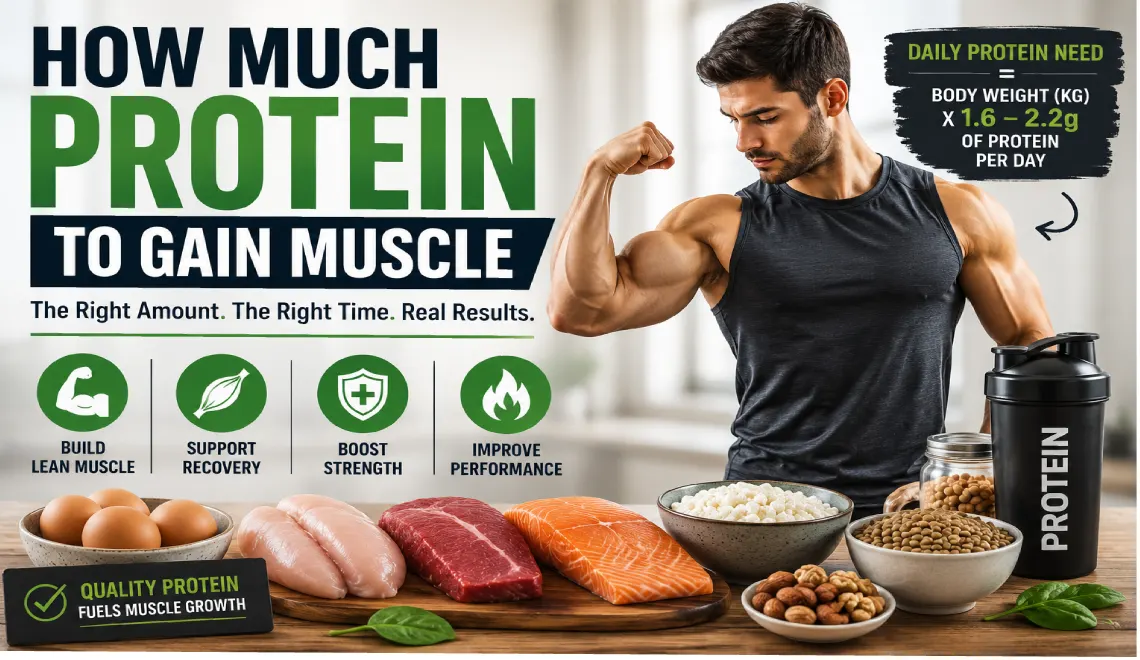
How Much Protein to Gain Muscle? If you’re just starting a strength training regimen, you’ve probably asked yourself how much protein is the optimal amount for gaining muscle. It’s probably one of the most talked-about nutrients in the fitness world because it helps with the repair and building process of muscle after you finish a workout. How do you know if you are consuming enough—or maybe too much—protein?
The reality is, if you want to get the most out of your efforts to increase your muscle mass, protein is only one piece of the puzzle.
You also need to have consistency with your training, the right caloric intake, quality sleep, proper recovery, and so forth. Just taking in an enormous amount of protein in addition to training probably won’t yield the desired results. This guide will provide the answers to your questions on how much protein to take, how to calculate your protein needs, some of the best protein-rich foods, meal timing tips, and debunk some popular protein myths. Whether you’re an absolute beginner, an amateur enthusiast, or you’ve lived at the gym for years, you should be able to access enough of what you’ll want in order to be a more knowledgeable foodie.
This Article Is Part of the Fitness Tips Hub
Discover proven fitness strategies, workout plans, strength training techniques, cardio exercises, recovery tips, and healthy lifestyle advice in our Fitness Tips Hub.
How is protein involved in muscle growth?
Your body’s protein is made up of sequences of amino acids—what some call your “muscle building blocks.” Resistance training creates micro-tears in the muscle fiber.
Protein that you ingest can assist your body in repairing the damage to the tears and ultimately rebuilding and building muscle.
Protein also supports:
- Muscle recovery after exercise
- Maintenance of lean muscle mass
- Production of enzymes and hormones
- Immune system function
- Healthy bones and connective tissues
Without proper protein consumption, your body will not properly repair itself after workouts.
How Much Protein to Build Muscle?
The protein requirements for your body depend on several different elements. Those elements contain your weight, the age, level of your own exercise routine and, in addition, the coaching objective that you will happen to be chasing.
As suggested by current sports activities’ nutrition analysis,
| Activity Level | Recommended Protein Intake |
| Sedentary adult | 0.8 g/kg/day |
| Recreational exerciser | 1.2–1.6 g/kg/day |
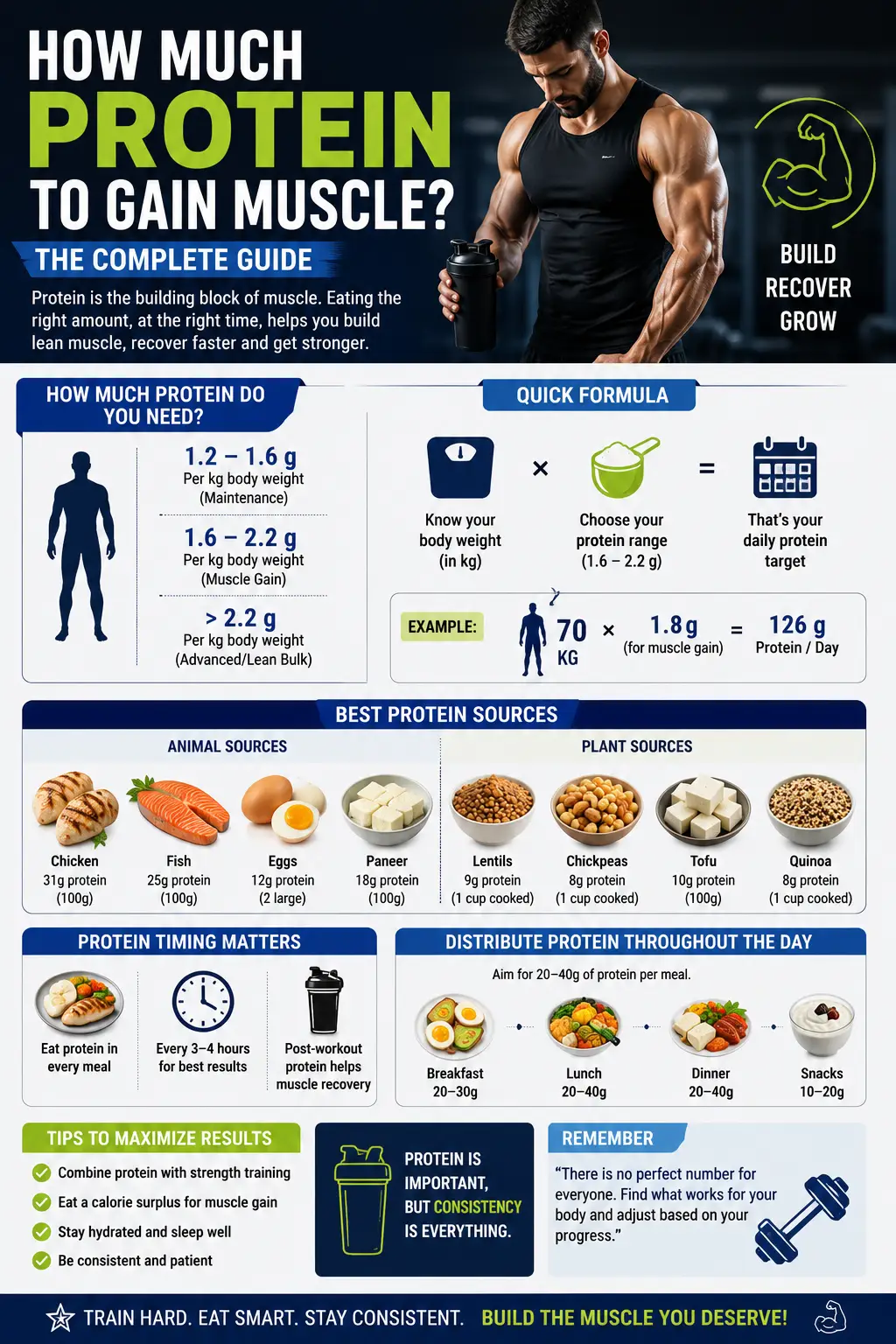
| Muscle gain | 1.6–2.2 g/kg/day |
| Competitive bodybuilder | Up to 2.4 g/kg/day (in specific situations) |
Research suggests that most people aiming to build muscle benefit from consuming around 1.6–2.2 g of protein per kilogram of body weight per day. These recommendations are supported by the International Society of Sports Nutrition ISSN Position Stand on Protein and Exercise
For example:
| Body Weight | Daily Protein Target |
| 50 kg | 80–110 g |
| 60 kg | 96–132 g |
| 70 kg | 112–154 g |
| 80 kg | 128–176 g |
| 90 kg | 144–198 g |
It is important to note that these figures are only suggested amounts and can vary from person to person.
Factors That Impact Your Protein Intake For Muscle Building
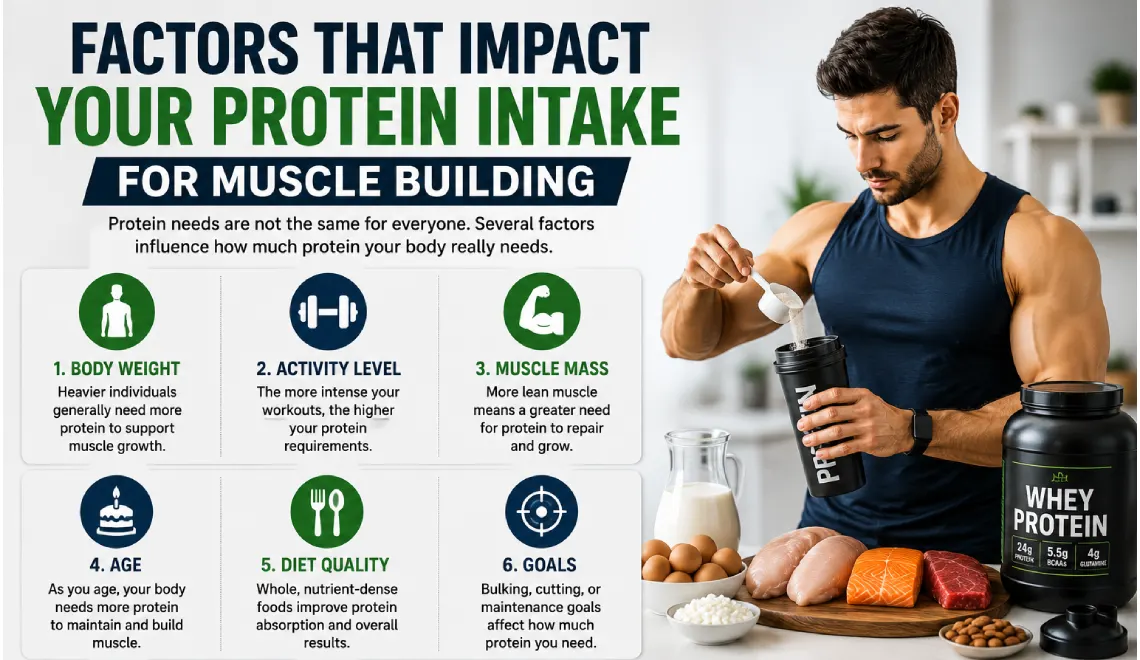
Not everyone needs to consume the same amount of protein. There are a number of influences that help determine the optimal intake of protein you need.
Body Weight
You generally look at the number of protein based on the person’s weight in kg, not their age and gender. People who are bigger naturally need more protein due to have more muscle mass to support and repair.
Training Intensity
A person working out at least 5 days a week typically needs to consume more protein than a person who workouts 1-2 times a week. You’ll need to eat protein often because increased exercise stimulates higher turnover rates of protein in the muscle cells.
Overall Calorie Intake
Also, calories need to be enough for you to build musclemass. If you’re simply eating far too few calories, then your body isn’t optimally set up to produce the maximum muscle you can with the amount of protein.
Age
Elderly people may need more protein just to support current muscle mass, as older adults tend to make and maintain muscle protein less effectively than younger people.
Protein for Muscle Mass Gain: Is High Protein Best?
There’s a prevailing idea among health enthusiasts that if you want to gain a lot of muscle, then you must have an exorbitant protein intake.
However, muscle development isn’t dependent upon a sole food source:
- Progressive resistance training
- Total calorie intake
- Recovery
- Sleep quality
- Consistency
Once your daily protein needs are met, consuming significantly more is unlikely to accelerate muscle growth for most people.
Instead, excess calories from protein may simply contribute to overall energy intake.
Protein for Muscle Growth vs Weight Loss
Although protein benefits both goals, the recommended approach differs slightly.
| Goal | Primary Focus |
| Muscle Growth | Calorie surplus with strength training |
| Fat Loss | Calorie deficit while maintaining high protein intake |
| Body Recomposition | High protein with progressive resistance training |
High protein intake during weight loss helps preserve lean muscle while reducing body fat.
Daily Protein Intake Throughout the Day
Rather than eating most of your protein in one meal, research suggests distributing it evenly across the day may support muscle protein synthesis.
Example:
| Meal | Protein |
| Breakfast | 25 g |
| Lunch | 30 g |
| Snack | 20 g |
| Dinner | 35 g |
| Evening Snack | 20 g |
This approach provides your muscles with a more consistent supply of amino acids.
Best Protein Sources: How Much Protein to Gain Muscle?
Whole foods should form the foundation of a muscle-building diet.
Animal Protein Sources
- Chicken breast
- Eggs
- Fish
- Turkey
- Lean beef
- Greek yoghurt
- Cottage cheese
- Milk
These foods contain all essential amino acids and are considered complete protein sources.
Plant Protein Sources
Vegetarians and vegans can also meet their protein needs through carefully planned diets.
Examples include:
- Lentils
- Chickpeas
- Kidney beans
- Soybeans
- Tofu
- Tempeh
- Edamame
- Quinoa
- Peanuts
- Almonds
Combining different plant foods throughout the day helps provide a balanced amino acid profile.
High Protein Indian Foods
For readers in India, many affordable foods provide excellent protein.
| Food | Approximate Protein |
| Paneer (100 g) | 18 g |
| Chicken breast (100 g) | 31 g |
| Eggs (2 large) | 12 g |
| Dal (1 cup cooked) | 9 g |
| Chickpeas (1 cup) | 15 g |
| Soy chunks (50 g dry) | 26 g |
| Milk (250 ml) | 8 g |
| Greek yoghurt (200 g) | 18–20 g |
| Peanut butter (2 tbsp) | 8 g |
Protein Calculator for Muscle Gain
You can estimate your daily protein requirement using a simple calculation.
Step 1
Find your body weight in kilograms.
Step 2
Multiply your body weight by your target protein intake.
Example:
70 kg × 1.8 = 126 grams of protein daily
Quick Reference
| Body Weight | Moderate Training | Intense Muscle Gain |
| 55 kg | 88 g | 121 g |
| 65 kg | 104 g | 143 g |
| 75 kg | 120 g | 165 g |
| 85 kg | 136 g | 187 g |
When To Take Protein
For optimum performance it’s important that your training should complement your eating, and one common topic in sport nutrition is protein timing.
Although it can be claimed to have many advantages, and the overall daily intake is of utmost importance, some protein consumption surrounding training has the potential to improve muscle repair.
Good times include:
- Breakfast
- Within two hours after training
- Lunch
- Dinner
- Before bedtime (optional)
Trying to split protein rather than having it in one meal is best.
Nutrition for Building Muscle: Protein is just a part of the story.
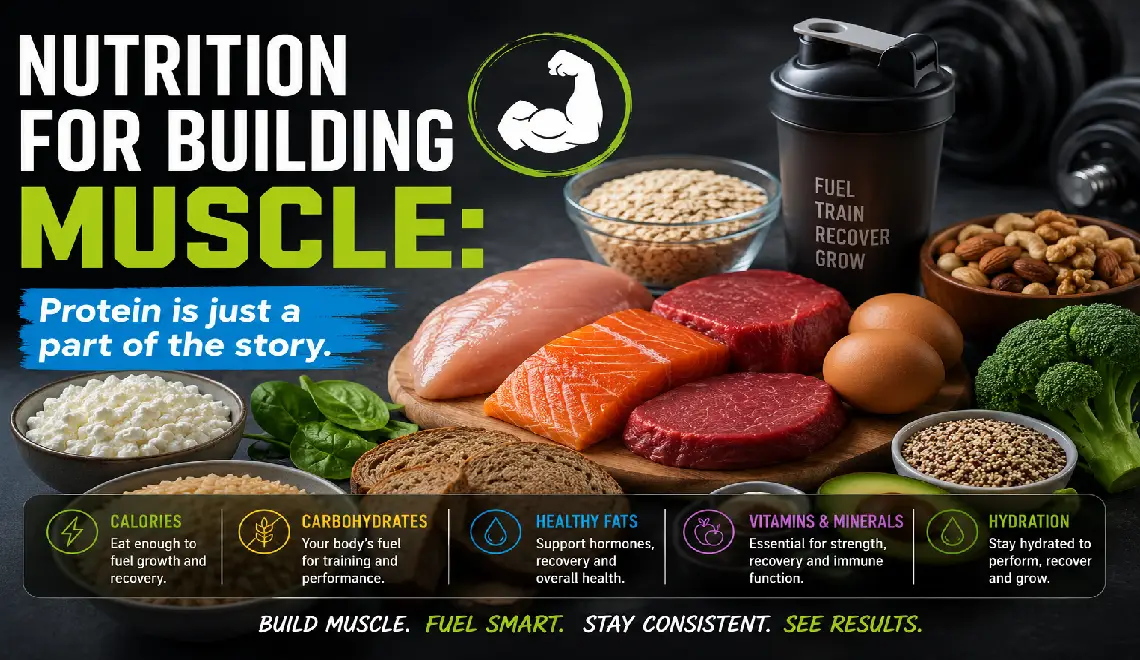
Even perfect protein intake cannot replace other essential aspects of muscle growth.
Successful muscle building also requires:
- Progressive overload
- Adequate sleep
- Balanced carbohydrates
- Healthy fats
- Hydration
- Recovery days
- Consistency over several months
Protein aids in the process but training gives the stimulus for muscle growth.
Protein Supplements vs. Whole Foods: Should I Supplement My Protein Intake?
Are protein supplements necessary for building muscle?
A lot of folks wonder about whether they need protein supplements for muscle growth. That really comes down to protein intake and your life.
Since whole foods are a great source of vitamins, minerals, healthy fats, and fibre along with protein, the majority of people find these to be their best source of this nutrient.
However, if you’re a protein eater who has a difficult time getting enough in your daily diet, a protein supplement can certainly be useful.
Whole Foods vs Protein Supplements
| Feature | Whole Foods | Protein Supplements |
| Protein Quality | High | High (varies by product) |
| Vitamins & Minerals | Naturally present | Often limited |
| Fibre | Present in many foods | Usually low |
| Convenience | Moderate | Excellent |
| Cost | Generally economical | Can be more expensive |
| Suitable for Everyday Use | Yes | As required |
Supplements aren’t always a necessity for most healthy adults.
Whey Protein Vs Plant Protein
Whether to choose the whey or plant version will depend on a range of factors, from diet, allergies and even your nutritional needs.
| Feature | Whey Protein | Plant Protein |
| Source | Milk | Pea, soy, rice, hemp etc. |
| Complete Protein | Yes | Some blends are complete |
| Digestion | Quickly absorbed | Varies by source |
| Suitable for Vegans | No | Yes |
| Lactose-Free | Usually no (unless isolate) | Yes |
| Muscle Support | Excellent | Excellent when total intake is adequate |
Both are viable protein options to complement a balanced diet in your mission to pack on muscle.
Example High-Protein Meal Plan for Muscle Gain
How can protein be spaced throughout the day? The meal plan below provides an example of such an eating schedule.
| Meal | Example | Approx. Protein |
| Breakfast | Oats with milk, Greek yoghurt and nuts | 28 g |
| Mid-Morning Snack | Boiled eggs or roasted chickpeas | 15 g |
| Lunch | Grilled chicken, rice and vegetables | 35 g |
| Evening Snack | Paneer sandwich or protein smoothie | 20 g |
| Dinner | Fish or dal with chapati and vegetables | 35 g |
| Before Bed | Glass of milk or cottage cheese | 12 g |
Daily Total: Approximately 145 grams of protein
Workflow: How to Calculate and Meet Your Protein Needs
Follow these simple steps to determine your ideal intake.
Step 1: Measure Your Body Weight
Record your weight in kilograms.
Step 2: Select Your Goal
- General fitness
- Muscle gain
- Fat loss
- Body recomposition
Step 3: Calculate Your Protein Target
Multiply your body weight by 1.6–2.2 g/kg if your goal is muscle growth.
Step 4: Plan Your Meals
Distribute protein evenly across 4–5 meals.
Step 5: Monitor Progress
Go for small, sustainable victories as opposed to aiming for big, rapid success.
What to Expect How Long Does it Take to Build Muscle?
Muscle building is a slow and steady game. We need to support protein synthesis with protein to facilitate repair, but not a substitute for proper training and nutrition.
Beginners can feel stronger in the first few weeks, but significant and visible gains will likely take many months.
Building muscle takes place in a number of ways, with the speed of this process dependent upon factors like age, genetics, exercise training, caloric intake, and rest. As opposed to just watching a number on the scales increase, pay attention to how you’re getting better at the following:
- Strength during workouts
- Exercise performance
- Recovery between sessions
- Muscle definition
- Consistency in training routine
Focus on small, steady wins rather than looking for quick, huge breakthroughs.
Common Myths About Protein
Myth 1: Protein Equals Muscle
No! You’ll get all the protein you need once you’ve met your requirements; any more won’t help muscle development.
Myth 2: You Must Have a Protein Shake After Your Workout
The ‘anabolic window’ has been overhyped.
Total daily intake is more important.
Myth 3: Vegan Protein Doesn’t Build Muscle
It does when you’re getting enough of it, along with the essential building blocks you need.
Myth 4: High-protein diets are just for bodybuilders No they aren’t.
Protein is important for anyone involved in regular physical activity, including beginners, older adults and recreational exercisers.
Pros and Limitations of a High Protein Diet for Muscle Gain
| Pros | Limitations |
| Supports muscle repair and growth | Excess protein alone does not build muscle |
| Helps maintain lean muscle | Must be combined with resistance training |
| May improve satiety | Individual protein needs vary |
| Supports recovery after workouts | Very high intakes may be unnecessary for many people |
| Can assist body recomposition | Overall calorie balance still matters |
Conclusion
Eating the right amount of protein in order to build muscle is really going to matter when trying to hit some of your fitness goals. There is only one thing to remember—protein will really help you rebuild broken-down muscle and repair it or build new muscle, but without strength training and taking in enough protein, good-quality sleep, and enough calories, that’s not going to make very much difference. As an average active adult, 1.6-2.2 grams of protein per kg of your bodyweight per day would be a good initial place to start to try to maximize that growth.
If you manage that via having plenty of different protein-rich foods within your diet throughout the day, you shouldn’t struggle too hard.
As in all areas related to body growth, there is nothing quick and there are not going to be any magical shakes or diet plans that all of a sudden see you having the musculature you desire—as in most things related tobody growth it isn’t going to happen particularly quickly either
FAQs
The right dose of protein for muscle growth?
1.6g-2.2g/kg of your body weight per day to gain muscle (you will also need adequate calories and resistance training for this). 2.
Can you build muscle without protein supplement?
Yes, for the vast majority, adequate protein will be supplied through a well-rounded diet of meat, fish, eggs, dairy products, nuts, seeds, beans and lentils, to meet requirements without supplementation.
100 grams of protein – is this enough for me?
Well, depending on your body weight and activity level. If you are a small and active person or you have larger body mass and you are not as active.
Do I have to take protein before or after exercise?
Both can. You have to make sure that you consume the right amount of protein.
Protein: is it too much?
Healthy people will likely be okay with reasonably high protein intake, but beyond a certain amount the benefits do not come in the form of much additional muscle, and may pose problems for anyone with kidney conditions or other such problems.
Does the age make a difference?
Older people may actually do themselves some good by adding just a little extra protein to their intake in order to keep a muscle-friendly physique as they age.
How Much Protein to Gain Muscle Hub
Learn how much protein you need to build muscle, calculate your daily protein intake, discover the best high-protein foods, optimise post-workout nutrition, compare whey vs food protein, and avoid common protein mistakes.