
Bodybuilding Competition Posing Guide: Poses, Routines and Beginner Tips
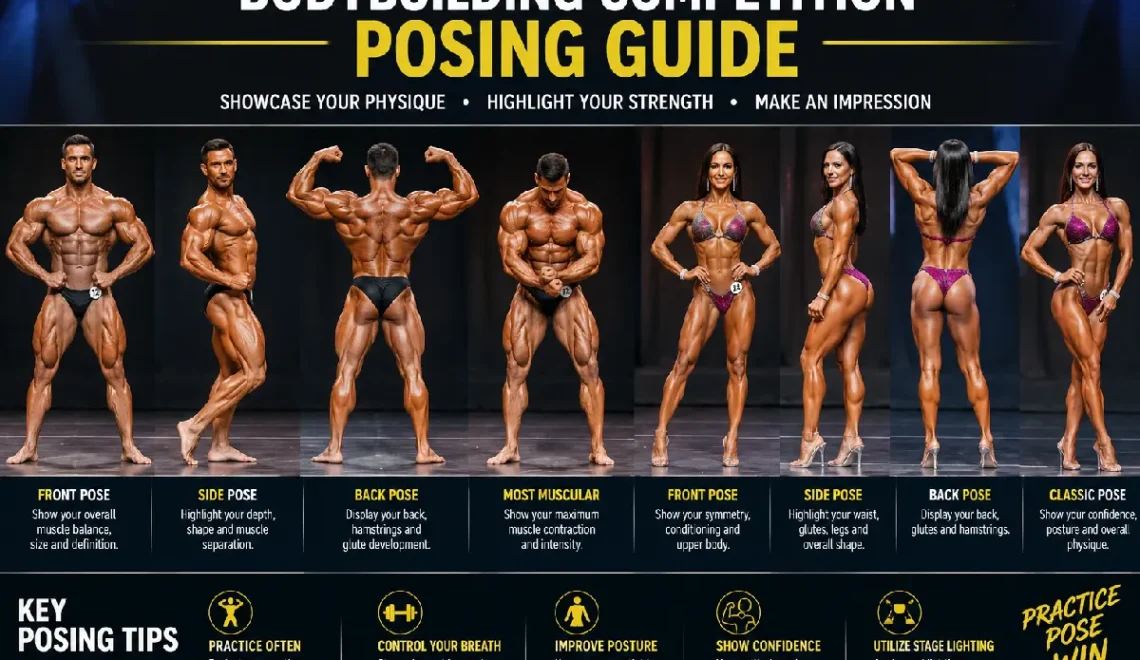
A bodybuilding posing guide is helpful to whoever is aiming to get on a physique competition stage for the first time. It’s not just about building muscle when a bodybuilder prepares for a competition; the preparation requires also learning posing, presenting and transitioning the body as much as possible so as to meet its requirements of the division it will be compared for.
Good posing doesn’t make a bodybuilder having more muscle where there aren’t any, but a competitive posing really is in a position to present the muscularity the individual has developed at its best. Depending on the bodybuilding federations and its different divisions posing and presentation requirements are also somewhat different, thus, the actual poses should be inquired on the respective federation rules of the considered competition.
This Article Is Part of the Bodybuilding Competitions Hub
Explore bodybuilding competitions, categories, preparation, diet plans, workout plans, rules, judging criteria, posing guides, and other useful information in our Bodybuilding Competitions Hub.
The Importance of Bodybuilding Posing
Bodybuilding competitions are evaluated using visually based judging parameters. The judges require an audience or panel to visually inspect various components of the physique. Appropriate posing is necessary to be able to reveal:
- Muscular development
- Symmetry
- Proportion
- Conditioning
- Overall balance
- Stage presentation
Being in a bad position can detract from the “pump” you have developed, whilst in a good position the physique can be more clearly assessed.
Because of thisposing should be viewed not as an addition just days before the competition, but a subject of practice along with every other element.
Compulsory bodybuilding poses
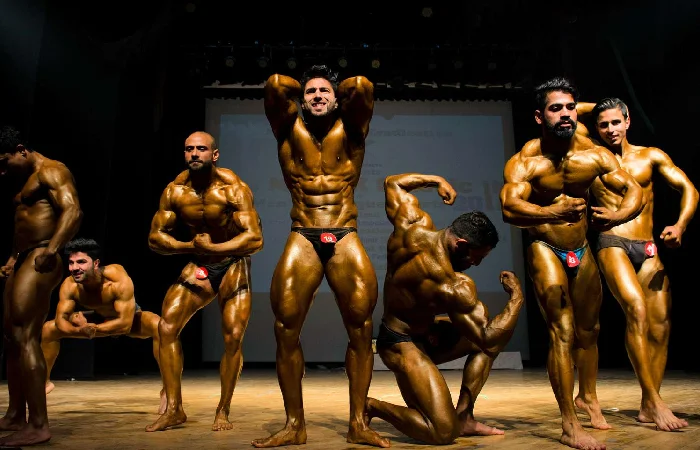
It does vary depending upon your category and which federation you are competing within. Usually there is a variety of bodybuilding poses that you can choose between such as;
- Front double biceps
- Front lat spread
- Side chest
- Side triceps
- Rear double biceps
- Rear lat spread
- Abdominals and thighs
- Most muscular
For other divisions these posing requirements may be different and some may not be taken.
Front Double Biceps
Competitor is standing with their back to judges facing the audience with their arms flexing showing the front double biceps of the competitors physique. This pose is used to show-
- Biceps
- Shoulders
- Chest
- Abdominals
- Quadriceps
Front Lat Spread
The purpose of the front lat spread is to display the width of the back while maintaining a good front-facing presentation.
Side Chest
The side chest helps the judges view things such as the chest, shoulders,arms and legs from the side perspective.
Side Triceps
This side pose allows the judge to analyze the triceps, as well as the side profile of the physique.
Rear Double Biceps
The competitor turns their back to the judges and bends both arms at the elbows, allowing them to display their arms, shoulders, back and hamstrings.
Rear Lat Spread
The purpose of the rear lat spread pose is to display back width and rear-body mass.
Abdominals and Thighs
This pose displays the contestants abs and quads.
Most Muscular
The most muscular pose is used when asked, in order to display mass on the contestant, when facing the judges.
Note: The pictures above may be for classic bodybuilding and do vary among other divisions.
Competitors can also refer to the NPC Worldwide for information on posing, competition divisions, and bodybuilding rules.
Bodybuilding Posing Routine
A bodybuilding posing routine is a series of poses and transitions that a bodybuilding competitor may put together. It might include:
- Starting position
- Mandatory poses
- Transitions
- Individual poses
- Final position
In a competition certain points will be asked, for example how long their routine will be or further instructions to do with stage directions.
There must be enough practice so that the person doesn’t have to think about the actions which are next.
How to Practice Bodybuilding Poses
If you’ve learned what bodybuilding poses to practice at an early stage, there will be less difficulties in how to practice posing.
Practice the must poses
Instead of designing an extravagant posing routine, the only bodybuilding poses you will need for each of your division are the posing which show up for that part. They should be practiced:
- Foot positioning
- Hand positioning
- Posture
- Muscle contraction
- Facial expression
- Breathing
- Use a mirror
Use full-length mirror to see if you are positioned correctly.
But don’t totally rely on the mirror – it’s not backstage on stage with you!
Video yourself
Recording yourself with the video camera may uncover certain problems that are not obvious while striking a pose.
Play back:
- Transitions
- Posture
- Arm position
- Leg position
- Timing
- Consistency
- Practice consistently
It can sometimes be easier to schedule shorter, more frequent practicing than a few longer sessions.
Bodybuilding Stage Presentation
Stage presentation is not only about posing and holding positions. You should also consider:
- Walking onto the stage
- Standing naturally
- Turning smoothly
- Maintaining posture
- Looking towards the judges
- Controlling facial expressions
- Transitioning between poses
Being confident must stem from training, not over-acting. The competitor that is extremely familiar with their own program is often able to devote more time and thought to their presentation.
Tips for Novice Bodybuilding Posing
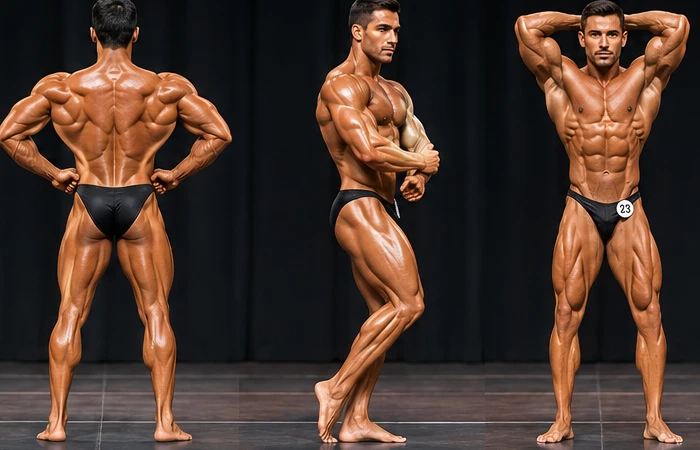
1. Knowing your division rules: The most important thing to do in regards to poses is not to imitate other categories poses, unless the posing situation specifically warrants that.
2. Slow transition work: When you pose, make the transitions deliberate. Don’t be in a hurry to make a new pose.
3. Work both sides of your poses: Some posing calls require you to do specific posing called with one direction or another. Know the specific requirements for your competition posing event.
4. Leg posing! Beginners will put tons of work into upper posing, and simply letting there leg be as it may, the legs too need lots of attention!
5. You must breathe: Not holding your breath will increase presentation and your ability to be comfortable during posing.
6. Stage practice with appropriate presentation: practice with extreme lighting, practice in presentation wear appropriate to the particular type of competition you are in (appropriate footwear, swimsuits, etc.).
7. Receive feedback: A professional posing coach or seasoned professional posing competitor, who knows posing better than themselves, may see simple position challenges you don’t notice yourself.
Posing practice workflow
A short posing practice may look something like this:
warm up, practice individual poses, hold poses momentarily, practice transitions between poses, run through full routine, film and analyse, iron out any flaws, and run the entire routine again and again, when contest approaches then working on your entire routine on stage is important instead of only on individual poses.
When practice for posing and How long to practice posing?
There are no certain requirements. For the beginners you may start with shorter sessions such as 10-15 mins a few times a week, then extend to hours and hours once you get closer to the competition day. The point is not to pose until forever. But is practice more on posing and consistency? As you master the routines then you may pose longer sets. You can experience how exhausting it is to stand at the competition.
Mistakes in posing
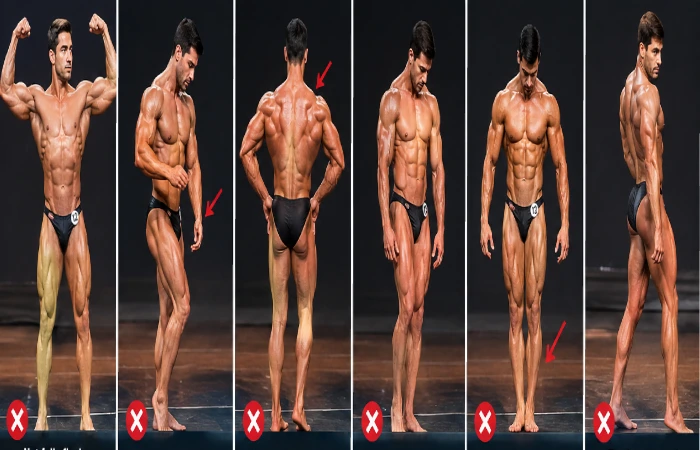
To “late” study the pose-material
It creates more pressure than necessary if a competitor takes on learning the 7 poses in the last week.
To over-pump the poses
Although the pose must express most power it’s not a presenting of the best shape. Extreme pumping up usually gives you that the pose is “painful”.
To be poor in transitional exercises.
This means; a competitor could be the master of every single exercise, but appears to be unsteady and insecure going from one to the other.
Bad body- posture
If your body doesn’t support posture so this will look poor.
No interest toward’s own expression.
This could also lead to the impression of painful posing. So, be concentrated toward’s you.
Imitating professionals
It is more or less understandable, but beginners require a presentation they are able to practice. Professionals have built their experiences for a longer term of time and they practice their own presentation skills.
Posing and various competition types
Requirements vary, often widely on posing.
| Division | General presentation emphasis |
| Men’s Bodybuilding | Mandatory bodybuilding poses and muscular development |
| Classic Physique | Classic posing, proportions and overall aesthetics |
| Men’s Physique | Front and back presentation with division-specific requirements |
| Women’s Bodybuilding | Muscular development, symmetry and bodybuilding poses |
| Women’s Physique | Muscularity, proportion and presentation |
| Figure | Symmetry, proportion and controlled presentation |
| Bikini | Shape, balance, presentation and stage presence |
These are guidelines only. In all events, please follow the rule book of that competition in use.
Realistic goals when competing for the first time
While good posing can mask muscle shortcomings and increase the display of muscle developed, a well conditioned individual that poses badly will have more trouble showing what they have.
Competing may also come as a bit of a surprise after having practiced all of your posing in your own bedroom. Lights, other competitors and a judges, and stage could certainly be the cause of your pre show jitters. That’s ok and normal. The goal is to be in a comfortable routine enough to execute those poses.
FAQs
How do I get a posing guide for a bodybuilding competition?
A bodybuilding competition posing guide shows and teaches the poses, moves, and showmanship necessary to display your body in a judging competition.
How many prescribed bodybuilding poses are there?
This is dependent on division and federations. In traditional bodybuilding common poses in front, side and rear take place and this varies for other divisions.
How often should I practice the poses for bodybuilding?
When training as a novice, several sessions of short pose durations many times throughout the week may be practiced. As a competition approaches training should be implemented more frequently.
Will posing raise my competition placings?
Proper posing will allow the judges to get a better feel for your musculature but will not be able to compensate for lack of size, symmetry or conditioning.
How soon is it too early to start posing practice?
Most suggest earlier practice is better than a couple of weeks out. Earlier practice lets you practice smooth transitions and posing presentation.
Conclusion
Think of your competition posing guide as another part of your preparation for competition. By understanding what poses you need to learn, perfecting your transitions between them, and creating a comfortable stage persona you’ll be more adept at showing off your body.
Figure out what poses are required in your division, drill yourself in those poses and transitions using video or an honest critic, and don’t get ahead of yourself with complexes or mimic another competitor without learning the actual requirements first.
Posing, more than anything else, is a skill and like resistance training, will be better with consistent repetition.
Bodybuilding Competition Hub
Explore the complete guide to bodybuilding competitions, including categories and divisions, competition preparation, diet plans, workout plans, rules and judging criteria, and posing.