
Best Smart Home Gym Equipment
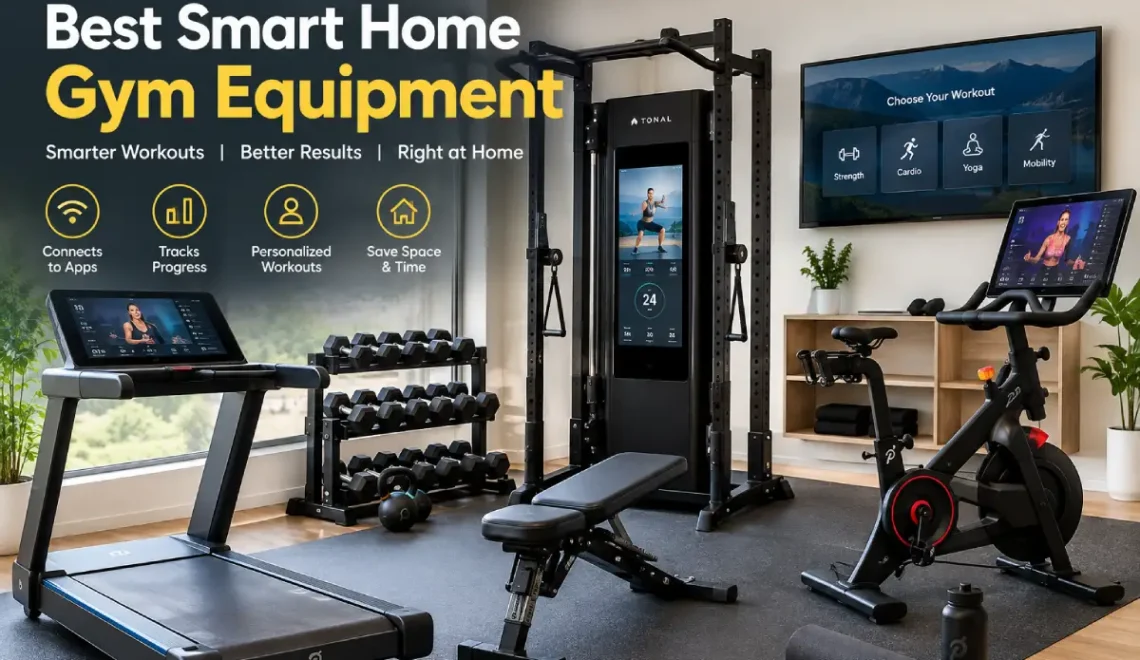
Smart home gym equipment can organize your home-based workout routine, bringing together physical exercise with connected technology. Smart fitness products go beyond offering just resistance or movement, actually taking and showing workout data, and linking to a smartphone; some may even be instructed by an application.
Connected exercise bikes, smart treadmills, and connected weight training equipment, are all available for those wanting more technology to aid their home workout-though more technology is certainly not more effectiveness when it comes to working out. The equipment that suits you best depends on your intended purpose for the machine, available space, financial plan, and how attached you are to the smart fitness features.
This Article Is Part of the Smart Gym Equipment Hub
Explore smart gym equipment, connected fitness technology, features, buying guides, and other useful information in our Smart Gym Equipment Hub.
What is smart home gym equipment?
Smart home gym equipment links the exercise machinery to digital elements such as a sensor, or a Bluetooth/Wifi function to the gym hardware, or a app, or a performance-monitoring display/tracking. Smart home gym equipment can assist a user’s fitness tracking, allow participation in follow-along workouts, or enable specific tracking statistics to be followed.
What is smart home gym equipment?
Smart gym equipment is designed to gather, process or report data about your exercise. Product features can include:
- Workout tracking
- Digital resistance control
- Repetition counting
- Heart-rate integration
- Bluetooth connectivity
- Wi-Fi connectivity
- Mobile applications
- Interactive workout classes
- Performance dashboards
- Training history
For instance, a smart treadmill might automatically record your speed, distance and duration, or a smart strength machine could monitor how much weight you have lifted. The difference, importantly, is the functionality; a smart device shouldn’t just be complicated, it should actually be practical.
Smart Home Gym Equipment Categories to Consider
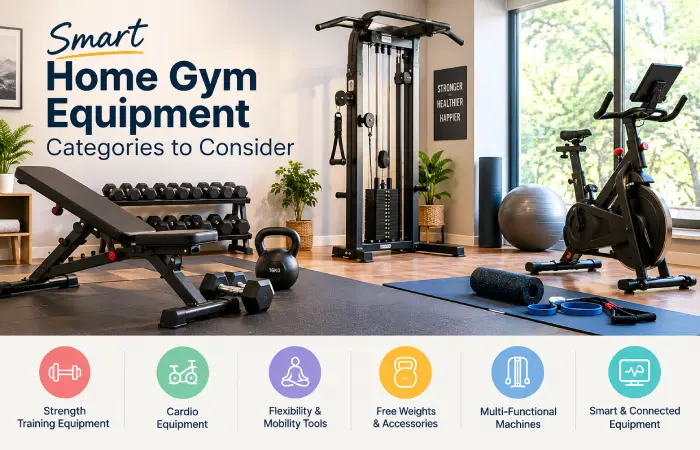
Not one single device is ideal for all homes, and types of equipment differ considerably and offer distinct benefit.
Smart Exercise Bikes
One of the earliest forms of smart fitness equipment available, connected exercise bikes integrate training with technology.
Users can monitor metrics like: Speed or cadence Workout time Distance Resistance Heart rate Estimated calories burned
Some systems also incorporate instructor-led classes or workout plans.
Best For:Indoor cycling enthusiasts who value structured or group workouts.
Smart Treadmills
These devices couple traditional walking or running equipment with digital capabilities. Features offered can range depending on the model, from integrated programs and performance metrics to remotely controlled incline and mobile application connections.
Before buying a smart treadmill, remember they take up significant room and research their dimensions when in use and whether they can be folded and stored for your space.
Best For: Walkers and runners who prefer the guided progression and feedback of technology indoors.
Smart Strength Equipment
Connected strength apparatus generally consists of digital controls or sensors to adjust electronically controlled resistance and some offer guided exercises or count repetitions for you.
Models can be particularly appealing for people who are new to resistance training and want the use of technology without requiring a room full of traditional weights.
Best For: Individuals interested in technology assistance with their resistance training.
Smart Rowing Machines
An alternative, connected rowing machines enable monitoring of all relevant rowing statistics, such as stroke cadence, distance traveled, and session duration. Additionally, some connected rowing machines integrate with applications offering guided workouts.
Good for the intense workout fan who want a good full body workout but takes up lots of space, similar to large cardio machines like treadmills or smart bikes.
Best For: Fitness buffs seeking an at-home, gym-inspired workout.
Smart home gym equipment uses connected technology, sensors, and digital tracking to help users monitor workouts and personalise their training, with connected fitness solutions such as those offered by EGYM.
What’s happening in your AI training equipment, anyway?
Your fitness gear that is “powered by AI” is actually quite a large market sector, and the term can refer to different ranges of technologies within this niche.
Some equipment might employ a computer algorithm to read and analyze your workout data, thus providing the recommendations on that front. Still, other pieces of gear might simply employ computer vision, sensors, or software on the backend to analyze the movement and provide help in other aspects of your workout or in exercise.
Examples include the application of:
- Automated workout adjustments
- Exercise recommendations
- Performance analysis
- Form feedback
- Personalised training programmes
- Workout progression suggestions
The AI functionality should still not be seen as a substitute for professional coaching. It automatically makes suggestions according to the data known to the system and cannot consider all physical needs and/or training history and situations. Accordingly, the AI functionality may primarily be considered as training aid.
Connected Home Gym Equipment vs Traditional Equipment
| Feature | Connected equipment | Traditional equipment |
| Workout tracking | Usually available | Usually manual |
| App connectivity | Common | Rare |
| Guided workouts | Often available | Usually unavailable |
| Digital resistance | Some products | Manual |
| Internet required | Sometimes | No |
| Subscription | May apply | Usually not |
| Maintenance | Hardware + software | Mainly hardware |
| Initial cost | Often higher | Usually lower |
| Simplicity | Can be more complex | Generally simpler |
Yes, connected apparatus can sometimes offer an enhanced, interactive experience. However, the advantage of “old skool” apparatus often lies in simplicity and the reliance on software.
Are Interactive Workout Machines worth the cost?
It might be beneficial for home workouts to feel more defined, and for that to happen, many homes now have interactive training equipment. A built-in screen will allow your equipment to display a workout for you, to show you how to move during a certain exercise or provide you with current activity information. So if you like instructions more than you like to create each fitness class from scratch, these machines could be what you need.
It’s worth keeping in mind if you actually require interactive elements.
If you already have a workout plan, prefer to work out on your own and don’t require instruction, paying the extra money and subscription charge just for a huge screen may not be much benefit.
Choosing Home Smart Systems for Working Out
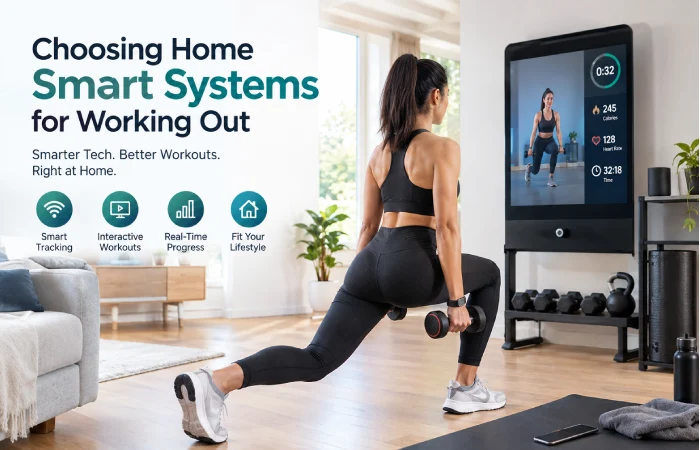
If you are deciding about buying home smart systems for working out you must first follow these simple steps.
1. Decide your training need: your purpose is strength training, cardio work-outs, improving general fitness, losing weight or anything else?
2. Decide what fitness equipment you need: the technique comes at a later stage; at first, think of the exercise you would like to be engaged in.
3. Confirm the type of connectivity: will the fitness machines or accessories operate through wireless technology (Wi-Fi, Bluetooth etc) and what devices are supported by those smart devices or accessories?
4. Confirm their subscription policy: if any, and see what basic use you can enjoy even with a subscription (free of charge).
5. Confirm measurements: smart fitness accessories and fitness machines can often have larger than estimated sizes so please check your available space before you get the equipment.
6. Research the type of support the particular smart system you have chosen has to offer (customer services, replacement parts, updates to its software, manufacturer guarantees etc).
Important Specifications to Compare
| Specification | Why it matters |
| Equipment dimensions | Determines whether it fits your space |
| User weight limit | Important for safe operation |
| Connectivity | Determines how devices and apps communicate |
| Display size | Relevant for interactive workouts |
| Resistance range | Important for strength progression |
| App compatibility | Ensures your preferred device works |
| Subscription cost | Affects long-term ownership cost |
| Warranty | Provides protection against certain faults |
| Power requirements | Important for powered equipment |
| Offline functionality | Determines what works without internet |
The screen size or the number of features is less important-the equipment should be used in the first place
Pros and Cons
Benefits
- Convenient workout tracking
- Interactive training options
- Digital performance history
- Guided exercise sessions
- Potentially more engaging workouts
- Some products can automatically adjust settings
Limitations
- Higher purchase prices are common
- Some features may require subscriptions
- Software can change over time
- Internet or app compatibility may be required
- Electronic components can require maintenance
- Technology does not guarantee better fitness results
When comparing to plain equipment the following disadvantages can be pointed out.
What sort of person is ideal to buy smart gym equipment?
Smart equipment may be suitable for you if
- Enjoy technology and fitness apps
- Like tracking workout data
- Prefer guided training
- Want interactive home workouts
- Have enough space for connected equipment
- Are comfortable paying for optional subscriptions
It may be less suitable if you prefer simple training, have a limited budget or do not want to depend on apps and internet connectivity.
FAQs
Which is the top of the smart home gym equipment?
Which smart home gym equipment is best for you depends on what you want to train. Smart bikes or treadmills are great for connected training, whereas the top of smart resistance training equipment might not fit your plan so well.
Should I buy artificial intelligence supported fitness equipment?
It could be helpful for those who want a certain degree of tracking, recommendations or integrated training without thinking so much about it. It’s more of a supplementary tool.
Is it necessary for smart gym equipment to connect to Wi-Fi?
It is not always needed; some products use Bluetooth or are capable of basic functions without connection, while other functions will utilize a connection to perform.
How much does connected home gym equipment cost?
It is possible it will cost more than the equivalent traditional equipment; there’s extra money for the screen, sensors and the software, in addition to on going subscription costs.
Can smart equipment replace a personal trainer?
Smart equipment is able to instruct, guide and automatically offer recommendations, but it can’t compete with a properly qualified individual when it comes to their judgment and individual evaluation skills.
Final Thoughts
When purchasing a new smart home gym equipment, it must fulfill two conditions – it should have relevant technology and it should offer equipment that can actually be effective for your routine training. Whether smart connected bicycles, treadmills, rowing systems, or strength systems, all have their technology that offers you tracking features, instructed workouts and the option of interactive sessions. However, that is not where the smart home gym equipment purchase should end.
Always do not select based on technology.
Consider comparisons of build quality of the smart home equipment, the dimensions of the equipment, level of resistance, level of connectivity and long term technical support available with purchase and any necessary subscription cost for access to trainer and fitness metrics. Connected home gym equipment could really make for more engaging workouts for a certain type of users and could give you an extra dimension in monitoring your fitness sessions. Some users might benefit more with classical weights, resistant band or basic cardio.
Best Home Gym Equipment Hub
Explore the complete guide to the best home gym equipment, including options for beginners, small spaces, budget-friendly setups, smart equipment, strength training, and all-in-one machines.