
Bodybuilding Competition Rules and Judging Criteria: Complete Guide
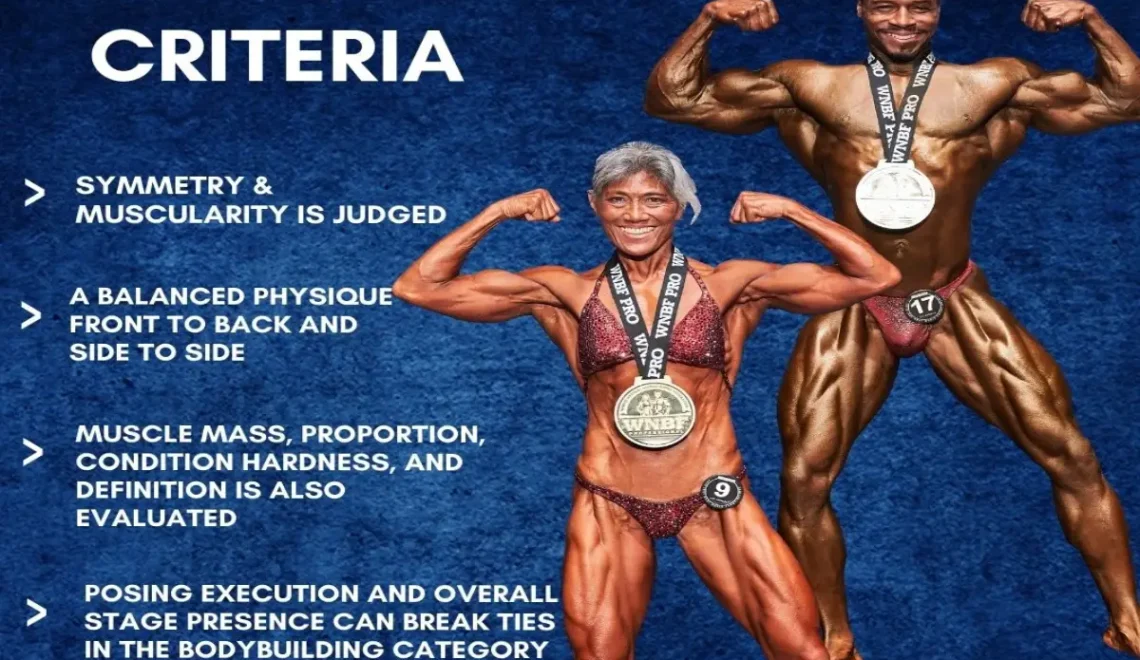
Before approaching the stage it’s vital that competitors have a detailed knowledge of the rules associated with the bodybuilding competition that they are competing in. Training and diet may result in your ideal physique but it’s imperative that competitors are fully aware of the compulsory posing rules as well as those covering judges and scoring. The judging standards can vary among different federations or divisions, therefore the current regulations associated with your particular competition should be checked and understood at all times. Nevertheless, bodybuilding competitions generally involve the same aspects and qualities.
This Article Is Part of the Bodybuilding Competitions Hub
Explore bodybuilding competitions, categories, preparation, diet plans, workout plans, rules, judging criteria, posing guides, and other useful information in our Bodybuilding Competitions Hub.
Bodybuilding Competition Rules-Why Bother?
The rules of competition ensure a standard format for both the competitors and the judges. They dictate what each competitor is required to do onstage, which poses can be performed, how comparisons are carried out, and which actions will result in deductions or disqualification. Knowing the rules also assist the competitor when preparing for the event, for example, an exceptionally muscular physique may lack when competitors’ posing skills,Transitions or on-stage deportment can fail to meet the needs of the category they are in. Registration, categories, weight categories, posing trunks/suits, tanning, music, on- backstage behavior and much more are all outlined by the rules.
Bodybuilding Judging Information
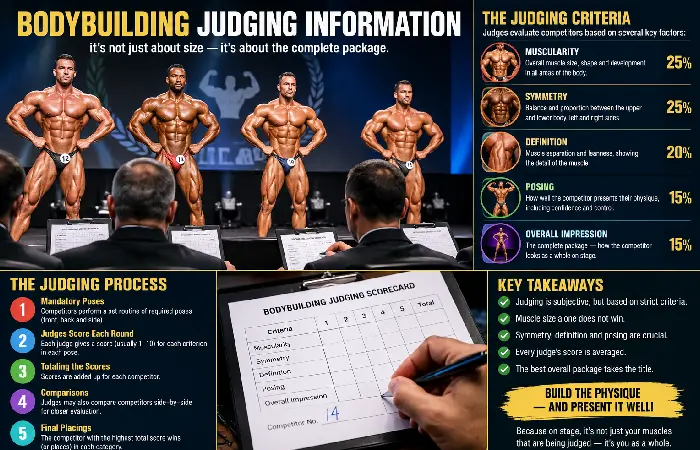
The question is, what is taken into account by bodybuilding judges. Here are the characteristics used to compare the athletes:
Muscularity & Development
Body size and development is significant in bodybuilding. Judges would assess the development of the main muscles in the body and if the competitors frame looks developed overall. It does not automatically mean if a competitor is the largest they will win, this should be assessed against symmetry, proportion and conditioning.
Symmetry
Symmetry indicates how evenly muscles are developed from one side of the body compared to the other side of the body, i.e. One side does not ‘bulge’ over other parts of the body nor are weaknesses obvious where muscles have not been trained. Judges expect a balanced build on stage.
Proportion
Proportion assesses the structure of the human frame. This compares the size of different parts of the body, i.e. Large well-developed upper body must have adequate well-developed legs etc. Proportions help to make the build look more harmonious.
Conditioning
This refers to the display of definition or leanness on stage, depending on the division category judges may be assessing muscle separation, definition and condition displayed on stage. The definition for different categories varies significantly; an athlete who is training to be a short, light contestant should not be aiming for leanness expected from tall or heavyweight competitors.
Posing and Presentation
Posing is essentially allowing the competitor to show their muscles and physiques to the judges from many angles to accentuate strengths and minimised weaknesses. Controlled posing can help judges see development, and good presentation helps create a ‘balanced’ presentation.
How Bodybuilding Competitions Are Judged
There can be multiple stages of judging in a typical bodybuilding competition.
Typically the competitors come out on the stage and then strike a few poses at each of the poses. Next the judges will bring the competitors next to each other for comparison.
Depending on the federation and divisions judges will call the competitors out for one or two comparisons where they are critiqued on an aspect of there physique.
The final judging can vary depending on the specific procedure however typically it’s put so the judges can do there comparisons with the specific criteria of that division.
For official competition rules and judging standards, competitors can refer to the IFBB Pro League for detailed information on judging criteria and contest regulations.
Points system bodybuilding contest
In bodybuilding, judging styles can vary according to the federation. Some organizations allow judging by a scoring system while others allow judging by a placement system where comparatives and the judgement of the judges are taken into account. It may come as a surprise to some readers that judging may not always be done on a similar basis.
For the purposes of judgment the competitor should always be compared against standards of the specific divisions.
One particular trait can, therefore, determine the placement position of a competitor rather than overall physique and presentation.
| Judging Factor | What Judges Generally Consider |
| Muscular development | Overall muscle size and development |
| Symmetry | Balance between left and right sides |
| Proportion | Relationship between different muscle groups |
| Conditioning | Definition, separation and overall condition |
| Posing | Ability to display the physique effectively |
| Presentation | Stage presence, control and overall appearance |
Rules to Remember in a Bodybuilding Contest:
If competing in a contest, always be sure to familiarize yourself with the official rules. Some usual areas are:
- Eligibility requirements
- Age and category restrictions
- Registration and weigh-in procedures
- Division-specific posing requirements
- Approved competition attire
- Tanning and appearance requirements
- Music requirements where applicable
- Backstage behaviour
- Stage instructions
- Drug-testing policies where applicable
- Check-in and competition schedules
Not all rules apply to each and every event. Adhere to all instructions by specific federation & organiser.
Disqualification Rules for Bodybuilding
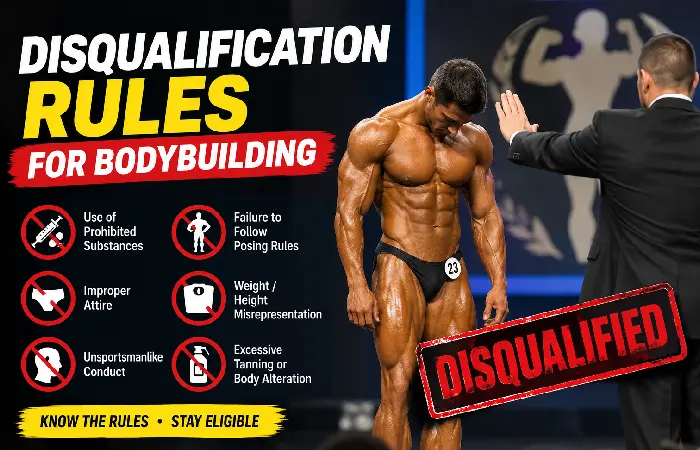
Disqualifications in bodybuilding change a lot between competitions. The athlete is disqualified from the show or given penalties as a result of not fulfilling critical requirements for the competition. Possible grounds are many.
Eligibility standards, missed check ins, violation of fair play, rules specific to the federation’s code of ethics, or a violation of anti doping regulations where used.
How one poses can even affect competitions: listen to the contest managers’ prompts and try not to do anything distracting that impedes upon any of the opponents or the show itself. Since all rules are not the same, you want to be able to access a copy of the rulebook itself instead of taking advice from prior competitions.
Simplified Competition Rules Checklist
Always follow before entering your first competition:
1. Ensure you are eligible for your division.
2. Read the federations current rulebook.
3. Understand mandatory poses for the division.
4. Verify registration requirements, weigh-ins and check-ins.
5. Double check uniform, tanning and music stipulations.
6. Ensure you can remember all poses and instructions.
7. Research show timing before arriving at the competition venue.
8. Listen to instructions from officials at the event.
Using this protocol can help ensure that you will not make obvious mistakes and that you will be confident and know exactly what is expected of you to display your physical structure.
Rules and Judging Criteria by Division
Not all bodybuilding contests judge the categories the same. Men’s Bodybuilding generally puts a lot of focus on muscle development, condition, symmetry and mandatory poses. Classic Physique puts more emphasis on the classic proportions and presentation, while Men’s Physique has their ownsetof judging rules and stage presentation guidelines. Similar, Women’s Bodybuilding, Women’s Physique, Figure and Bikini have their own guidelines that are looking for muscle and shapes differently.
For this reason, when determining the rules of the bodybuilding competition that you intend on entering, you must first know the division that you plan on competing in.
Common Errors that first time competitor might commit.
New competitor tends to only emphasize on the workout and nutrition while forgetting all about the rules for competition itself. Some of the common errors, learning how to poses way too late, do not see rules for your federation, wrong check-in time. It’s common that each show has their own differences in rules although it may not be such a big difference, it can sometimes affect you much.
You should prepare based on division rather than the broad concept of bodybuilding, different divisions may have different criteria set for competitors so prepare accordingly to the set criteria from the official division.
FAQs
What is the fundamental criteria for bodybuilding contest rules?
Common guidelines relate to entry requirements, divisions, presenting (posing), outfits required, competition sign-in processes, and stage presentations. Specific standards change across different federations and competitions.
Which is the fundamental bodybuilding contest scoring requirements?
Judges observe the bodybuilders’ development, proportion and balance, muscle definition, posing as well as the entire aesthetic of presentation-though relative values differ among divisions.
So what’s the process with how bodybuilding competitions are judged?
Each federation has a different grading system but as a general guide some are number systems but some judging categories are on comparison and are placed first, second etc. Refer to the rules and regs of the event you are participating in.
Is it possible to be disqualified?
Yes definitely. Many events will penalize you and in more extreme circumstances will disqualify. Again rules again will reflect the organisation’s requirements for bodybuilding disqualification.
Are the rules to bodybuilding the same for every division?
No. Each division requires you meet new judging standards, posing requirements, and presenting to the judges. Be sure you know the rules for your particular division.
Conclusion
Besides preparing both your workout and diet for a bodybuilding competition, you should also learn the rules of competition. Judges usually look for development, symmetry, proportion, conditioning and presentation, although specific standards vary based upon division and federation. You should familiarize yourself with the rulesbook and correct poses required. Most importantly, make sure you know of every registration deadline and presentation deadline well in advance.
Bodybuilding Competition Hub
Explore the complete guide to bodybuilding competitions, including categories and divisions, competition preparation, diet plans, workout plans, rules and judging criteria, and posing.