
Bodybuilding Competition Diet Plan: Complete Contest Prep Guide

A bodybuilding diet plan should be about more than just dieting on extremely few calories. Competitors often plan contest prep diets on a gradual reduction in body fat with minimal muscle loss and best possible training recovery for a months-long process. There isn’t one diet that’s better for competition than any other; the competition dieting process needs accommodate various competitors sizes, training, and beginning physical makeup, not to mention personal flavor tastes and desired category in which to compete.
The following section guides you through the core structure of the diet you’d adhere to if you were looking to compete while steering clear from overly stringent dieting techniques.
Note: Preparation diets for competitive bodybuilders can lead to excessive calorie deprivation and reduced body fat extremely and drastically. Dehydration as well as an intake that has been altered may result in potentially life- threatening results so use the accompanying advice as a general guide only and always consult a physician or sports nutrition professional when partaking in contest dieting practices.
This Article Is Part of the Bodybuilding Competitions Hub
Explore bodybuilding competitions, categories, preparation, diet plans, workout plans, rules, judging criteria, posing guides, and other useful information in our Bodybuilding Competitions Hub.
What Is a bodybuilding contest prep diet?

A bodybuilding contest prep diet plan is an approach to consuming foods when dieting before a physique event.
It typically aims to:
- Reduce body fat gradually
- Preserve lean muscle
- Support resistance training
- Provide adequate nutrients
- Manage hunger and fatigue
- Prepare the competitor for their chosen division
Don’t use another person’s plan but rather adjust diet on based on performance over time.
Calories and Cutting Fat
There needs to be a calorie deficit for bodybuilding cutting diet, meaning consume lesser than that you expand. Larger caloric deficit does not essentially mean greater fat loss. Over-restraining the body may bring about higher
- Hunger
- Fatigue
- Poor training performance
- Recovery problems
- Difficulty maintaining muscle
Moderate lifestyle can also be quite effective, and it’s definitely one that’s more sustainable to implement for several weeks/months.
I like having progress reflected in more ways than just the numbers on the scale.
Muscle Retaining Protein
It’s especially crucial when dieting: Good protein sources:
- Chicken
- Fish
- Eggs
- Lean meat
- Greek yoghurt
- Cottage cheese
- Milk
- Tofu
- Lentils
- Beans
In short Protein needs vary per individual and diet! It is possible to find appropriate goals from a registered dietitian, based on an individual’s weight, training and caloric needs.
Training Carbs.
Resistance training requires carbs for energy. Typical selection can include:
- Rice
- Oats
- Potatoes
- Whole-grain bread
- Pasta
- Fruit
- Other grains
This is not a must that all competitions that carb diet is no needed with bodybuilding. Most contests will find that with controlled carbohydrates around their training, hard workouts could become sustainable.
Dietary Fats
A cutting bodybuilding diet doesn’t mean the exclusion of fat sources. Some examples include:
- Nuts
- Seeds
- Olive oil
- Avocado
- Eggs
- Oily fish
The quantity should fit into your total calories, and in keeping with all macronutrient recommendations.
All in all a balanced approach is better than eliminating all of one macro if you don’t have a solid reason.
Pre-competition Bodybuilding Diet
This simple pre-competition bodybuilding diet plan could include:
| Meal | Example |
| Breakfast | Oats, eggs and fruit |
| Lunch | Chicken, rice and vegetables |
| Pre-workout | Yoghurt and fruit |
| Post-workout | Lean protein with rice or potatoes |
| Dinner | Fish, potatoes and vegetables |
| Snack | Greek yoghurt or another protein-rich food |
This is an example and not a unique plan for the competitor
Amounts of foods and the total calories must be tailored for the individual’s requirements.
For reliable guidance on sports nutrition and dietary planning, the International Society of Sports Nutrition (ISSN) provides evidence-based resources for athletes and fitness professionals.
Meal Scheduling In Preparation
Meal scheduling can be beneficial for routine, satiety and convenience when working out. While one competitor might have three big meals on competition day, four or five smaller meals might suit another better. An Example Training Day Meal Schedule: 1.
Breakfast.
- Lunch.
- Pre-Work Out
- Post-Workout Meal.
- Dinner.
You don’t need to eat minute for minute, each day, though.
Total calories/macro distribution are normally far more important than a complicated timetable!
Before the competition what can I eat?
Usually on pre-competition days it is beneficial to start becoming more consistent. The competitor may just decide to take everything in that they currently find works for them. Here are some general principles of proper prep.
- Keep meals predictable
- Avoid unnecessary food experiments
- Maintain appropriate hydration
- Follow the established nutrition plan
- Monitor how foods affect digestion
Digestive upset: When you go on stage the last thing you may want is an upset digestive system.
Peak-Week Diet Plan
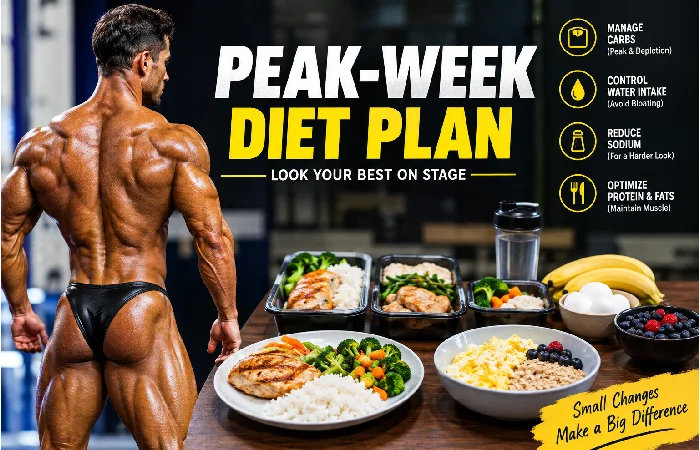
The peak week diet is basically the nutrition practices that competitors focus on within their last days leading up to the competition. Some individuals use a diet focused on controlling the amount of water, sodium or even carb manipulation in order to achieve desired looking body on stage, yet often aggressive manipulation isn’t helpful, an extremely restricting water intake could prove to be dehydration, an improper manipulation of electrolytes could prove quite detrimental, not all competitions need aggressive final week practices, beginners trying peak-week should avoid copying what you see on social media or from other competitors, final week adjustments must be approved through a competent professional.
Water during training camps and competition-prep:
Water is vitally important to bodily function and athletic performance.
During the last few days in the lead-up to a competition, an unnecessary sense of panic about drinking water is sometimes developed. Deliberately fluid restriction without specialist advice is not prudent in certain situations. Fluid balance is a health concern, not primarily an appearance-altering technique.
Supplements when on contest prep
Supplements can supplement and ease dieting, however they’re not essential for all and contest participants may use many various products, including:
- Protein powder
- Creatine
- Caffeine
- Basic vitamin or mineral supplements when appropriate
Competitive athletes must know supplements may be tainted or mislabeled.
Athletes who will undergo doping tests should investigate the competition’s rules and think about using products certified for doping tests.
Food Faults
- Extremely Cutting Calories Extreme calorie restriction can lead to loss of performance and recovery time when training. \
- Dramatically Cutting Carbs Withdrawing Carbs too quickly will hinder aggressive strength workouts.
- Mimicking Another Athlete Each person has vastly different needs for calories and macros.
- Rotating Foods Too Rapidly While you need to track success, switching too frequently makes it tough.
- Poor Hydration If you’re water restricting, it’s no laughing matter.
- Weighting Your Diet on Supplements There’s only so much you can achieve by supplementing over a shoddy base diet.
Competition Diet – Realistic Expectations
A competition diet is not your typical weight loss regimen. The body’s stage of fitness can necessitate that individuals become extremely lean, in a state that not only is difficult to continue but also is not necessary to be healthy. Competition weight will also stall at points during competition readiness.
Fluctuation will happen as hydration, food intake, and other factors influence body weight and should be reviewed on a more long-term basis as opposed to daily fluctuation.
Planning for a methodical and organized preparation opposed to the fastest possible rate of weight loss should be the primary objective of any competition diet.
FAQs
What makes up a bodybuilding contest diet plan?
What must an eating regimen plan for bodybuilding competitions consist of? It ought to supply suitable calories, protein, carbohydrates, fat, micronutrients, water and also it must help the competitor achieve their objectives for both training and the show.
Just how lengthy ought to the contest bodybuilding cutting diet last?
There is no correct answer; it differs from individual to individual, the amount of lean muscle mass one has to shed, the physique standards, http://www. BodyBuildingGuide. Com The Speed In Which the Individual Gets In shape as well as When the contest is.
Am I allowed carbs during bodybuilding show preparation?
Yes. Carbs can help fuel your training sessions and will not guarantee that fat will be accumulated as long as your overall calorie intake is balanced.
What should I do on the week before my show?
A ‘peak week’ diet is not something that exists across the board. You should eat what is individualised for you at the end of your prep week and it should not involve dehydrating excessively or playing with electrolytes in the same way.
Is the bodybuilding dieting style healthy?
Bodybuilding diets require such severe restriction and have such low body fat that should not be accepted as normal dieting for health. Sensible nourishment and professional support is key preparation.
Conclusion
The appropriate bodybuilding competition diet and nutrition plan aims for improvement not deprivation of muscle, maintaining an adequately sustained caloric state and nutrition. Protein, Carbohydrates, Fats and fluid intake along with continued adherence all play important roles in bodybuilding competition preparation.
Especially for the first time competitor less is definitely more-the simple fact that one can consistently follow the plan is much more rewarding that attempting to cycle variety in or mimicking an other competitor’s program. Plan for an appropriate amount of time, progress accordingly and implement slight, subtle and well informed changes if necessary.
Finally keep stage condition an “exceptional” condition rather than something that anyone has to have to consider themselves healthy.
Bodybuilding Competition Hub
Explore the complete guide to bodybuilding competitions, including categories and divisions, competition preparation, diet plans, workout plans, rules and judging criteria, and posing.