
How to Prepare for a Bodybuilding Competition: Complete Guide
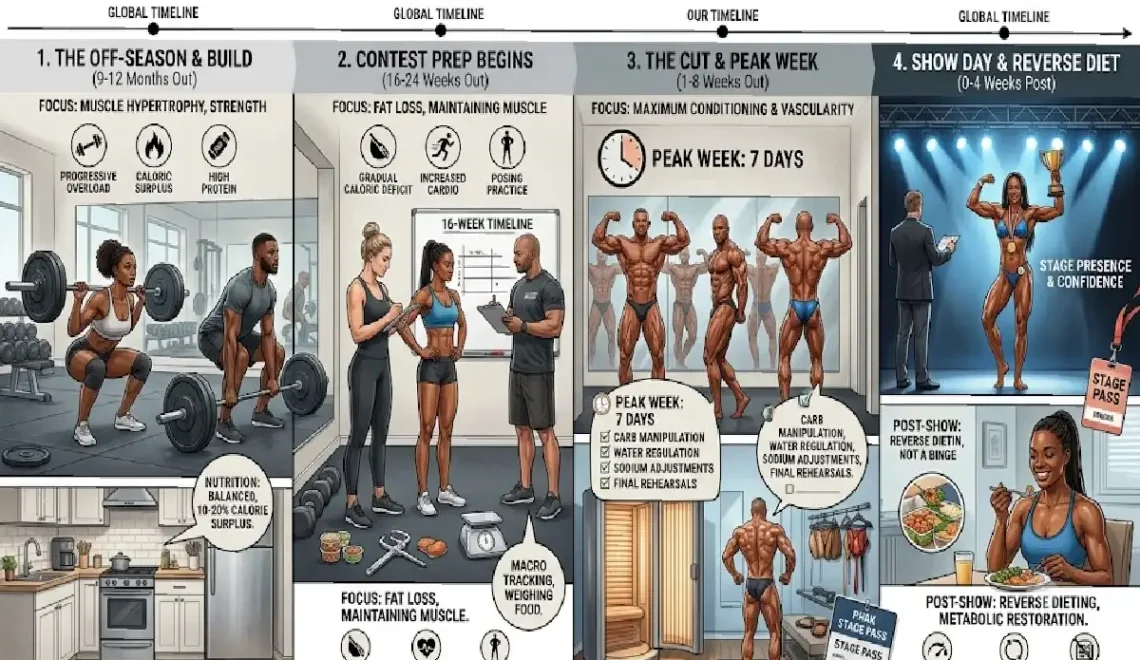
Preparation for Your Competition Knowing how to prep for a bodybuilding show consists of more than just pumping more sets in the gym and restricting calories. A well-rounded prepping process includes resistance training, nutrition, cardio, rest and posing, as well as a day of prep to put it all together. If you’re thinking about stepping on stage for the first time, prepping for a bodybuilding competition can seem a little daunting.
Having an idea of what your competition prep entails and at what point to do things can make it much more realistic.
Here’s a overview of the 5 key phases of a bodybuilding contest prep and what a first-time competitor should realistically expect to endure. Disclaimer : Competition prep can involve long-term dieting, and making extreme changes to your body. Dieting extremes, dehydration and overtraining pose health risks. You may wish to consult qualified medical professionals or fitness trainers to get individual assistance, if it’s necessary for your prep.
This Article Is Part of the Bodybuilding Competitions Hub
Explore bodybuilding competitions, categories, preparation, diet plans, workout plans, rules, judging criteria, posing guides, and other useful information in our Bodybuilding Competitions Hub.
How to get in shape for a bodybuilding competition
There are many steps that your prep plan will incorporate, but in general terms it will be divided into the following areas:
- Assess your starting point
- Choose a competition and division
- Establish a realistic timeline
- Structure training and nutrition
- Practise posing
- Monitor progress
- Prepare for peak week
- Organise competition day
The actual method varies based on individual athletes. An athlete nearing their stage condition will utilize a slightly different method to an athlete requiring the reduction of significant body fat.
1. Decide on Competition and Division
Before you can begin with serious bodybuilding training, you need to work out what competitions and category to compete in.
Check:
- Competition date
- Federation rules
- Available divisions
- Eligibility requirements
- Weight or height restrictions
- Posing requirements
- Registration deadlines
- Drug-testing policies where applicable
The category that you are participating in makes an impact; these categories have varying standards regarding muscularity, conditioning, and posing.
Research official competition guidelines rather than following suggestions from social media.
2. Make your Preparation Timeline realistic
Your bodybuilding contest preparation timeline must be that long you should give time for the gradual changes. There is no magical timeline, since that works perfectly. Some months before your event
Focus on:
- Building or maintaining muscle
- Establishing consistent training
- Improving nutrition habits
- Developing cardiovascular fitness
- Learning required poses
- Improving sleep and recovery
In the major preparation period: As the occasion approaches can be changed depending on how much progress you are making activity level. Things that can be monitored useful is:
- Body-weight trends
- Training performance
- Measurements
- Progress photographs
- Energy levels
- Recovery
Do not overhaul your diet over a single day. The weight loss can fluctuate.
3. Adhere To A Structured Training plan
The backbone of your physique prep training regimen is resistance training. Your routine must seek to sustain muscle as it will contribute for your overall contest objective. Whether working out depends on you, this could include:
- Upper/lower splits
- Push/pull/legs
- Full-body programmes
- Body-part splits
There are no programmes to assure better outcomes on any competition.
Focus on:
- Good technique
- Appropriate training volume
- Progressive overload where possible
- Recovery
- Managing fatigue
However, when calories are lowered, recovery is likely harder. Adding more training is not necessarily the answer.
4. Create Your Contest Diet
Nutrition is essential in contest bodybuilding preparation and usually includes good amounts of:
- Protein
- Carbohydrates
- Dietary fats
- Vegetables
- Fruit
- Fluids
Goal During Cutting: Ideally to lose body fat and lose as little lean tissue and training performance as possible.
Avoid extreme dieting,Very aggressive calorie restriction may cause:
- Reduced training performance
- Increased fatigue
- Poor recovery
- Hunger
- Difficulty concentrating
- Loss of lean tissue
Lose weight gradually When it’s preferable, you should lose the weight in installments as opposed to in leaps and bounds right before a competition.
5. Don’t Skip Posing Practice
For most physique competitions, it’s necessary to practice your posing poses. Competitors cannot just have a ripped body; they have to show the judges this body properly in various stances.
Practise:
- Mandatory poses
- Transitions
- Quarter turns where applicable
- Stage walking
- Individual posing routines
- Presentation
Practice soon rather than too close to the end.
Try filming yourself practicing as this may pick up posture and positioning errors not evident whilst posing.
6. Cardio-activity & recovery
To increase energy expenditure and cardiovascular activity training Cardio is useful.
- Walking
- Cycling
- Jogging
- Cross-training
How much: Depends on how the individual responds. Training fatigue and the plan can then be adjusted based on whether performance, mood and recovery decrease. As for sleep, rest continues to be the first priority. It’s desirable to sleep relatively undisturbed and prevent chronic training fatigue.
For additional guidance on preparing for bodybuilding competitions, athletes can explore the American College of Sports Medicine (ACSM) resources on exercise training, nutrition, and sports performance.
Bodybuilding Peak Week

The period between the competitor’s’ training and entering the bodybuilding stage, commonly known as the final week is referred to as a bodybuilding peak week and can attract more attention. It is perceived that, some competitor may alter a physical appearance by;
- Carbohydrate intake
- Water intake
- Sodium intake
- Training
- Food choices
But, it’s not always best to push your limits to extremes. Extreme methods of dehyration/electrolyte loading can have negative effects and what works well for one competitor may actually be harmful to another. For the first competition, do not try the “miracle” dehydration methods immediately before the show; the focus should be on arriving ready for a show, not to jeopardize yourself the last few days.
Competition Day Checklist
A competition day checklist helps avoid little things from become overwhelming logistical nightmares.
Documents
- Registration confirmation
- Identification
- Federation membership information if required
- Event schedule
Competition items
- Posing attire
- Stage shoes where required
- Resistance bands if permitted
- Towels
- Grooming supplies
- Food and drinks
- Required music for routines
Personal preparation
- Arrive early
- Follow the organiser’s schedule
- Allow enough time for registration
- Keep food and fluids organised
- Avoid unnecessary last-minute changes
Make it simpler the next morning by packing everything that you can the night before.
First bodybuilding show – what to expect
The first bodybuilding show isn’t usually all it’s pumped up to be.
You may experience:
- Long periods of waiting
- Multiple posing sessions
- Nerves before going on stage
- Changes to the published schedule
- Comparisons with other competitors
- Unexpected feedback from judges
Treat the initial competition as a learning opportunity. The score you receive is just one aspect of the experience. You have the ability to learn from the performance, from the level of your training, from the aesthetic qualities of your pose, and from the improvements that could be made before the next competition.
Popular preparation mistakes:
- Starting too late, will also promote rapid crashes
- Replication, calorie intake, cardio regimen and peak-week approach used by another competitor is probably wrong for you.
- Not enough posing practice, and will not have enough time to perfect this in days before the competition.
- Juggling variables together so cannot know what is the driving force behind the progress.
- Focusing solely on weight. The number on the scale is information and not a single measure.
Preparing for a Bodybuilding Show Realistic Expectations
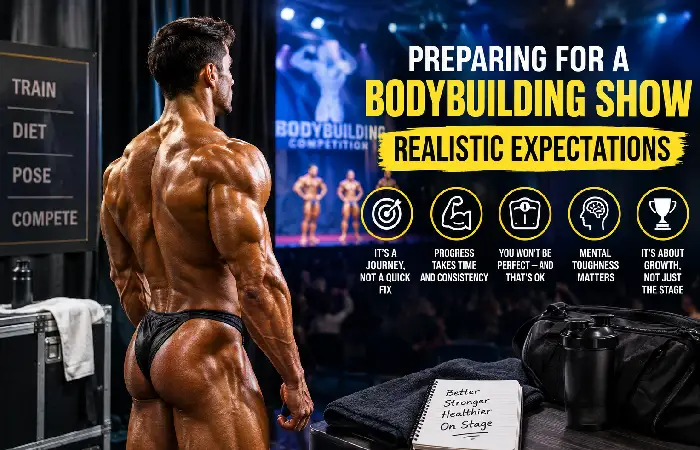
Pushing yourself to be ready for a competition takes a lot and doesn’t always go as smoothly as you might want it to. Some weeks it seems there’s no progress even with following your schedule and on other weeks things will change quickly do to the natural ebb and flow of water in our bodies and our diet. In the final appearance we may factor in all kinds of things.
- Genetics
- Muscle development
- Starting body composition
- Preparation length
- Division requirements
- Posing ability
- Competition field
There is no proven winning formula. Preparation one in a preparation process might be as simple as that you get to the stage and get experience and an idea of what you want in order to improve.
FAQs
How to be ready for a bodybuilding competition?
There is not a right amount of time, this might take many months or more from you based on your initial shape, experience and competition level/category goals
How to prepare a bodybuilding competition for the first time?
Select appropriate division, event, prepare a feasible timeframe for your prep – focusing on training, food/nutrition, posing, rests & logistics
Peak week in bodybuilding What’s peak week in bodybuilding?
Peak week is the final phase of competition preparations where the body is tweaked physically through nutrition, exercise and presentation for posing. Use extreme levels of water and/or electrolyte manipulation with care.
Should I be practicing posing?
Yes, posing is a crucial aspect of most physiques and must be a regular part of your competition preparation.
Should my cardio increase with the approaching competition?
Not necessarily. Cardio should be increased based on individual progression, recovery and overall preparation plan, not just because the competition is closer.
Conclusion
Preparing for a bodybuilding competition begins with solid planning. This entails selecting the bodybuilding division, dedicating sufficient time to your preparation, implementing both a strong diet and training regimen, practicing posing routines and watching each development within this phase.
The final weeks should not be a mad scramble to fix things. A good preparation will eliminate surprises the day of.
In your first bodybuilding competition you should aim not to “place” more than you learn. Competitive bodybuilding is something achieved and attained over a lifetime so every contest will ultimately serve as knowledge to perfect your diet, training and posing regime.
Bodybuilding Competition Hub
Explore the complete guide to bodybuilding competitions, including categories and divisions, competition preparation, diet plans, workout plans, rules and judging criteria, and posing.