
Cardio and Strength Training Schedule

For a variety of training goals that can promote healthy aging, the development of lean muscle mass, and the maintenance of body fat stores, a well-balanced cardio and strength-training program can greatly optimize your training outcomes. Cardiovascular training, such as sprinting on the treadmill, will get your heart in excellent shape as well as build up your endurance and assist you get the biggest calorie burn of your life.
Strength training is going to help to construct strong muscle tissues in your body as well as add some muscle to your body’s density. In order for you to take advantage of both kinds of workouts, you can include cardio and weight lifting in your exercise program. This can ensure that your body recovers properly between sets and also during workouts.
When establishing a balanced weekly routine, whether you’re brand new to exercise or just getting back into a consistent exercise routine.
This Article Is Part of the Fitness Tips Hub
Discover proven fitness strategies, workout plans, strength training techniques, cardio exercises, recovery tips, and healthy lifestyle advice in our Fitness Tips Hub.
What Is a Cardio and Strength Training Schedule?
A cardio and strength training schedule refers to a weekly routine that incorporates resistance training with cardio sessions. Ideally, the weekly workout schedule will have a combination of activities to promote muscular development, endurance, flexibility, and recuperation time. There will be enough of every activity to balance out your routine for an effective workout session rather than just randomly jumping around.
The Benefits of Doing Cardio and Strength Training at the Same Time

Cardiovascular and resistance workouts each offer separate health benefits. Here’s why coupling them together can lead to even greater rewards.
Better Functional Fitness.
The ability of your body to perform common movements efficiently refers to functional fitness.
Doing cardio boosts cardiovascular and muscular endurance, while the strength training makes for better overall function.
More Efficient Fat Burn.
When trying to burn calories without burning lean muscle mass—arguably the most difficult aspect of dieting.
Both weightlifting and cardio will help you with a healthy boost to your calorie-burning abilities as you shed pounds.
Longer life span.
Longer Lifespan Through Exercise. Cardiovascular fitness and powerful muscles can extend lifespan and also enhance bone and mobility strength.
Combine strength training along with cardiovascular fitness for the body to perform better for decades.
Avoid the plateaus.
Changing exercise regimens in a workout that balances cardiovascular and resistance exercises is key to combating this natural adaptive response of the body.
The truth is, when you stick with the same workout routine or a set of workouts day in and day out, your body begins to consider them not a challenge at all, and as a result, you stop getting results.
According to the American Heart Association, strength training should be performed at least twice a week alongside regular aerobic exercise for overall health.
Fat Loss Training Schedule
When working out to lose fat but gain some muscle, the below training plan is great mix of weight training and light cardio throughout the week:
| Day | Workout |
| Monday | Upper Body Strength + 20 minutes walking |
| Tuesday | Moderate Cardio (30–40 minutes) |
| Wednesday | Lower Body Strength + Core |
| Thursday | Recovery Cardio or Mobility |
| Friday | Full Body Strength Training |
| Saturday | Cycling, Swimming or Brisk Walking |
| Sunday | Rest or Gentle Stretching |
Here is a program where calories can be burnt, muscle could be gained, and one could rest.
Cardio and lifting split
Your cardio and lifting schedule should reflect your number one training goal. Focus on muscle gains above all else?
Lift weights.
If you’d like to, then do 15 to 20 minutes of light to moderate cardio in order to.
Pay attention to progressive overload in your resistance training.
Do moderate cardio almost every day.
If your number one goal is fat loss, do 3-4 sessions of resistance training.
Eat an appropriate diet.
If overall health and fitness are your main goals, alternate resistance training and cardio; ensure you get one full rest day each week.
Workout Schedule:
Begin with low volume This can build a habit while keeping injuries at a low risk level.
Monday
Full-body strength training
Light stretching
Tuesday
Brisk walking or cycling (30 minutes)
Wednesday
Upper body strength
Core exercises
Thursday
Active recovery
Mobility work
Gentle walking
Friday
Lower body strength training
Saturday
Moderate cardio
Yoga or flexibility training
Sunday
Complete rest
This ensures consistency and decreases chances of over-training.
How to Effectively Mix Cardio and Weights
Cardio and weight training will largely depend on what you’re trying to achieve.
Muscle Gain
If you aim to increase the amount of muscle you gain, you want to do weights first, as it allows you to get the most out of lifting heavy and doesn’t impact the weight training session as much as the other way around.
For Endurance Improvement
If endurance is your primary objective, cardio can be prioritized on selected training days.
For General Health
Either will work just as long as both are performed with appropriate intensities and adequate recovery.
It’s common to have people train longer cardio days separately from weight training days. This helps them optimize each type of training.
Balanced Fitness Routine
Balance must come into fitness more than only cardio and strengths.
Aim to include:
- Resistance training
- Cardiovascular exercise
- Flexibility work
- Mobility exercises
- Recovery sessions
- Adequate sleep and nutrition
This combination supports both short-term performance and long-term health.
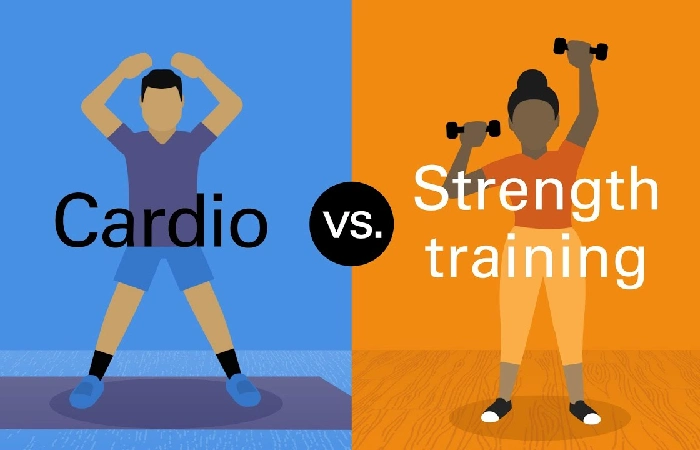
Cardio vs Strength Training
| Feature | Cardio Training | Strength Training |
| Primary Goal | Endurance | Muscle & Strength |
| Calorie Burn | Higher During Exercise | Higher After Exercise |
| Muscle Building | Limited | Excellent |
| Heart Health | Excellent | Good |
| Bone Health | Moderate | Excellent |
| Recovery Needs | Moderate | Moderate to High |
Both exercises work well together with other exercise so ideally fit both into your training on the same week.
What do you want to do?
1. What Are Your Objectives?
First and foremost, ask yourself: What do you want to accomplish? Fat loss, muscle gain, better overall fitness, or enhanced endurance? Once you’ve clarified this, you’ll be well on your way to a solid fitness plan.
2. Get Resistance Training
Do a resistance training routine for two to four times each week.
3. Add cardio training
Between 2 and 4 cardio-based workout sessions a week to achieve your requirements.
4. Prioritize rest and mobility
A full day of rest should feature on every single one of your training schedules, not to mention regularly throughout the week—mobility.
5. Analyze your training.
This involves analyzing the body’s progress every few weeks and adjusting your work volume higher or lower accordingly.
As you start to get organized, you might find a structured schedule will help with small improvements over time.
What You Can Expect
- Increased strength
- Better cardiovascular fitness
- Improved muscle endurance
- Greater calorie expenditure
- Enhanced overall health
- Better workout consistency
Limitations
- Results will be based on diet, sleep, and regularity of your training routine.
- If you overtrain without enough downtime, it could affect your abilities.
- Gains will fluctuate as depending on your age, experience and type of training.
- Progress that comes as slow but steady increments will likely last longer than any drastic gains in volume.
Pros and Cons
Pros
- Supports fat loss and muscle maintenance
- Improves overall fitness
- Reduces workout monotony
- Promotes better long-term health
- Suitable for most fitness levels
Cons
- Requires good time management
- Recovery must be prioritized.
- Excessive cardio may affect muscle recovery if poorly planned
Who Should Follow This Schedule?
This type ofprograme is suitable for:
- Beginners
- Intermediate exercisers
- Individuals aiming for fat loss
- Recreational athletes
- Busy professionals seeking balanced fitness
Who May Need a Modified Plan?
You may benefit from a customized schedule if you are:
- Training for endurance events
- Preparing for strength competitions
- Recovering from injury
- Following medical advice that limits exercise intensity
Actionable Advice: How to Maximise Your Routine
1. Always Warm Up First
Always spend a couple minutes of your pre-gym workout; you’ll find it’ll increase your safety, efficiency, and effectiveness during your workout.
2. Gradually Increase Your Volume
By “volume,” we simply mean your workload (sets x reps x weight).
Don’t just assume you can walk into the gym and go the weight of your strongest mate; gradually increase the amount of work you’re doing on each lift week by week.
3. Stay Hydrated in the Week
Not just before and during the gym. Staying properly hydrated throughout the week will help your body’s natural repair and building process much more efficiently, so don’t be slacking!
4. Focus On Your Form
Just because you lift a big weight does not mean your form is correct. Working your muscles properly through a full range of motion is much more important than just chucking the weight around with any old body.
5. Eat Tons of Protein
Protein will take care of repairing your body fast between workouts.
6. Work on your flexibility.
Just like working in all planes of motion for muscle growth is beneficial for overall muscle building and also for improving athletic performance, also include some mobility and flexibility work in your routine.
7. Don’t ignore Your Body
We all know someone who refuses to listen to the messages the body is sending them. Either that, or that’s us. Pay attention to how your body feels—don’t push on if something feels ‘off.’
FAQs
What’s a good cardio and strength training routine?
A general schedule consists of three strength training workouts, two or three days of cardio, and one day for active recovery.
Is there a difference in workout plans for fat loss and muscle gain?
Yes. Workout routines for weight loss and fat loss usually have more cardio, while workout regimens designed to increase lean mass focus primarily on resistance training and a modest amount of cardio.
Can I do the same cardio and weight lifting on repeat each week?
Sure; however, it would certainly be advisable to alter intensities as well as exercises periodically to not reach a plateau as well as continue reaching new targets.
How can I build an appropriate weekly plan for workouts?
It’s recommended for beginners to do two to three weight training sessions a week along with two cardio workout days per week.
Why is it important to do cardio and weights?
To promote good health of the heart, build muscle, boost your body’s burning capacity, and create a full-body workout.
Conclusion
If you have been wanting to change up your routine and achieve greater results in your training program, you will benefit from a cardio and strength training plan. A training schedule that effectively works for cardio, strength, mobility, and rest could give you results for weight loss and health. The most efficient, successful, well-balanced fitness training schedule plan is one that you are going to be able to stick with.
Be sure you plan real goals that will increase each month. A consistent routine, however simple, yields better long-term results.
Cardio Before or After Weights Hub
Learn the best way to combine cardio and weight training for fat loss, muscle gain, HIIT workouts, workout scheduling, and overall fitness performance.