
Muscle Building Peptides: Benefits, Risks, Types and What the Evidence Says

Muscle gain can often be traced to basic, effective science: a regimen of progressive resistance training coupled with sufficient calorie and protein intake. Appropriate rest and consistent effort will allow you to build muscle most effectively over time. In recent years, however, the rise in popularity of muscle-building peptides is among the most noteworthy fitness industry trends. These are synthetic-sounding substances that many gym-goers are turning to either to supplement training, optimize their gains, or to achieve results that may not be possible or achievable when sticking to traditional methods and conventional dietary practices.
Some peptides may be recognized by the scientific community for their pharmaceutical application, while those promoted in bodybuilding forums and discussed in locker rooms often fall under the categories of investigational drugs, experimental medicines and substances that are neither approved for human consumption or scientifically validated for the effects that are purported to take place within the body.
It is important that that distinction is drawn. Just because a peptide is mentioned on a bodybuilding blog or has a name derived from some protein sequence doesn’t make it suitable for human consumption or automatically effective in inducing lean muscle growth. Clinical data on many substances frequently utilized within bodybuilding circles to gain a lean muscle mass advantage, however, suggest that there is very little evidence to support efficacy with higher-dosaged regimens and commonly seen peptide stacking and sequencing that have not been properly studied in humans.
This Article Is Part of the Muscle Building Hub
Explore muscle-building workouts, training plans, exercises, recovery tips, and other useful information in our Muscle Building Hub.
Muscle Building Peptides
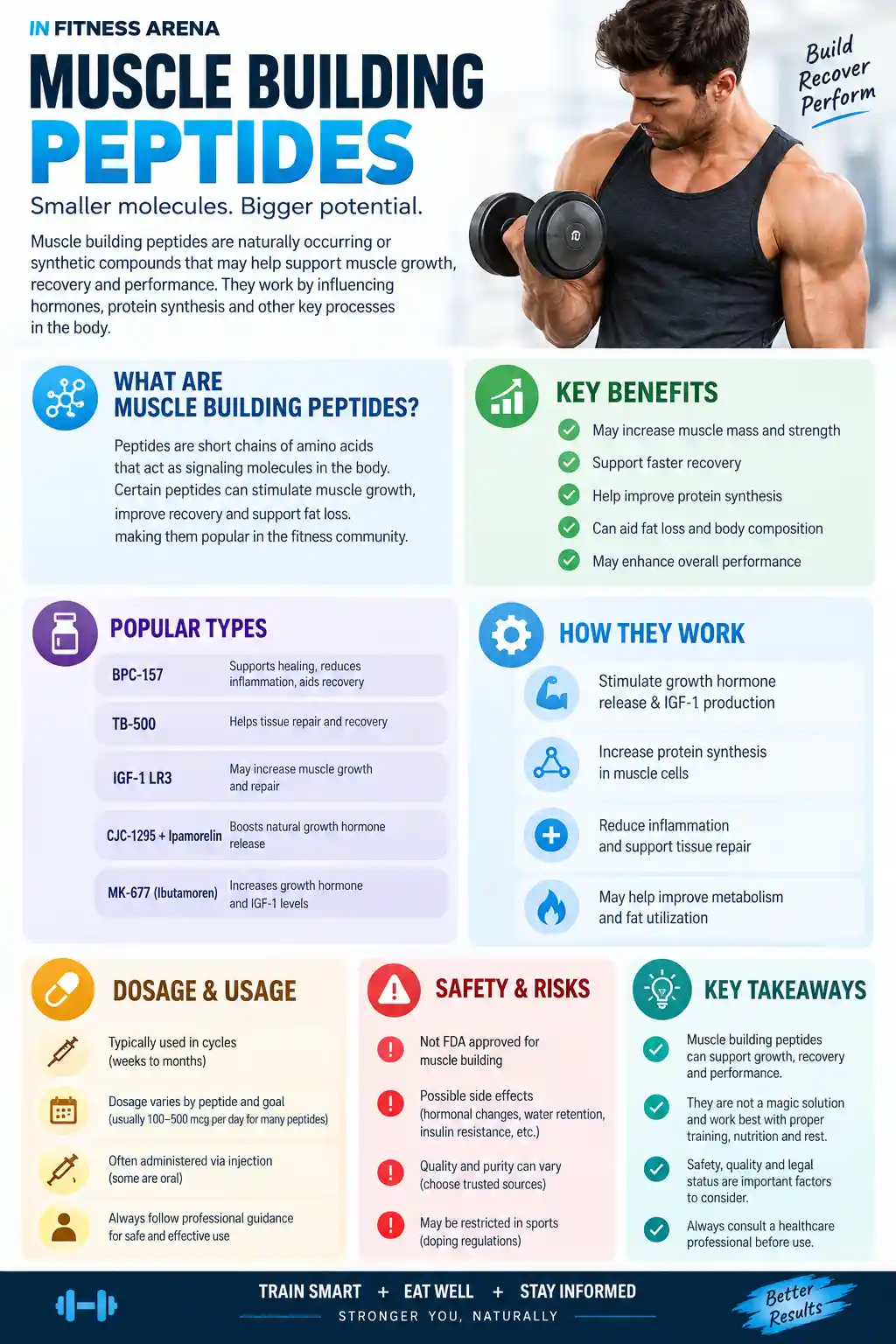
The peptides which claim to support muscle related biological functions including: increased growth hormone signalling, improved recovery or modulation of body composition. Peptides can operate within the body as a signaling molecule or receptor ligand, distinct from conventional protein supplements. This means peptide responses, such as increased lean mass, depend not just on the peptide, but also on its pharmacology and formulation. Widely considered categories of peptide, include:
- Analogues of GHRH
- Secretagogues for GHRH
- Growth hormone-releasing peptides
- Growth factor associated substances
- Peptides studied for the repair or restoration of tissue
- Research agents claimed for body composition alterations
Again, do not see these terms synonymously. One compound that increases the production of growth hormone, for example, is not a substantiated muscle building treatment. Ingesting an increasing signal does not mean you achieve meaningful increases in muscle, strength or sport performance.
The data are inconsistent.
A critical evaluation on the use of peptides and peptide analogues in Sport and Bodybuilding, found that clinical trials backing the use of a lot of these are scarce and focus in patients. Many studies are not performed on humans, which are in healthy condition aiming muscle development, and if it is humans, the trials do not focus on healthy patients.
So how are peptides involved in muscle growth?
Muscle growth (also known as hypertrophy) takes place when training causes an adequate stimulus in the body for a physical change to occur-that is for the muscle fibres to increase in size and function.
There are number of body systems involved:
- Muscle protein synthesis
- Muscle protein breakdown
- Growth-factor signalling
- Hormonal regulation
- Nutrient availability
- Recovery and sleep
- Training volume and intensity
Some peptides are marketed based on the fact they might be targeting one or more of those pathways. That’s great on paper, but there is a big difference between being biologically active and having a demonstrative benefit to fitness.
It is possible that something changes hormone levels but provides nothing or only slightly more force and size than an inert. Likewise, findings of lab based or small trial studies are not necessarily applicable to normal health recreational weightlifters.
This means evaluating claims being made of peptides based on human based evidence, regulatory status, safety information and what end point is actually being monitored.
Categories of peptides often mentioned concerning building muscle.
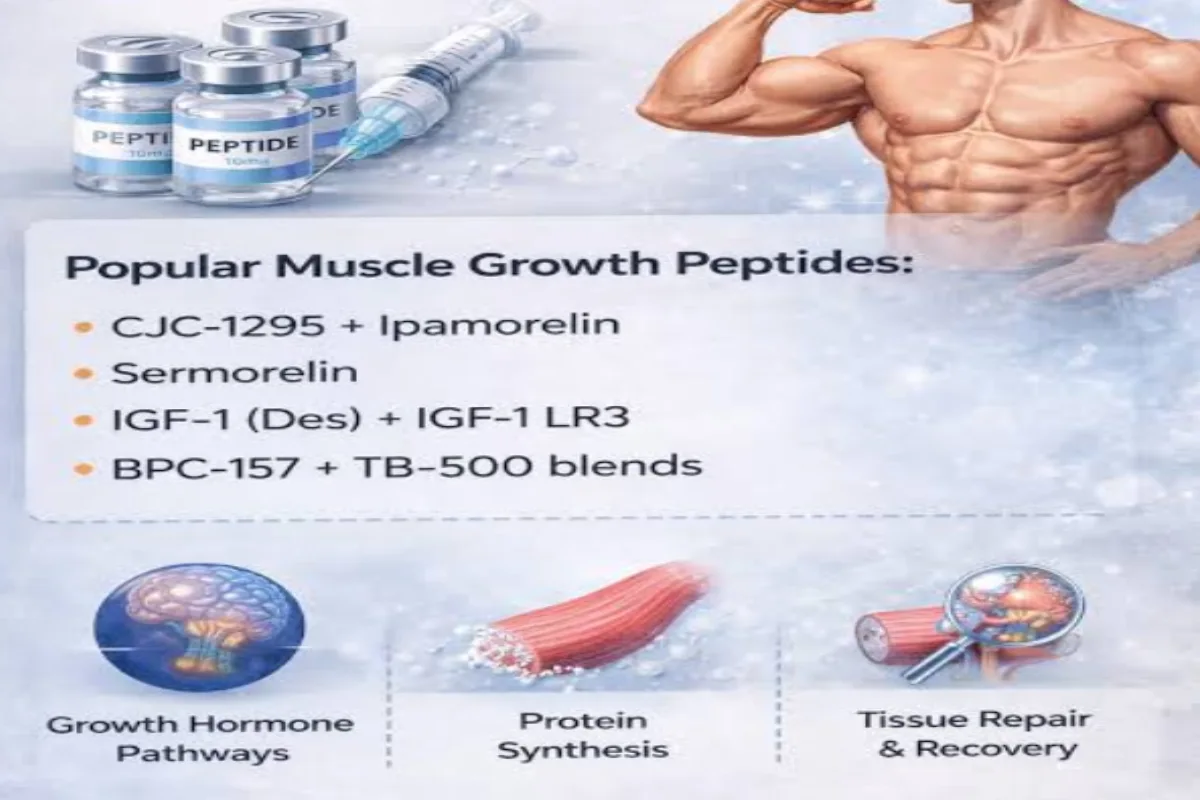
There isn’t a specific category known as “muscle building peptides”.
Growth Hormone-Releasing Hormones (GHRH) analogues
These chemicals, while acting through growth hormone releasing mechanism, have a distinction from GHRH itself. Examples of this kind of peptide used in research, also in bodybuilding community, are CJC-1295 or sermorelin. Their pharmacologic behavior differs not only from taking GH. It is also worth noting that clinical evidence cannot serve asproof of enormous musculature gain through sport supplement.
Growth hormone secretagogues
Compounds which directly promote GH release via specific pathways. An example commonly spoken about online is Ipamorelin. However online hype grows faster than scientific data. The US FDA has identified concerns about the quality and safety of compounded ipamorelin acetate and suggests there is no adequate data as to its safety for some uses.
GHRP compounds
GHRP related agents are also found to be of interest to bodybuilders. Such agents are GHRP-2 and GHRP-6. Such agents are pharmacologically active but this alone does not prove the utility or safety of GHRP-2 and GHRP-6 for the healthy consumer to build muscle. The FDA stated that they were concerned of the potential safety effects related to compounded GHRP-2 and GHRP-6, issues including peptide impurities, immunogenicity and metabolic effects.
Growth factor compounds
Other peptides and peptide related agents also interact with growth factor signaling pathways.
IGF-1 is mentioned in contexts of performance enhancing agents, but it and other IGF-1 like compounds should be thought of in terms of very strong biological pathways. They should not be thought of in any terms resembling regular Sports Supplements.
In World Anti Doping Agency’s list of banned compounds, IGF-1, growth hormone, various GRF’s, growth hormone secretagogues are listed.
Experimental Recovery Peptides
Additional peptides available on line, with advertised benefits of recovery, tissue injury and tissue healing- not growth itself,- include BPC-157, an analogue of actin.TB-500. Peptides with BPC and TB names can, be found quite commonly in the literature discussions concerning fitness on the web. Interest does not equal to clinical effectiveness. It has been pointed out by the FDA that information about safe usage and evidence on effects regarding the peptide BPC-157 is sparse, as are the quality control on certain compounded pathways for the peptides with impurities as well as immunogenicity risks.
Muscle Building Peptides Benefits—What Actually Do We Know?
Long lists of peptide effects can be found on a website or during peptide benefits-search (e.g. Increase of muscle gain, improvement of regeneration, decrease of sleep problems, reduction of body fat). But one needs to distinguish the evidence from advertisement.
Potential biological effects might be, for example: Change of Growth Hormone signaling, influence of special metabolic paths, influences on tissue regeneration, change in body composition in specific cases or clinical scenarios and potential use in the context of regeneration and recovery in sports.
But these effects alone do not suggest peptides result in superior muscle gain in athletes in the fitness context. In 2016 a review on peptides in bodybuilding reached the conclusion, that there is very limited evidence and most research focuses on therapeutic uses but less on thesupra-physiological or complex application in fitness. However, generally speaking, effective training & nutrition is much more effective to increase muscle-gain.
What results should you expect to see?
If an individual is contemplating using peptides due to wanting drastic physical improvements as quickly as possible, one’s expectations should be tempered.
Muscle gain is effected by:
- Quality of training
- Protein intake
- Calorie intake
- Amount of sleep
- Genes
- Age of training experience
- Hormonal well-being
- Consistency in the application of other factors above
A peptide cannot make up for a sub par training program, subpar nutrition, and a general disregard for adequate sleep.
Furthermore, no generally accepted time frame can be given for the attainment of muscle gain due to the shortage of studies of high quality with which to directly investigate peptide- induced muscle gain in the average healthy recreational user.
Should Beginners Care About muscle building peptides?
Muscle building peptides can lead one to believe peptides is just another tool for the beginner. They are not. There are so many more benefits to be made from proper resistance-training form and developing sustainable training/eating plans then manipulating with drugs.
As a starting base for any new to training, one would want to incorporate training every major muscle group more than once weekly, progressive overload through increasing workout intensity/volume, and consumption of appropriate levels of protein and calories to meet one’s stated goals.
Quality sleep and adequate recovery of muscle are equally essential as is, allowing more than several months to observe changes and improvements. People typically achieve good results before they could use other performance-enhancing substances. If one has unusually poor recovery and/or weakness or signs of hormone imbalance and gains of muscle mass and strength are severely lagging despite well designed/nutritious plan of execution then this problem should be taken to the appropriate medical professional.
For research-based information on peptides, their biological functions, and ongoing scientific research, readers can explore the National Center for Biotechnology Information (NCBI).
A muscle building peptide plan… what it involves…
First off, there’s nothing in a muscle building peptides plan related to what peptide should be dosed or injected, it refers to overall training, recovery and nutrition that supports gains. If we look at a basic muscle building plan, it would involve:
-
What is it that you want to achieve from training?
Hoping to build the muscles that you already have? Looking for enhanced strength or general athleticism? Hoping to build muscle or decrease fat while simultaneously strengthening your general fitness levels? Various objectives warrant the execution of diverse training and nutrition regimens in order to reach them most efficiently.
-
What program have you decided on?
These plans include major movement patterns and require progressive overload in all of them to build muscle size. They could include things like:
Element practical focus
- Squat pattern: Squats, split squats, or similar movement
- Hinge pattern: Romanian deadlifts, hip hinges, or similar
- Horizontal push, bench press, presses, and press-ups
Horizontal pull rows and pull backs
- Vertical push-ups or presses overhead
- Vertical pull-ups or pull-downs, pulldowns
- CoreBracing trunk with a focus on controlled trunk exercises
Actual exercises selected need to be adapted for the experience, equipment and physical requirements of an individual.
-
Nutrition needs to complement the goals.
As part of this protein, carbohydrate and fats are also important in any healthy balanced meal plan. If someone is trying to increase muscle size they need sufficient calories and protein-they don’t just need to take a peptide on an insufficient diet!
-
Track progress carefully.
Such measures have included body weight trends, training performance, strength increases, physical measurement increases, progress photo increases, recovery and the quantity of their sleep. You can’t track gains based on just one training session and weight fluctuating every hour of the day.
-
When medically concerned: do seek professional advice.
If you believe a peptides may help something that you have been medically diagnosed with, discuss the issues with an adequately qualified medical professional that it seems appropriate for.
Muscle Building Peptides Tips on assessing claims online

Of all the tips on researching muscle building peptides the skill which I can find most useful is learning the difference between evidence and sales pitch.
-
Seek Human clinical evidence
Research using lab trials and animals is informative. However this can not provide evidence of safety nor proof that a compound will build muscle in humans.
-
Research The status of the compound
Question whether the specific compound is licensed for the use in the country you reside.
Labeling of “research use only” is not synonymous with human therapeutic use. In the USA recent action by the FDA has target peptide vendors based on sales pitches implying human use. This includes products in the USA being marketed in ways that hint at human use.
-
Always question guarantees
Any sales pitch implying “fast muscle gain”, “no side effects” or “steroid level results with absolutely no risks” should be met with a sense of skepticism.
-
Quality of evidence
Evidence from controlled trials using humans is much more valuable to you than endorsements. The same applies with regards to social media opinion/recommendations or pre/post photos shared by others online.
-
Consider the origin.
All peptide vendor firms make money by selling their products to people. Their priority is to prove to their target audience that their products are worth your investment. Medical literature provided by reputable organizations is the place to begin and so are authoritative governing bodies.
Mistakes people make using muscle building peptides (What makes online peptide use potentially risky):
1. Treating peptides as nutritional supplements. Peptides are not the same as a protein shake, creatine, or multi-vitamin and are not naturally occurring in the body thus resulting in potential pharmacological effects on the body.
2. Mistaking ‘peptide’ or ‘natural’ as a signal that a substance is safe. The word ‘peptide’ can be very vague and tell us little or nothing of how safe a substance is. Peptides have very different effects in the body as some will have totally distinct biological effects to others.
3. Purchasing peptides from shady sources. The true identity, strength and sterile purity of peptides is often questionable when being purchased from unauthorized dealers, Injectable substances even add more risk as poorly stored or badly made products could potentially be very damaging.
4. Following a person’s protocol that is prescribed on the internet: Protocols can often only be based on individual experiments (no studies have been conducted) and other times people are using so many substances in their protocol that they are only left guessing about which actual compound is causing the specific side-effects.
5. Forgetting about the regulations in sport and anti-doping policies. Anyone who takes part in sports must first consult the anti-doping rules relating to which peptides/substances are not permitted. These include various growth hormones, growth hormone releasing factors and secrete-agents listed on WADA’s prohibited lists;
Peptide vs. Evidence-based muscle building methods
| Factor | Peptide-based enhancement | Conventional muscle-building approach |
| Primary mechanism | Depends on specific compound | Training and nutrition adaptations |
| Evidence for healthy lifters | Often limited or indirect | Stronger overall evidence |
| Regulatory status | Varies significantly | Generally established |
| Product quality | May be uncertain with online products | Easier to source established products |
| Main benefits | Compound-specific and uncertain | Strength, hypertrophy and fitness adaptations |
| Main concern | Pharmacological and product-quality risks | Training injuries if poorly programmed |
| Beginner suitability | Generally not a first-line strategy | Appropriate with suitable programming |
| Anti-doping considerations | Important for many compounds | Usually much lower concern |
| Long-term evidence | Limited for many experimental compounds | Extensive |
But what it doesnt show, is that all of the peptides don’t work, and all of the conventional methods do just as well. The distinction is here between traditional training concepts and substances, where the data (safety, legality etc) is a little less certain.
Are Muscle Building Peptides Safe?
Safety will depend wholly on the particular peptide, dose, administration route, formulation, existing condition, as well as source of.
This negates all broad claims of: “peptides are safe” or, conversely, “peptides are dangerous”. Nevertheless, it is important to consider the following aspects of safety and/or risk:
Product quality
Medications that are available over-the-counter online may not have appropriate quality control procedures. Some potential concerns when using these compounds include; incorrect quantities, contamination, incorrect components, inadequate labelling, ineffective temperature control/storage, or sterility issues. It is noted that if a product injected into the body cannot meet the stringent standards applied to medication produced in approved medical facilities, an injected formulation could present serious risks by bypassing some of the body’s normal defenses against impurities.
Metabolic effects
Certain peptides could negatively impact a range of metabolic processes such as appetite, blood sugar balance or other natural signals within the body. Specific concerns with identified ingredients in many ‘peptide-marketed’ compounds by the FDA including effects on blood insulin sensitivity and levels of blood glucose for example have been reported.
Long-term unknown effects
Data available at the present on many experimental peptides does not reveal what long term health effects or any health risks may occur using them recreationally as muscle building agents. This concern becomes of special concern as, typically, experimental agents are only studied under limited conditions, including differing age-ranges, dosage ranges or different indications than where they are used recreationally.
How trust worthy are peptide products on sale on the internet?
The matter completely depends upon the kind of product itself as well as the seller, but simply a slick web page does not certify an item as legitimate, and indeed such an item is often marketed using some phrase of the kind
- Pharmaceutical grade
- Research grade
- Laboratory tested
- High purity
- Not for human consumption
This phrase alone does not make the product approved or safe for human use.
The FDA is still issuing warning letters to companies selling peptide products and unapproved drugs. The most recent actions demonstrate that saying they are for “research use only” is sometimes not enough, especially in cases where the product is marketed for human use.
Care is particularly important with injectable products sold from a website or from sellers on social media.
People in Which Groups Should NOT Self-Experiment with Peptides?
The self-experimentation with unsanctioned peptide products should definitely be avoided, just because of the desire to achieve bodybuilding results at a faster rate. There is some extra care in the cases of individuals who:
- Are under 18
- Are pregnant or trying to become pregnant
- Have existing medical conditions
- Take prescription medicines
- Have a history of hormone-related disorders
- Compete under anti-doping rules
- Are considering injectable products from unverified sources
Whether the individual’s objectives or signs suggest a condition that requires medical investigation can be determined by a health professional.
What’s better for building muscle?
For the majority of recreational lifters the most valuable strategy would still be a well constructed resistance training programme complemented by an appropriate diet and recovery.
Progressive Resistance Training
The resistance of your training should be increased steadily over time rather than striving for maximal output in every workout.
- Appropriate protein.
- Resistance training’s required adequate, protein-rich diet can both help maintain and build muscle.
- Sufficient Energy Consumption
- For individuals aiming to build mass an energy surplus may be appropriate and for fat l, prioritizinging muscle preservation through decreasing energy intake.
- Sleep and Recovery
- It is during recovery that muscles actually grow.
- Creatine. As its own independent entity:
By far the strongest evidence based sports supplement that’s related to strength and high intensity exercise comes from creatine monohydrate; as opposed to most alternative experimental peptides that have been designed for bodybuilders. It is, however, inappropriate to label any kind of sports supplement with this same name as that for a peptide-based pharmaceutical drug.
A Practical Muscle-Building Workflow
An evidence-first workflow instead of an initial one involving peptides
Goal Training Nutrition Recovery Pro appraisal if needed
Objective
Either to achieve hypertrophy or increase strength (not both).
Training
Execute a consistent resistance-training protocol to continually test and challenge your muscles.
Nutrition
Consume sufficient energy, protein and high-quality food as a whole.
Recovery
Allow sufficient rest days and sleep, and keep the amount of volume training within your capacity.
Tracking
Evaluate what has worked over weeks (rather than day by day). Monitor muscle-composition and performance changes.
Pro appraisal if needed
You should get the assistance of a qualified healthcare provider for your concerns. This includes if progress is surprisingly slow or symptoms arise that can indicate a problem with your health.
This simplifies distinguishing what actually causes what and reduces extraneous inputs into the process.
Points to consider before examining any peptide
When the individual is looking into a particular peptide based on it having being recommended for a bona-fide medical application, the questions to be explored are:
- What condition is the compound actually approved to treat?
- Is the proposed use supported by human clinical research?
- Is the product legally authorised in the relevant country?
- What are the known adverse effects?
- What long-term safety information exists?
- Is the product obtained through a legitimate medical supply chain?
- Could the substance violate sports anti-doping rules?
- Are there safer established treatments or strategies?
These questions provide more value than asking if a peptide is “good for gains.”
Peptides V’s steroids-are they the same?
No, peptide and anabolic steroid are different chemical. Anabolic-androgenic steroids consist of structures similar to testosterone. The affect works by triggering androgen receptors in cells. Peptides consist of various amino acids bonded together in a chain. Different peptides have different ways of working.
Just because something is not a steroid though, does not make it safe. Certain peptide compounds trigger powerful hormonal systems, and some are banned for competition sport, so the safety of each compound needs to be viewed separately. The FDA warn that it would be dangerous for any bodybuilding product sold as a ‘supplement’ to actually contain steroids and not disclose this, and this highlights a problem in simply taking all labels at their face value.
How fast do you gain muscle?
There is no set rule as the beginner is gaining strength very fast, simply because the central nervous system gets use to performing a particular pattern.
Building visually impressive muscle does take quite a while and a more sustained approach to training. Things that will affect how long it takes are:
- Age
- Sex
- Genetics
- Training history
- Nutrition
- Sleep
- Exercise selection
- Training consistency
A sensible muscle-gaining regime therefore must be observed over months not days.
Products that promise significant physical alterations in an unbelievably brief amount of time must be inspected carefully.
FAQs
What are muscle building peptides?
Muscle building peptides are peptides being advertised for benefits that may affect muscle growth, recuperation, body composition, or growth-hormone related pathways. A small percentage have medical or research applications, while much of the bodybuilding specific peptide market is unapproved for this use and has little evidence in humans.
Do muscle building peptides really help you build muscle?
Some peptides are known to act on metabolic and growth related pathways. However, it is by no means an indication that they will result in any sort of significant muscle gain in recreational athletes without special needs or medical condition. All peptides are also not researched the same. Evidence varies greatly and research supporting bodybuilding application in particular is minimal in most products.
Are Muscle Building Peptides Safer than Steroids?
To say muscle building peptides are safer than steroids simply because they do not have those anabolic effects, may not be the case. They all contain varied risks, and a lot do not contain enough data for long term safety. Some too, are banned from competitive sport.
Can new to muscle building peptides take them?
Beginners have little use in starting with experimental or unregistered peptide products. They have to establish proper training form, progressive overload, nutrition, sleep and consistency first.
Is muscle building peptide legal?
Legality and regulatory status will vary according to the peptide itself as well as your country, the product that it is presented in and the purposes you are using it for. If a product is purchasable online does not mean it is legal or appropriate for use in humans, The FDA has also carried out legal action against vendors that have been supplying unapproved peptide products to the consumer.
What are the muscle building peptide’s common benefits?
A range of popular claims exist that muscle building peptides will assist with an increase in the signalling pathways for growth hormone, assist in recuperation, create a change in body composition, and be beneficial for muscle building, however there is a big difference between the compounds studied for these potential benefits.
What is the common peptide mistake regarding muscle building that you see the most?
Common peptide mistakes involve treating them like any other supplement, relying on reviews available on-line, buying unvalidated products that must be injected and following someone else’s cycle and/or violating any anti-doping rules.
Can peptide supplementation replace solid training and nutrition?
No. Compounds themselves may actually affect biological processes but do not eliminate the need for resistance training, sufficient nutrition, adequate sleep and consistently proper recovery.
Final Takeaway
Muscle building peptides sit in a murky area combining real biomedical investigation, prescription medicine, sport, and online bodybuilding community behavior. Some peptides have scientifically recognized biological functions, but this doesn’t mean that each product advertised to gain muscle is proven, approved or safe to use.
For the vast majority of individuals, progressive resistance training and sufficient energy, and protein consumption, rest and long-term consistency are the best pillars to work from. Any individual thinking about using any specific peptide with the intention of its medical or physiological effect should seek proper medical advice from their doctor rather than a research compound dosing protocol readily available on the internet.
It’s also wise to keep in mind that regulations can and may be updated, as do WADA’s prohibited substances which currently prohibits a large number of peptides hormones and growth factors along with related compounds, and also regulatory authorities taking action against distributors selling unregulated peptide supplements.
Overall: when looking for that next muscle building compound, it will always be more beneficial in the long term to understand the science and risks before jumping onto the new product, and build from a solid, well-established base.
Muscle Building Peptides Hub
Explore the complete guide to muscle-building peptides, including how they work, types used for muscle growth, potential benefits, side effects, legal considerations, and how they compare with supplements.