
Physical Fitness Test and Medical Examination
Introduction
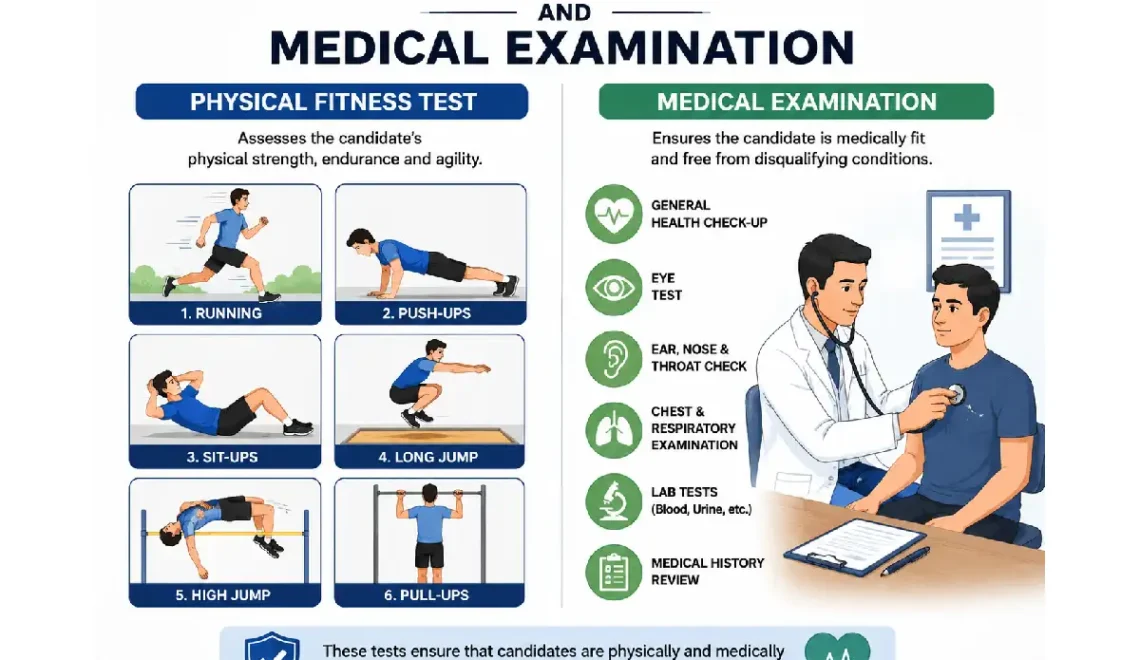
A physical fitness test and medical examination will establish an individual’s general physical health, fitness levels and suitability for particular activities. Such a test can be undertaken for job application, a sports programme, a government recruitment process or simply a general health check-up. It has many functions to establishing the fitness levels of an individual.
This Article Is Part of the Fitness Events Hub
Explore marathons, running events, fitness expos, bodybuilding competitions, sports events, virtual fitness events, community fitness programs, and wellness festivals in our Fitness Events Hub.
A fitness test, for example, tests endurance and strength; medical examination will find if there are any underlying conditions which may compromise activity or the particular job requirement.
What Is a physical fitness test and medical examination?
A physical fitness test and medical examination combines physical fitness testing, based on performance with medical testing. It provides a good picture of physical health.
| Component | Purpose |
| Fitness Test | Measures physical performance |
| Medical Examination | Evaluates health condition |
| Health Screening | Detects risk factors |
| Physical Assessment | Reviews body function |
| Fitness Evaluation | Determines capability levels |
| Medical Clearance | Confirms suitability for activities |
Understanding the Physical Fitness Assessment
A physical fitness assessment focuses on measuring physical performance and functional fitness.
| Fitness Component | What It Measures |
| Cardiovascular Stamina | Lung & heart efficiency |
| Muscular Strength | Maximum force production |
| Muscular Endurance | Ability to sustain activity |
| Flexibility | Joint range of motion |
| Agility | Movement efficiency |
| Speed | Quickness of movement |
| Body Structure | Fat-to-muscle ratio |
These measurements provide a standard from which you can try for improvement.
What do you do during a medical fitness exam?
A medical fitness exam involves investigating your health and determining if you pass a needed level of health.
| Examination | Purpose |
| Blood Pressure Check | Cardiovascular health |
| Heart Rate Assessment | Cardiac function |
| Vision Test | Eye health screening |
| Hearing Test | Auditory function |
| Height and Weight | General health indicators |
| Medical History Review | Risk assessment |
| Physical Examination | Overall health evaluation |
Additional investigations may be recommended based on age, occupation, or health history.
Body Fitness Test Components
A body fitness test may vary depending on the organisation conducting the assessment.
| Test | Objective |
| Running Test | Measure endurance |
| Push-Ups | Assess upper-body strength |
| Sit-Ups | Evaluate core endurance |
| Plank Hold | Test stability and endurance |
| Flexibility Test | Measure mobility |
| Step Test | Assess cardiovascular fitness |
| Shuttle Run | Measure agility and speed |
Sports bodies, educational establishments and employers require different levels.
Health Screening Process: Step-by-Step workflow
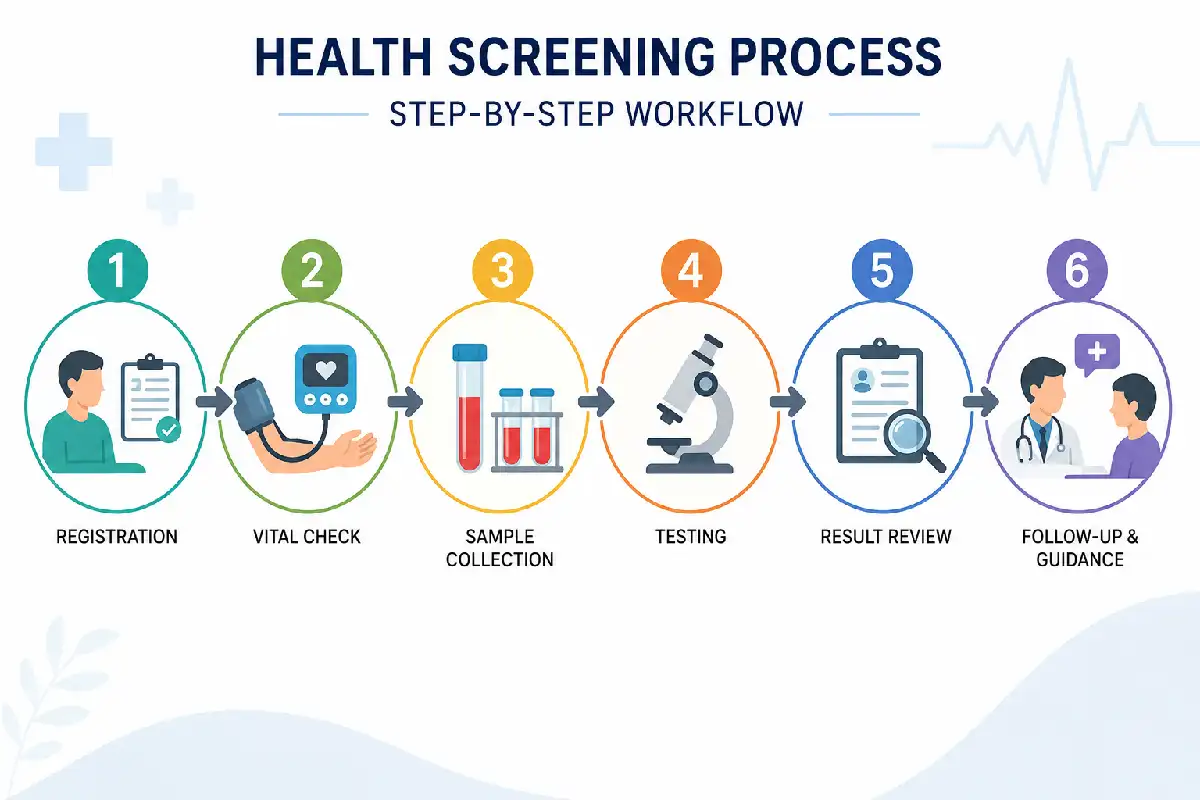
The process of health screening follows a general routine sequence.
Step 1: Registration
candidate registers and presents documentation and medical details.
Step 2: Medical history
Candidates’ past medical problems, surgical history, prescribed medication and family medical history are investigated by health professionals.
Step 3: Vital Signs Assessment
The candidate’s blood pressure, pulse, temperature and other bodily measurements are recorded.
Step 4: Fitness assessment tests
The required fitness assessment tests for the candidate are conducted.
Step 5: Medical examination
A complete physical assessment is carried out by a health professional.
Step 6: Laboratory investigations (optional)
Blood tests, urine analysis or imaging may be carried out.
Step 7: Concluding remarks
The candidate is provided with a medical or fitness clearance report upon the results of the assessments being reviewed.
Categories of Fitness Evaluation tests
A fitness evaluation test can be adapted to the individual aims and requirements.
| Assessment Type | Primary Goal | Typical Users |
| Employment Screening | Job suitability | Employers |
| Sports Fitness Test | Performance assessment | Athletes |
| Military Fitness Test | Operational readiness | Defence personnel |
| School Fitness Evaluation | Student wellbeing | Educational institutions |
| General Health Assessment | Preventive healthcare | General public |
Each assessment serves different purposes and follows different standards.
Benefits of Physical Fitness and Medical Assessments
| Benefit | Explanation |
| Early Health Detection | Identifies potential concerns |
| Fitness Benchmarking | Measures current fitness level |
| Performance Monitoring | Tracks improvement over time |
| Risk Reduction | Helps identify limitations |
| Goal Setting | Supports personalised fitness planning |
Intensive care can be helpful as a tool to guide knowledgeable decisions related to physical activity, health status and lifestyle.
Regular fitness assessments and preventive health screenings can help individuals better understand their overall health status and identify potential risk factors early. According to the World Health Organization (WHO), regular physical activity and ongoing health monitoring play an important role in supporting long-term physical health, functional fitness, and overall well-being. For additional information on physical activity and health recommendations, visit the World Health Organization (WHO): https://www.who.int/
Expectations management: Interpreting results
Most people believe that fitness testing or medical reports offer a comprehensive and exhaustive summary of one’s health status
| Expectation | Reality |
| One Test Defines Overall Health | Not entirely |
| Perfect Scores Guarantee Fitness | Not necessarily |
| Medical Clearance Means No Health Risks | Incorrect |
| Results Never Change | Health evolves over time |
| Fitness Equals Health | Related but not identical |
Interpret the findings with your physician and continued monitoring of your health.
Factors Affecting Results
| Factor | Possible Impact |
| Poor Preparation | Reduced performance |
| Lack of Sleep | Lower endurance and focus |
| Illness | Temporary fitness decline |
| Dehydration | Impaired physical performance |
| Incomplete Documentation | Administrative delays |
If performed effectively, tests can be more informative and less stressful.
Preparation for a Physical Fitness Test and Medical Examination
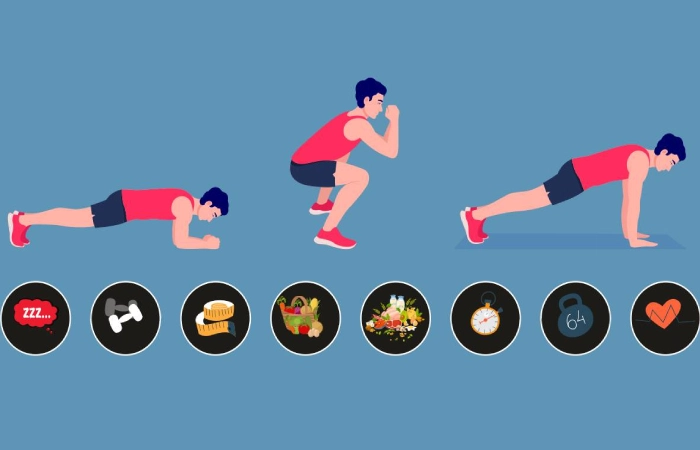
- Good sleep the night before the assessment.
- Drink enough liquids during the day.
- Wear proper sportswear.
- Don’t do rigorous activities immediately before the assessment.
- Remember to bring identification documentation.
- Adhere to instructions for fasting (if a laboratory analysis is to be performed).
- Disclose to examiners the list of current drugs.
The preparation may not confirm favourable results, but it should support in more detailed assessment.
Advantages and disadvantages
| Pros | Explanation |
| Objective Evaluation | Standardised measurements |
| Health Awareness | Encourages precautionary care |
| Growth Tracking | Cares long-term fitness goals |
| Risk Identification | Detects potential problems early |
Limitations
| Limitation | Explanation |
| Snapshot Assessment | Reflects one point in time |
| Variable Standards | Different organisations use different criteria |
| Performance Factors | Stress and fatigue may affect results |
| Additional Testing | May require follow-up investigations |
Who May Need These Assessments?
- Job applicants
- Athletes and sports participants
- Military and police recruits
- Students entering specialised programmes
- Individuals seeking preventive health evaluations
- Corporate wellness programme participants
The requirements depend on the sector, organization and activity.
Medical Fitness Certificate Resource Hub
Explore certificate format, requirements, jobs, students, gym, visa, and medical examination guides from one place.
Commonly Asked Questions
What is a fitness test and medical examination?
A physical fitness test and medical examination is a test that incorporates the assessment of physical fitness levels and a clinical assessment of health to establish physical fitness status and health status.
How long is a physical fitness test?
Most physical fitness test would last for a minimum of 30 minutes to a few hours depending on the tests and medical examinations required.
Is a medical fitness test required in employment?
Certain occupations with physical requirements or responsibilities on safety may require a medical fitness test.
What does a body fitness test include?
A body fitness test may consist of assessing cardiovascular endurance, body strength, agility and body flexibility.
When should a fitness evaluation test be carried out?
A fitness evaluation test can be performed at varying intervals depending on ones goals, nature of the job, and medical advice but most would conduct one annually.
Conclusion
Physical fitness test and medical exam provide important information about one’s physical ability, health status, and preparation for work, sport, study or personal fitness purpose. These assessments offer a useful reference point and are a good opportunity for screening. It is important, however, to regard such tests as a part of an on-going process of health management rather than a holistic representation of a person’s state of health. Regular tests, sound lifestyle habits, and the involvement of medical professionals are important factors contributing to fitness and health in the long term.