
Gadgets for Home Workouts: A Practical Guide to Smarter Training
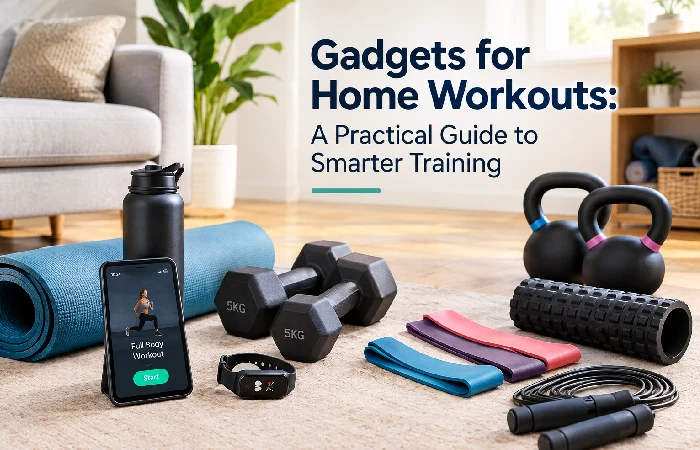
Gadgets for home workouts can make exercise easier to track and organise, especially when you prefer training without visiting a gym. From fitness trackers and smartwatches to connected exercise equipment, modern technology provides useful feedback about activity, workout duration and selected performance measurements. However, you do not need expensive technology to get an effective home workout. The right gadget should support your routine rather than make it unnecessarily complicated.
This Article Is Part of the Fitness Gadgets Hub
Explore fitness gadgets, smart workout devices, wearable technology, features, guides, and other useful information in our Fitness Gadgets Hub.
What Are Gadgets for Home Workouts?
Gadgets for home workouts are electronic devices designed to support exercise, track activity or provide useful workout information while training at home.
Some gadgets are worn on the body, while others are connected to exercise equipment or smartphones.
Common examples include:
- Fitness trackers
- Smartwatches
- Heart-rate monitors
- Smart skipping ropes
- Smart scales
- Wireless workout headphones
- Connected exercise bikes
- Smart resistance equipment
- Digital workout timers
The most suitable option depends on your exercise goals, available space and the type of workouts you enjoy.
Popular Gadgets for Home Workouts
Smartwatches and Fitness Trackers
Smartwatches and fitness trackers can monitor activities such as walking, running and certain home workouts. Depending on the device, they may record steps, workout duration, heart rate, distance and other measurements.
They can be particularly useful if you want to keep a record of your daily activity without manually writing everything down.
For home workouts, a tracker can also help you monitor how frequently you exercise and whether your activity levels are changing over time.
Heart-Rate Monitors
Heart-rate monitors provide information about your heart rate during exercise. Wrist-based sensors are common, while chest straps are another option.
They can be useful during cardio workouts, circuits and other sessions where exercise intensity changes.
However, readings from consumer devices are estimates. They should not be treated as medical measurements or used to diagnose a health condition.
Smart Skipping Ropes
A smart skipping rope combines traditional skipping with digital tracking. Depending on the product, it may count jumps, record workout duration or connect to a smartphone app.
This can be useful for short cardio sessions, warm-ups and conditioning workouts where you want a simple way to monitor activity.
Smart Scales
Smart scales can measure body weight and may provide estimated body-composition readings.
These measurements can help users observe longer-term trends, but readings can change because of hydration, food intake and other factors. Therefore, they should not be treated as exact indicators of body composition.
Connected Home Exercise Equipment
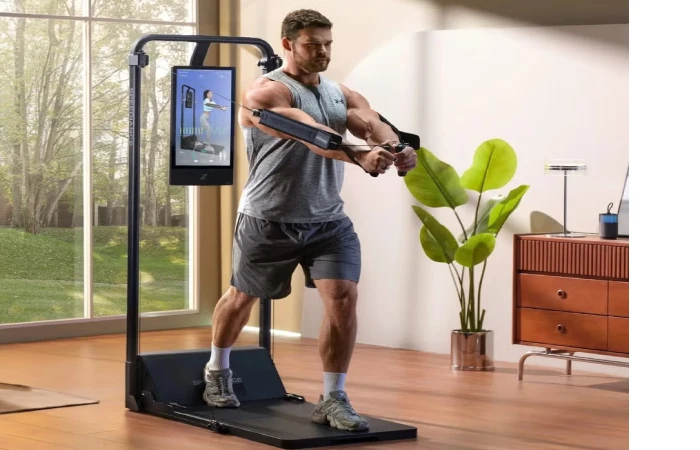
Some treadmills, exercise bikes, rowing machines and resistance-training systems include digital displays, sensors or app connectivity.
Depending on the equipment, these features may record speed, distance, resistance, workout time or other training information.
Connected equipment can be useful when you enjoy structured workouts, although traditional equipment can still provide an effective workout without smart features.
Gadgets for Home Workouts: Features to Consider
Different devices provide different features. Consider whether each specification actually supports your training goals.
| Feature | What it provides | Useful for |
|---|---|---|
| Heart-rate tracking | Estimated heart rate | Cardio workouts |
| Step tracking | Daily movement | Walking goals |
| Workout timer | Tracks exercise duration | Circuits and intervals |
| GPS | Outdoor distance and route | Running and cycling |
| App connectivity | Stores workout information | Progress tracking |
| Water resistance | Protection from moisture | Sweaty workouts |
| Battery life | Determines charging frequency | Regular use |
| Workout modes | Records different activities | Varied routines |
How to Use Home Workout Gadgets: Simple Workflow
Using technology effectively does not require several devices.
Step 1: Set a clear goal.
Decide whether you want to improve strength, cardiovascular fitness, mobility, activity levels or workout consistency.
Step 2: Choose one useful gadget.
Start with the device that provides information relevant to your goal.
Step 3: Set it up correctly.
Follow the manufacturer’s instructions for positioning, charging and connecting the device.
Step 4: Track workouts consistently.
Record sessions over several weeks instead of focusing on individual readings.
Step 5: Review your progress.
Look for changes in workout frequency, duration, performance or activity levels.
Step 6: Make gradual adjustments.
Use the information as feedback when deciding how to progress your routine.
What Can You Realistically Expect?
Home workout gadgets can make tracking more convenient, but they cannot guarantee better fitness results.
For example, a device may reliably record that you exercised for 30 minutes, while its calorie-burn estimate may be less precise. Similarly, a wearable can provide useful heart-rate trends without replacing professional assessment.
Technology can also have limitations when tracking exercises. A wearable may not recognise every movement accurately, particularly during resistance training or unusual exercises.
For this reason, combine gadget data with practical measures such as exercise consistency, strength, endurance, recovery and how you feel during workouts.
For readers looking to make their home training setup more effective, explore our guide to gadgets for home workouts to discover practical fitness technology for exercising at home.
Benefits and Limitations
Benefits
- Makes workouts easier to track
- Can support realistic goal setting
- Provides useful activity trends
- May encourage consistency
- Reduces the need for manual tracking
- Can connect with smartphone fitness apps
Limitations
- Some measurements are estimates
- Advanced gadgets can be expensive
- Devices need charging
- Sensors may occasionally record inaccurate data
- Apps may collect personal activity information
- Too much tracking can make exercise feel complicated
A gadget is useful when it solves a genuine problem in your routine.
Who Should Use Home Workout Gadgets?
Gadgets can suit people who enjoy tracking their activity or prefer structured home training.
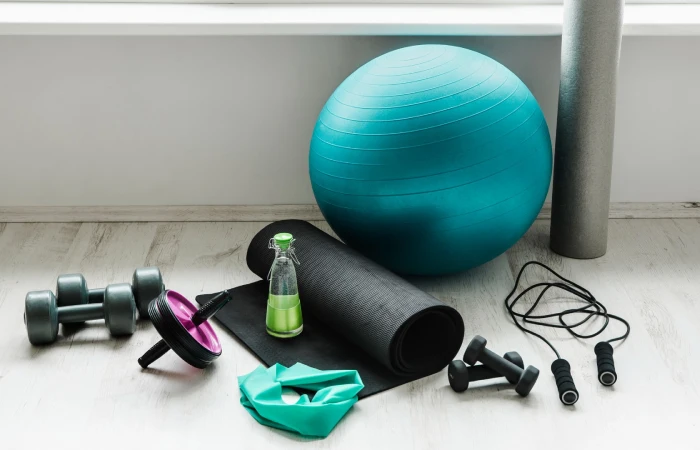
They may also be useful for people combining strength exercises with walking, running, cycling, skipping or cardio workouts.
Beginners can use a basic fitness tracker or timer to understand their activity, but technology is optional. A simple notebook, smartphone timer or workout plan can be enough to get started.
Who Should Avoid Them?
You may not need a gadget if you prefer straightforward workouts or are unlikely to use the tracking features.
People who become overly focused on numbers may also prefer a simpler approach. Exercise should remain manageable and enjoyable rather than becoming a constant attempt to reach device-generated targets.
Buying Tips
Before buying a gadget for home training, consider:
- Your workout: Choose features that match your actual exercises.
- Available space: Larger connected equipment may not suit a small room.
- Compatibility: Check whether the device works with your phone.
- Battery: Consider how often it needs charging.
- Durability: Sweat and water resistance can be useful.
- Data privacy: Check what information the associated app collects.
- Price: Do not pay for features you will rarely use.
A simple gadget used consistently can be more practical than an expensive device with unnecessary features.
Are Home Workout Gadgets Reliable?
Most established fitness gadgets are legitimate consumer technologies, but accuracy varies between devices and measurements.
Look for clear product specifications, manufacturer support and transparent privacy information. Be cautious about products making unrealistic claims about rapid fat loss, muscle gain or medical benefits.
Fitness technology should provide useful feedback, not replace qualified professional advice where medical or injury-related concerns are involved.
Frequently Asked Questions
What are the best gadgets for home workouts?
The right choice depends on your goals. Fitness trackers, smartwatches, heart-rate monitors and workout timers can be useful for general home exercise, while connected equipment may suit people who want more structured training.
Are gadgets for home workouts necessary?
No. Effective home workouts can be completed with bodyweight exercises and basic equipment. Gadgets are optional tools for tracking or supporting exercise.
Can home workout gadgets track calories accurately?
Calorie expenditure shown by consumer fitness devices is an estimate and should not be considered an exact measurement.
Are gadgets for home workouts suitable for beginners?
Yes. Beginners can use simple gadgets to track activity and build consistency, but learning safe exercise technique and developing sustainable habits should remain the priority.
Conclusion
Gadgets for home workouts can make exercise tracking more convenient and provide useful feedback about your activity. Fitness trackers, smartwatches, heart-rate monitors, smart skipping ropes and connected exercise equipment each offer different features.
The most useful device is one that matches your goals, fits your home environment and provides information you can realistically use. Technology can support your routine, but consistent exercise, sensible progression, recovery and healthy everyday habits remain the foundation of long-term fitness.
Innovative Fitness Gadgets Hub
Explore our complete guide to innovative fitness gadgets, including smart gym gadgets, home workout devices, gadget reviews and comparisons, buying tips, and beginner-friendly fitness technology.