
Modern Fitness Gadgets: A Practical Guide to Smarter Workouts
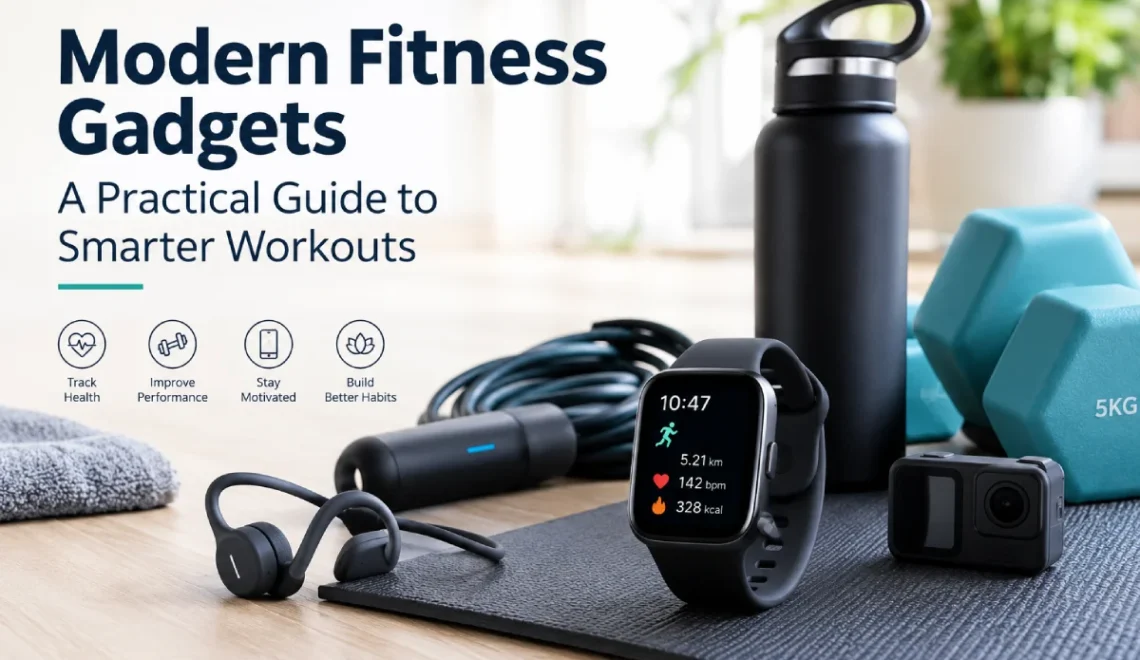
Modern fitness gadgets have become increasingly common among people who want to understand their workouts and daily activity better. From smartwatches and fitness trackers to heart-rate monitors and connected exercise equipment, these devices can collect useful information about movement, exercise duration and selected health metrics. However, they work best as supporting tools rather than replacements for consistent exercise, recovery and good nutrition.
This Article Is Part of the Fitness Gadgets Hub
Explore fitness gadgets, smart workout devices, wearable technology, features, guides, and other useful information in our Fitness Gadgets Hub.
What Are Modern Fitness Gadgets?
Modern fitness gadgets are electronic devices designed to help users track physical activity, monitor selected fitness measurements, or make workouts easier to organize.
Common examples include:
- Smartwatches
- Fitness trackers
- Heart-rate monitors
- Smart scales
- GPS running watches
- Smart skipping ropes
- Wireless workout headphones
- Connected exercise equipment
The right device depends on what you want to measure and how you exercise.
Key Types of Fitness Gadgets
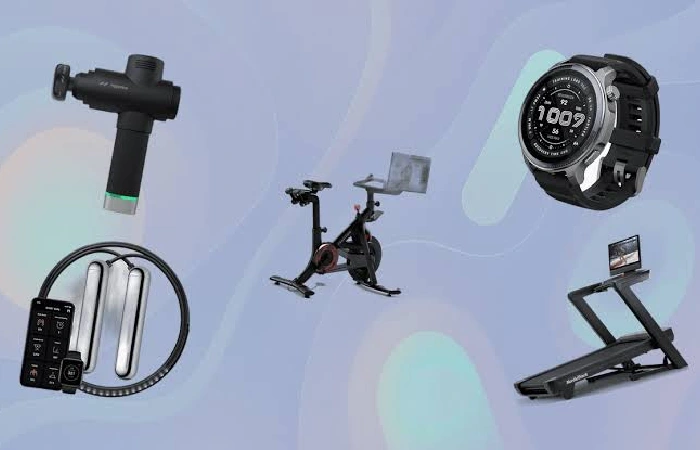
Smartwatches and Fitness Trackers
Smartwatches can track steps, distance, heart rate, workouts, and, depending on the model, GPS activity and sleep-related information. Fitness trackers generally focus more on everyday activity and basic fitness measurements.
They can be useful for someone trying to become more consistent with walking, running, or general exercise.
Heart-Rate Monitors
Heart-rate monitors help users observe how their heart rate changes during exercise. Chest-strap monitors and wrist-based sensors are commonly available.
They can be particularly useful for people who structure workouts around exercise intensity, although consumer devices should not be treated as medical-grade diagnostic equipment.
Smart Scales
Smart scales may estimate body weight and other body-composition measurements. These readings can help users observe longer-term trends, but hydration and other factors can affect results.
They are best used alongside other progress indicators rather than as the sole measure of fitness.
Modern Fitness Gadgets: Features and Specifications
Different devices provide different combinations of features. The following table shows what to consider rather than suggesting that one specification is automatically better.
| Feature | What it does | Useful for |
|---|---|---|
| Step tracking | Records daily movement | Walking goals |
| Heart-rate monitoring | Estimates heart rate | Cardio and training |
| GPS | Records outdoor location and distance | Running and cycling |
| Sleep tracking | Estimates sleep patterns | Routine awareness |
| Workout modes | Records different activities | Training logs |
| Smartphone connection | Transfers data to an app | Progress tracking |
| Water resistance | Provides protection from water exposure | Swimming and sweaty workouts |
| Battery life | Determines charging frequency | Regular use |
How to Use a Fitness Gadget: Simple Workflow
A fitness gadget becomes more useful when it is incorporated into a realistic routine.
Step 1: Define your goal.
Decide whether you want to track walking, running, strength training, general activity, or another form of exercise.
Step 2: Choose relevant measurements.
Focus on information you will actually use, such as steps, workout duration, or distance.
Step 3: Wear or use the device correctly.
Follow the manufacturer’s instructions for positioning and setup.
Step 4: Record your activity consistently.
Look for patterns over several weeks instead of reacting to individual daily readings.
Step 5: Adjust your routine gradually.
Use the information as feedback when planning realistic changes to your activity.
Performance Expectations: What Can You Really Expect?
Fitness gadgets can make activity tracking easier, but they cannot guarantee better fitness results.
Step counts and workout duration are generally straightforward measures. However, calorie expenditure, sleep stages and some body-composition measurements are estimates and can vary between devices and individuals.
For example, a smartwatch showing that you burned a particular number of calories should not automatically be interpreted as an exact measurement. Similarly, a change in a smart-scale body-fat reading may partly reflect hydration or other short-term factors.
The most useful approach is to look at long-term trends and combine device data with how you actually feel and perform.
Pros and Limitations
Pros
- Makes activity easier to monitor
- Can support goal setting
- Provides workout records
- May encourage regular movement
- Can make progress easier to review
- Some devices offer GPS and training features
Limitations
- Measurements are not always perfectly accurate
- Some advanced features require expensive devices
- Battery charging can become inconvenient
- Constant tracking may not suit everyone
- Some metrics can be misunderstood
- Apps may collect personal activity data
Technology should support your fitness habits rather than make exercise unnecessarily complicated.
Who Should Buy a Fitness Gadget?
A fitness gadget may be useful if you enjoy tracking progress, follow structured workouts, participate in running or cycling, or simply want greater awareness of your daily movement.
A basic tracker can be sufficient for someone interested mainly in steps and activity. More advanced users may benefit from GPS, workout-specific tracking or additional sensors.
You do not need a fitness gadget to become fit. Beginners can make significant progress using simple activities such as walking, bodyweight training and regular strength or cardiovascular exercise.
Who Should Avoid Buying One?
Consider skipping a gadget if you are unlikely to use the information it provides or if tracking numbers makes exercise stressful.
Someone starting a basic exercise routine may benefit more from establishing consistency before investing in technology. A device should solve a practical problem, not create another source of unnecessary pressure.
How to Choose the Right Gadget
Before buying, consider:
- Your activity: Choose features that match running, walking, cycling, gym training or your preferred activity.
- Compatibility: Check whether the device works with your smartphone.
- Battery: Consider how frequently it needs charging.
- Comfort: A device should be practical enough for regular use.
- Durability: Look at water and sweat resistance where relevant.
- Data privacy: Review what information the associated app collects and how it is handled.
- Cost: Avoid paying for features you will never use.
Alternatives to Fitness Gadgets
Technology is only one way to monitor fitness. Alternatives include a simple exercise diary, smartphone activity tracking, a traditional stopwatch, a pedometer or a written workout log.
For many beginners, these simpler options can provide enough information without requiring another connected device.
Activity trackers can provide useful feedback on steps, heart rate, activity intensity and other fitness metrics, helping users monitor their progress and set realistic goals. Mayo Clinic’s guide to activity trackers
Are Modern Fitness Gadgets Legitimate and Reliable?
Established fitness gadgets are legitimate consumer technologies, but individual measurements should be interpreted carefully. Accuracy can vary according to the sensor, activity, device placement and measurement method.
Look for established manufacturers, clear technical information, software support, privacy policies, and independent testing where available. Avoid products making unrealistic health or medical claims.
Frequently Asked Questions
What are modern fitness gadgets?
Modern fitness gadgets are electronic tools that help users track physical activity, workouts, or selected fitness measurements. Common examples include smartwatches, fitness trackers and heart-rate monitors.
Are modern fitness gadgets accurate?
Accuracy varies by device and measurement. Basic activity data may be useful for tracking trends, while calorie, sleep and body-composition estimates should be treated as approximate.
Are fitness gadgets useful for beginners?
Yes, but they are optional. Beginners can use them to monitor activity and build consistency, but effective exercise does not require expensive technology.
What is the most useful fitness gadget?
There is no single device that suits everyone. A fitness tracker may be enough for daily activity, while runners or cyclists may prefer a GPS-enabled smartwatch.
Conclusion
Modern fitness gadgets can make it easier to monitor activity, organize workouts, and understand long-term trends. Smartwatches, fitness trackers, heart-rate monitors and connected devices each have different strengths and limitations.
The best choice is one that matches your actual fitness goals and provides information you can use. Treat device readings as useful feedback rather than perfect measurements, and remember that consistent exercise, recovery, nutrition and sustainable habits remain the foundation of fitness.
Innovative Fitness Gadgets Hub
Explore our complete guide to innovative fitness gadgets, including smart gym gadgets, home workout devices, gadget reviews and comparisons, buying tips, and beginner-friendly fitness technology.