
Types of Peptides for Muscle Growth: A Beginner’s Guide
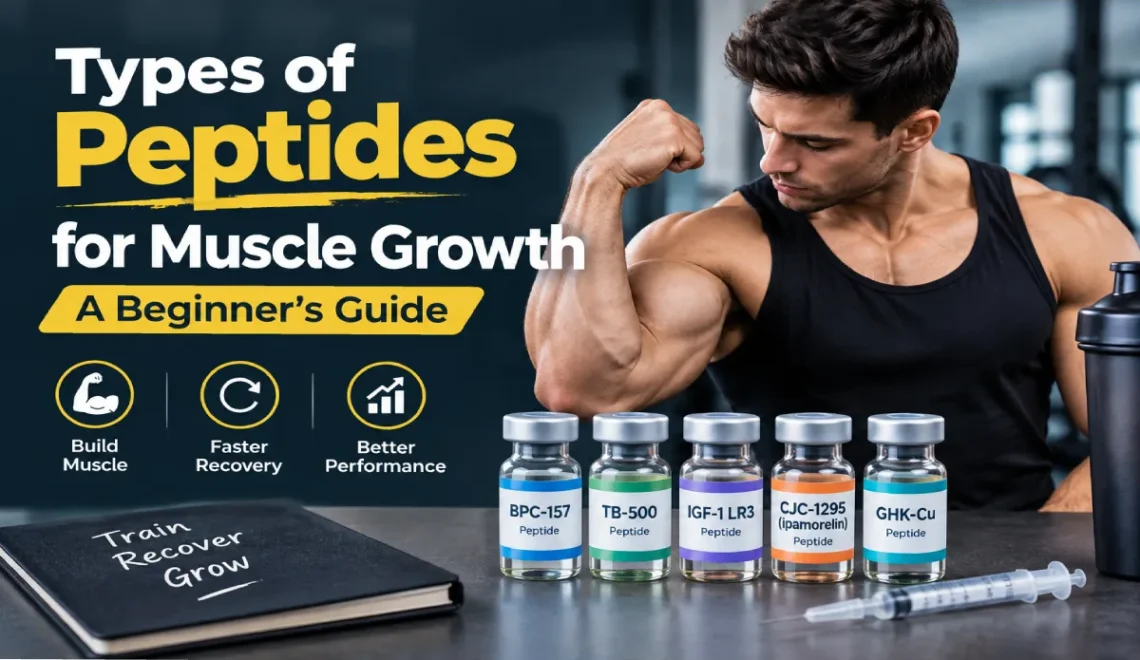
When searching for types of peptides for muscle growth, you will soon find a lengthy list of substances that are ‘recommended’ on the Internet for building muscle, enhancing recovery or boosting performance. However, peptides are not just one more kind of performance supplement.
Peptides are compounds made of chains of amino acids, which may function as signalling molecules in the body. Some are medically effective, while others are experimental and have not been proven to be effective or safe supplements for adding muscle in healthy people.
Before you even look at a product, it is essential to realize the distinction.
This Article Is Part of the Muscle Building Hub
Explore muscle-building workouts, training plans, exercises, recovery tips, and other useful information in our Muscle Building Hub.
What are peptides?
Biochemicals and Body Chemistry What are peptides? Peptides are made up of amino acids-the same building blocks that make up proteins. There are some peptides that naturally occur in the body and are important in hormone production, immune response, tissue repair and growth.
Some synthetic peptides are engineered to copy or alter natural biological signals.
This is also where peptides’ potential connection to muscle development enters the conversation. But a biological action does not necessarily translate to a known muscle-building benefit. The evidence base, legal classification, safety and purity profile varies widely from peptide to peptide.
Main Types of Peptides for Muscle Growth
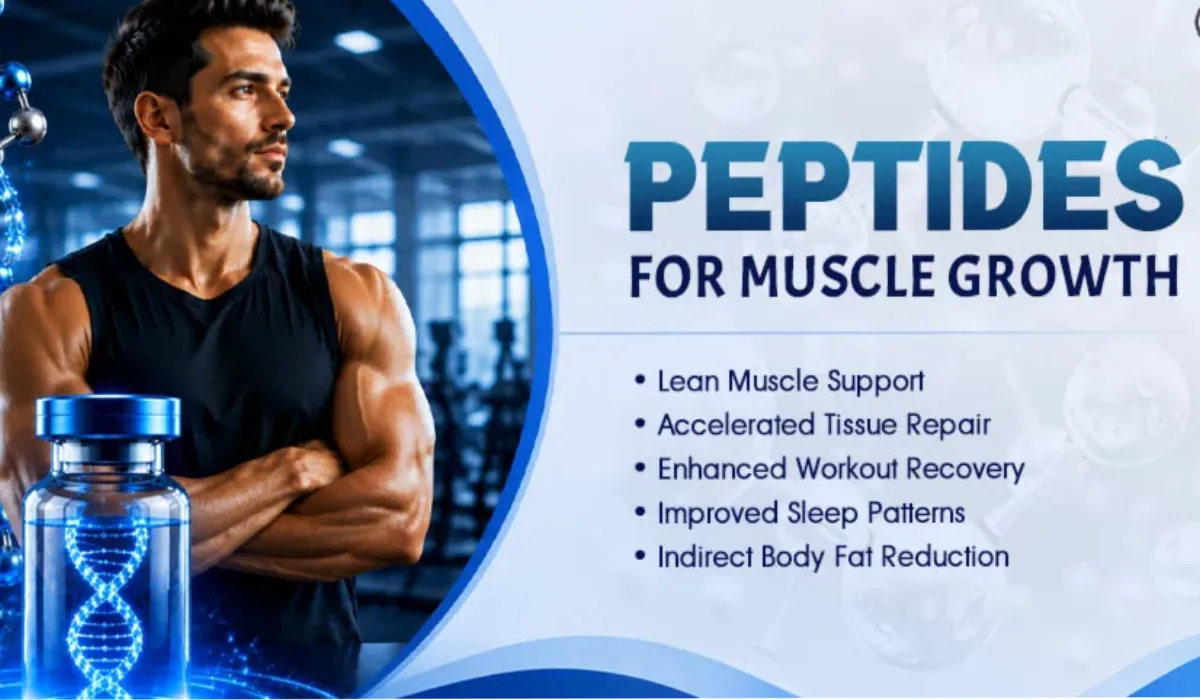
There are several main categories of peptides discussed in the gym community.
1. Growth-hormone-related peptides
These are peptides that play roles in various aspects of growth hormone signalling.
Some peptides like GHRH analogues and growth-hormone secretagogues have been discussed online, but just because a peptide stimulates GHRH pathways doesn’t mean it has been shown to be safe or helpful in healthy lifters.
Growth-hormone has a complex effect throughout the body, and disrupting its pathways can cause it to have negative effects.
2. Tissue-repair peptides
BPC-157 peptide regularly pops up in the gym community because of its healing and tissue-repair qualities. Most of the information around BPC-157 is based on early studies rather than clinical trials, so it’s not really a treatment yet.
3. Myostatin-related compounds
Myostatin is a protein involved in muscle growth. Because of its function in muscle growth, some research has looked into how to block or otherwise modify the pathways of myostatin. This has the potential to become a novel approach to muscle development, but it currently isn’t an accepted method of helping build muscle.
4. IGF-related compounds and peptides
These relate to the insulin-like growth factor-1 hormone, a growth-related hormone that can influence tissue development.
IGF-related compounds are discussed online due to their link to growth and muscle growth promotion.
However, IGF-1 signalling can influence many other processes, so these compounds shouldn’t be thought of as being comparable to protein powders or other sports nutrition supplements.
Peptide-based drugs can involve important safety considerations, including immunogenicity, drug interactions, and other clinical factors, so it is important to understand the evidence before considering them. FDA: Clinical Pharmacology Considerations for Peptide Drug Products
Peptides Vs Protein Supplements
One of the key difference here is that peptides are completely different from protein supplements.
| Feature | Peptides | Protein supplements |
|---|---|---|
| Basic structure | Short amino-acid chains | Larger proteins or protein mixtures |
| Main purpose | Often biological signalling | Convenient dietary protein |
| Typical examples | Experimental or prescription compounds | Whey, casein, soya, pea protein |
| Regulation | Varies substantially | Food/supplement regulations vary by country |
| Muscle-building evidence | Depends heavily on compound | Protein supports muscle protein synthesis when dietary intake is adequate |
| Main concern | Drug-like biological effects and product quality | Dose, ingredients and overall diet |
While you will be providing amino acids to your body that the body can use to maintain the tissues normally, a protein powder can provide your body to promote muscle protein synthesis. A pharmacologically active peptide can change a biological signaling pathway.
Do Peptides Increase Muscle Mass?
This is where marketing may sometimes outpace research. Several peptide pathways are known to be involved in muscle biology, and laboratory or clinical studies have documented muscle-related effects of certain substances.
However, this does not mean that injecting an unapproved peptide is going to reliably and safely lead to significant muscle growth in a healthy individual.
To gain muscle mass, you still need to:
- Progressive resistance training
- Adequate protein
- Sufficient total energy
- Recovery
- Sleep
- Consistency
For everyone else, then, utilising these fundamentals should provide a far more straightforward and more well-established way to gaining muscle than any investigational drugs.
Limitations and Possible Benefits
Potentially relevant effects Some peptides may be investigated by researchers for:
- Hormonal signalling
- Tissue repair
- Muscle-related pathways
- Recovery mechanisms
- Metabolic effects
- Treatment of particular medical conditions
There are plenty of areas of research that are scientifically interesting here, but they should not be taken as evidence that each and every peptide being sold online will support building muscle.
The major caveats:
The US Food and Drug Administration has issued warnings regarding the dangers of unapproved drugs and products that contain some of the compounded peptides listed below.
- Limited high-quality human research for many compounds
- Unknown long-term effects
- Potential hormonal complications
- Variable product quality
- Contamination or incorrect labelling
- Unclear dosing outside clinical settings
- Different regulatory status between countries
The US Food and Drug Administration has issued warnings regarding the dangers of unapproved drugs and products that contain some of the compounded peptides listed below.
Safety of Peptides: What do you need to know?
The safety will be very specific to the peptide, from the source, dosage and your health status. Anything that is bought online is not necessarily what it states on the label.
The injections have an added component of risk which can include contamination or infection if the product is not produced or stored under conditions that are safe.
It can also include biological risk, as for example when any action on growth hormone or related signalling genes may influence the way in which the body metabolizes insulin or fluid balance. A product that a peptide is marketed as natural/ research only/ not hormonal, does not mean that it is safe in humans. A conversation with a healthcare professional with correct experience, should be done if using peptides for a medical reason and not a social-media fan.
A better muscle-growth process
Before making a start with drug-like substances, get the basic stuff in order.
1. Resistance training programme that gradually overloads the big muscle groups
2. Sufficient protein levels to support your body on a daily basis (the adult RDA is 0.83g of protein per kilogramme of body weight per day, but larger quantities may be necessary for those who workout regularly)
3. Total food intake that supports positive energy balance
4. Recovery (sleep and rest days are important for success)
5. Consistent training progress, 10-20% increase in training volume every week over a 4-6-week period in addition to trackable increases in strength and body weight
6. When asking whether or not to take a drug-like peptide, speak to a doctor about the risks associated with using an injectable or non-licensed product.
How Fast Will I Grow To Muscle?
Peptides are not a magic bullet to gain muscle quickly.
However, even the best trainers and the best diets will not instantly turn you into a muscle monster. Newcomers to serious training will typically notice increases in strength fairly soon, but actual muscle growth (size) is a slower process.
Growth timelines are dependent on:
- Training experience
- Genetics
- Age
- Nutrition
- Sleep
- Training quality
- Starting body composition
Be highly sceptical of people claiming massive gains in just a few weeks.
Who Must Not Use Experimental Peptides?
If you: For competitive athletes, it is advisable to consider the anti-doping regulations applicable to hormones and peptides before taking any hormones or compounds related to peptides.
- Have an existing medical condition
- Take prescription medication
- Are pregnant or breastfeeding
- Are under 18
- Have unexplained hormonal symptoms
- Are considering injectable products from unverified sources
The World Anti Doping Agency (WADA) Prohibited List lists a number of growth-hormones and secretagogues.
Alternatives to Peptides for Muscle Growth
For most people, tried-and-true training and diet approaches are the best place to start. Resistance exercise
1. Progressive resistance training: It is the most important stimulus for muscle growth.
2. Dietary protein: Foods such as eggs, dairy, fish, lean meat, tofu, soy, beans and lentils.
3. Protein powders: Whey, casein, and plant-based protein powders if the goal for the day can’t be achieved from food sources.
4. Creatine monohydrate: When used in conjunction with resistance training, creatine monohydrate is arguably the most studied sports supplement for high-intensity exercise and lean muscle.
FAQs
Which Peptides are Best for Muscle Growth?
No officially established “best” list of peptides are recommended by medical professionals for healthy individuals who want to build muscle. Some are experimental and some have only anecdotal evidence of efficacy.
Are peptides safe for building muscle?
Everything depends on the compound. There isn’t enough research available for many of the peptides marketed for muscle building for long-term use in healthy adults, and some aren’t approved for such use.
What peptides help you gain muscle?
Based on what is currently known and there is not enough evidence, unapproved peptides do not guarantee faster or safer muscle growth. The basics of hypertrophy are still training, food and rest.
What are peptide supplements?
No. Protein powder is a source of nutrients, while pharmacological peptides are often used as biological signals.
Can beginners use muscle-growth peptides?
Newcomers have little reason to consider novel agents at all. A regimen of resistance training, good nutrition (protein and calories) and recovery will be all they need to get a head start.
Conclusion
The peptides being discussed online for muscle growth include anything from growth-hormone related to tissue-repair and myostatin related peptides still under research. This does not mean, because they are interesting and studied biochemically, that they are proven or safe bodybuilding drugs. For most of us, the simple solution is to get strong by progressive resistance training, eat enough protein and overall food energy, and sleep/recover sufficiently. If you are considering a peptide for a use other than bodybuilding, seek medical advice and check with the regulator rather than the gobs of influencers or unverified sources online.
Muscle Building Peptides Hub
Explore the complete guide to muscle-building peptides, including how they work, types used for muscle growth, potential benefits, side effects, legal considerations, and how they compare with supplements.