
Potential Benefits of Muscle Building Peptides
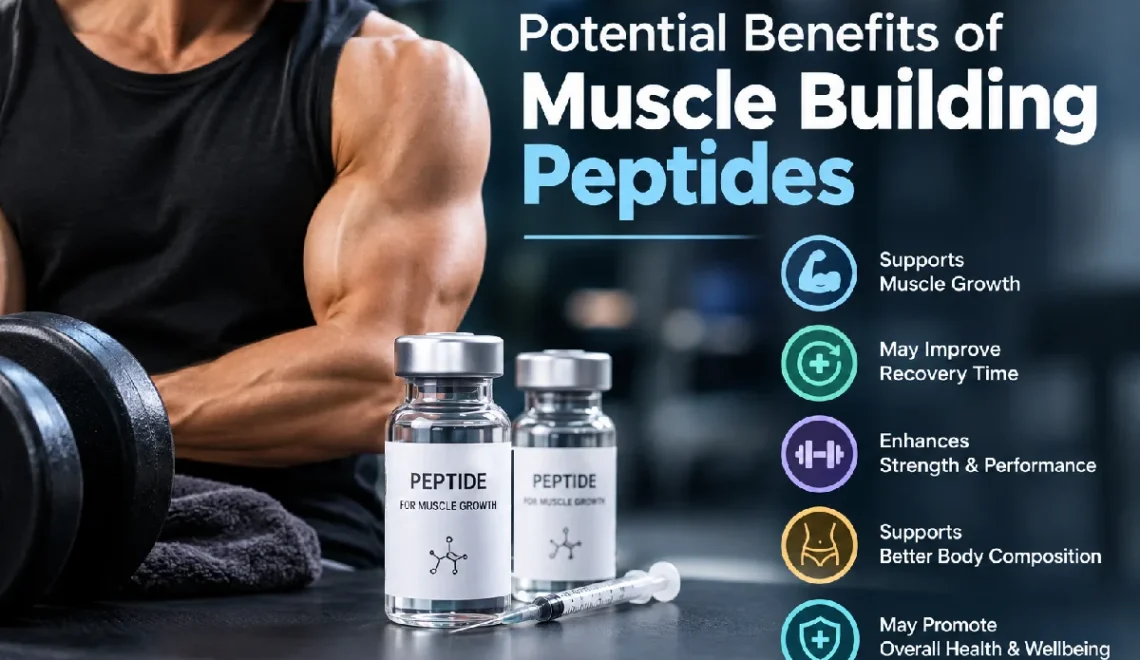
Bodybuilders and fitness enthusiasts have become keenly interested in the world of peptides since it has become possible to manipulate certain biological pathways related to growth hormone production, tissue growth and repair, metabolism, and body composition, as certain substances are capable of activating these pathways within your body. As such, peptides have allegedly been touted as potentially providing bodybuilders and fitness advocates with abilities to build muscle and recover at rapid rates and possibly obtain improved physique composition.
With that being said, the abilities of muscle-building peptides should not be interpreted without question. Certain peptides function in unique pathways of biological activation and there is very little scientific research conducted on certain types of peptides while several have very well-known or documented therapeutic uses while other types are still considered experimental or to have a purpose that has no significant human testing behind it yet.
This Article Is Part of the Muscle Building Hub
Explore muscle-building workouts, training plans, exercises, recovery tips, and other useful information in our Muscle Building Hub.
-
Potential to support muscle growth.
The mechanism some peptides act through is by impacting upon the signalling pathways controlling growth hormone and insulin-like growth factor 1 (IGF-1). Growth hormone and IGF-1 have roles within multiple aspects of growth, metabolism and tissue repair.
As these two hormones have an influence over functions which are associated with muscle it is not surprising that a lot of interest, particularly from those in sport and bodybuilding, has emerged regarding peptides which affect these hormonal pathways.
One does not simply increase the size of ones muscle just because one increases the levels of hormones which affect muscle development. Growth of muscle has an obligation to many different processes to continue to grow, mainly relating to resistance training, consumption and calorie intake, sleep and recovery and of course genetics.
-
Potential influence on recovery
Recovery would be another rationale for discussing peptide compounds within fitness circles.
Various research peptides are being explored for their potential influence on repair and other biological pathways. Peptide compounds such as BPC-157 and TB-500 are common talking points in the online fitness world and are usually proposed for their positive impact on recovery.
The proposed argument is that by affecting certain biological pathways the body would be assisted naturally.
Nonetheless the majority of these peptide compounds have little documented evidence in humans. When you review data coming from laboratory or animal testing studies then you simply can not transfer that finding directly to healthy individuals using the compounds for bodybuilding.
Anyone interested in pursuing peptides for recovery would thus have to differentiate between a research concept and an established medical therapy.
-
Effect of Body Composition
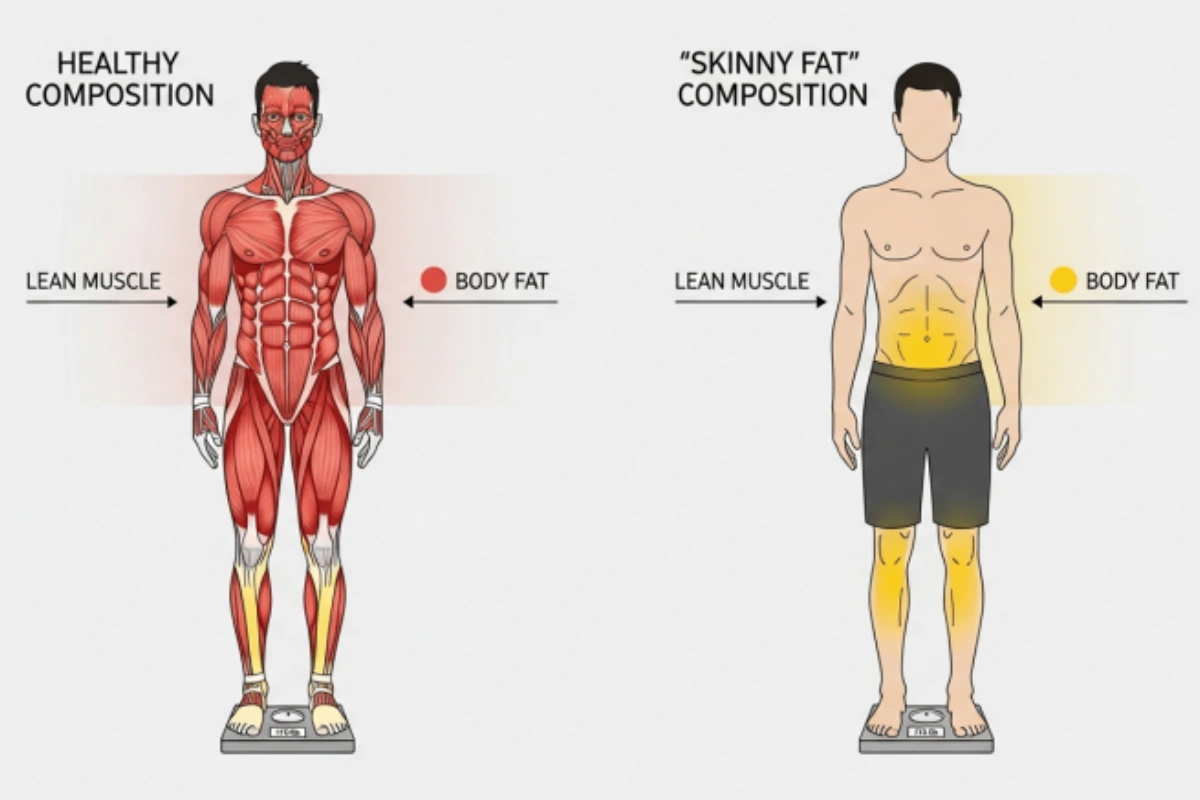
Several peptides have been researched for the potential effect they might have upon the body fat, appetite and body composition. In a bodybuilder, removal of body fat is used to enhance definition of muscles and thus a body composition study could potentially explain the reason certain metabolic or hormonal peptides are mentioned along with muscle building compounds. However, one must keep in mind that a decrease in body fat is not the same as an increase in muscle.
Thus an increase or decrease in body weight / composition should not by definition be called muscle gain.
The mechanism, clinical evidence must be examined for each individual.
-
Potential Impact on Growth Hormone Signalling
Some types of peptides can stimulate or affect the body’s pathway governing the production of growth hormone. The body produces it naturally within the pituitary gland, playing a role in growth, metabolism and tissue maintenance. Certain peptides activate the receptors and signaling cascade for controlling secretion of growth hormone.
This is perhaps the strongest biological effect that has lead athletes to consider taking peptides for performance enhancement purposes.
However it is not automatically that more growth hormone translates to more muscle on equal footing. Biological systems governing hormones are highly interconnected, so changing one pathway may result in other impacts throughout the system. Therefore, growth hormone producing peptides are certainly not in same category of ” sports supplement” as more conventional types are.
-
Other research areas of potential interest regarding muscle recovery:
Peptides are also involved in more general research work focusing on muscular and related tissues. Researchers are exploring the role of various signaling pathways in order to identify if there is a role for some compounds as pharmaceutical applications in areas such as muscle wasting, recovery from injuries, or other specific illnesses. While this work is very exciting and could play a great role in medicine, it’s crucial to distinguish between a research perspective and established body-building applications. Having a compound researched for a specific medical issue does not equate to having proven its effect in order to achieve muscle growth at the health gym.
-
Possible aid to training adaptation
Training against resistance is associated with a cascade of adaptions in skeletal muscle, these are; changes to muscle protein synthesis, cellular signaling, cellular metabolism and neuromuscular function. A number of peptide pathways are known to have relevance to these adaptions. This has resulted in inquiry into how the peptides might be of benefit to adaptation to training. Training is likely the dominant stimulus behind muscle gains though, peptide does not substitute progressive resistance training, for an individual new to resistance training mastering technique, and consistently and progressively increasing resistance training needs are probably more significant than the use of untested compound.
For balanced information on the potential benefits and limitations of peptide therapies, readers can refer to the National Institutes of Health (NIH) for research-based health information.
-
Realistic Use of Research
Perhaps one of the most realistic positive outcomes of peptide research is the possibility of increased knowledge on growth and tissue regeneration regulation within the human body. Peptide pathways are useful for researchers studying:
- Muscle growth mechanisms
- Hormonal regulation
- Tissue repair
- Metabolic processes
- Cellular signalling
- Muscle-wasting conditions
- Potential future medical treatments
In the future it is possible that this type of study could lead to effective therapeutic use. Although, it is important not to take the results of research as an indicator that any of the peptide combinations that can be purchased online would be beneficial when ingested by humans.
Potential Benefits vs Evidence Strength
| Potential benefit | Why it attracts interest | Evidence consideration |
| Muscle growth | Some peptides influence growth-related pathways | Evidence varies considerably |
| Recovery | Certain compounds are investigated for tissue repair | Human evidence is limited for many products |
| Body composition | Some peptides affect metabolic pathways | Fat loss does not necessarily mean muscle gain |
| Growth hormone signalling | Some compounds influence hormone release | Hormonal changes do not guarantee hypertrophy |
| Muscle research | Peptide pathways are relevant to muscle biology | Research potential is not the same as proven treatment |
Caution is advised when discussing peptide benefits.

A major issue in communicating peptide benefits is that online marketing strategies can make initial experimental results appear as though the results were a done deal.
For example, an experimental study in a laboratory may suggest that an effect is on a specific cell pathway. A small human study might suggest that the hormone level increased. None of this indicates what effect a healthy athlete will experience using it from a perspective of gaining substantial muscle mass.
Product quality can also be of concern. Unauthorized, internet-sold products could consist of errors relating to its purity, concentration, contamination, or label. An injected product would create additional hazards from any perceived error in sterility or quality manufacturing.
The FDA has expressed safety concerns of multiple compounded peptides and acted against several others advertising peptide products that are not approved for human usage.
What can really benefit the build-up of muscle?
The core principles behind building muscle should not be outdone even if discussing the possible benefits of peptides.
- Progressive resistance training: Muscles have to be given adequate stimuli and a program of incrementally higher resistance, more repetitions, a greater workload or increased intensity can cause an adaptation in training.
- Sufficient protein: Muscles are made out of the amino acids found in protein. It is therefore an important part of any resistance training program and nutrition should contain enough of this foodstuff.
- Enough energy intake: An attempt to build muscle naturally relies on an adequate amount of energy from total energy intake in conjunction to the training itself, an energy deficit may impede the processes of muscle growth.
- Good sleep: Recovery constitutes an essential part of training adaptation; poor sleep consistently will interfere with training performance and recovery.
- Consistency over the long term: An improvement in the build up of muscle is very much a slow process; it’s these long-term sustained plans that are ultimately more of benefit to the individual as compared to any one given intervention.
Are the potential benefits from peptides worth the risks?
There is no one answer, as peptide compounds can be very different from one another, some peptide medications have well-founded medical uses, and some are more experimental. The risks associated with peptides can vary depending on a variety of things: the compound, how it’s formulated, by which route it’s administered, from where it was sourced from, and individual health factors.
For healthy people simply wanting to increase their muscle mass, it is unlikely that the often scarce evidence associated with bodybuilding peptides would deem it a common substitute for a solid workout and nutrition routine. This aspect should also be taken into consideration for competitive athletes when referring to World Anti-Doping rules, as many peptide hormones, growth factors and growth-hormone analogs are banned.
Final Takeaway
The beneficial potential for building muscle using peptides seems to be via the influence of specific biological pathways regulating growth hormone signaling, tissue repair, metabolism and general cellular activity. While these are a promising area for research and explanation for potential benefits, this doesn’t necessarily prove that all marketed peptides for building muscle actually create these effects or lead to improved performance.
However, for the average person, the most stable methods of building muscle is through increased progressive resistance training, balanced protein intake, sufficient energy intake, decent sleep and consistent recuperation. Products promoting the building of muscle through peptides should be evaluated individually based upon the scientific data, legal standing, and safety of their product rather than hearsay from the net.
Muscle Building Peptides Hub
Explore the complete guide to muscle-building peptides, including how they work, types used for muscle growth, potential benefits, side effects, legal considerations, and how they compare with supplements.