
How Muscle Building Peptides Work
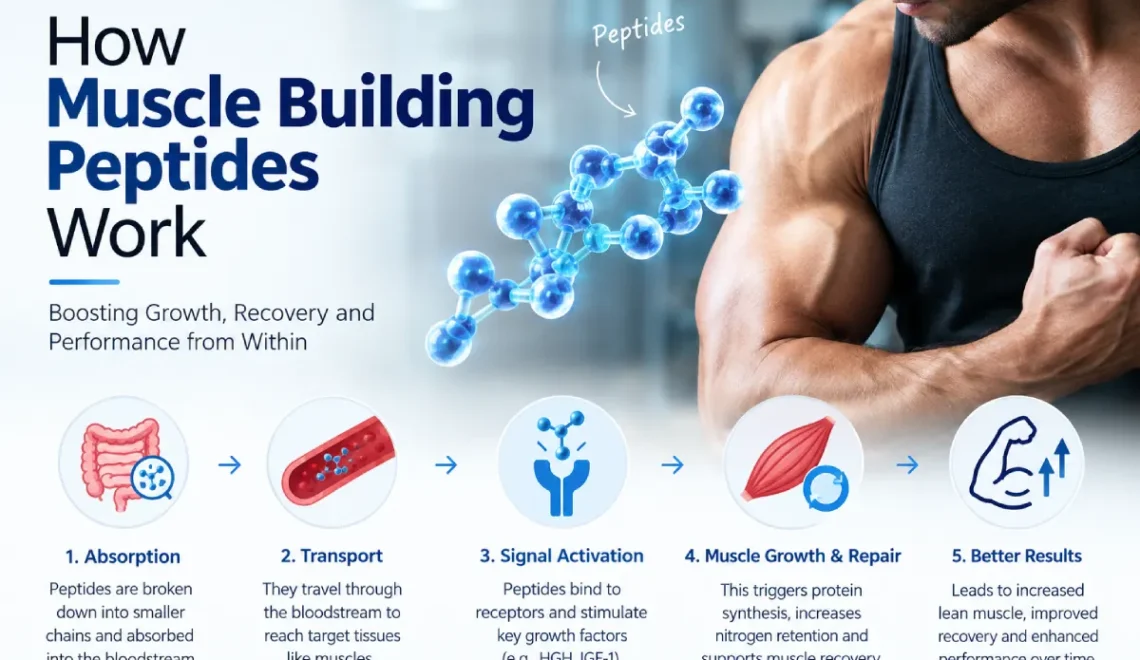
Peptides for muscle building are small sequences of amino acids, which have certain effects on the body’s processes. Although supplements that use proteins (amino acids to provide nutrient values), some peptides are signalling mechanisms; they bind with sites or signaling pathways related to hormones, the metabolism or tissues growth and repair. It is the reason why these compounds are receiving such an interest in the fitness industry and in body building community.
Nonetheless, it is crucial to realize not every product sold to be consumed while trying to muscle mass work in the same way. Indeed, others use growth hormone signaling pathway, while others are under study to reveal potential other bodily functions. Nevertheless,, the datas vary a lot from one to others, and many products advertised as protein to build muscle don’t possess their authorized use.
This Article Is Part of the Muscle Building Hub
Explore muscle-building workouts, training plans, exercises, recovery tips, and other useful information in our Muscle Building Hub.
Peptides and biological signaling
Perhaps the simplest explanation for what a peptide does is to liken its function to a biological messenger. The biological system works by having cells in the body “talk” to each other using biological signals: hormones, proteins, peptides are all examples. When a peptide comes into contact with cells in the body, it attaches to a certain receptor site and this then kick-starts a sequence of events.
Some of the peptides mentioned when discussing muscle building aim to affect growth hormone related pathways. Growth hormone is made by the pituitary gland and it does play a part in the development of tissue, metabolism and growth.
Certain peptide compounds are able to increase and affect growth hormone secretions. This is nothing like simply taking growth hormone; some peptides are able to influence existing receptors that are a part of the bodies regulation system for hormone release.
What is important to note however, is that a raised biologic signal does not equate massive muscle hypertrophy, hypertrophy is multifaceted and occurs primarily from resistance training, diet, sleep and a complex multitude of interconnected physiological mechanisms.
Growth hormone secretagogues—How They Function

Peptides that have become popular among the community of bodybuilders also appear in various growth hormone secretagogues or growth hormone-related ways.
Generally, GH released by your body is under precise feedback regulation where different signaling molecules present in the hypothalamus and pituitary have two major pathways affecting your GH: one stimulatory and one inhibitory
Some peptides interact with one or both of the receptors associated with this system. Consequently, their action leads to an increased secretion of growth hormone from your pituitary gland.
The interaction with growth hormone can affect various mechanisms involved with the body’s use of protein, development of body tissues etc and can also stimulate the production of insulin-like growth factor 1 (IGF-1).
However, it’s a false premise that the more growth hormone, the more muscle.
Hormone levels fluctuate naturally over a twenty-four-hour cycle and can also rise and fall depending on such things as your sleeping patterns, work rate, dietary intake and age. Pumping increased levels of hormones into the system does not mean that muscle size and/or strength will increase by a correspondingly higher factor.
To understand how peptide-based therapies interact with the body, readers can explore research and educational resources from the National Center for Biotechnology Information (NCBI).
The Role of IGF-1
IGF-1 is another important element of the growth signalling pathways. Growth hormone acts upon the liver and other tissues to bring about IGF-1 production. This compound then binds to cellular receptors to influence growth-related and other cell processes.
In the muscle cell, growth signalling may be related to the regulation of protein synthesis and other processes, and it’s likely that compounds acting on the hormone growth hormone – IGF-1 signaling pathway have gained significant interest among athletes as a consequence of this finding.
However, IGF-1 is not just a switch in the muscle building process-it plays an enormous role in other processes around the body. Therefore, manipulating this pathway may have effects on tissue other than skeletal muscle. This is precisely why hormonal pathway modulating compounds are not similar to your typical supplements.
Peptides and Muscle Protein Synthesis
To ultimately build muscle, you consistently need an environment which allows protein synthesis to outweigh protein breakdown over the long term.
The single best stimulus for this process is resistance training. Given the proper stress load, the body will attempt to remodel muscle tissue with the provided building blocks.
Sufficient protein in the diet ensures these building blocks are available and that they can be applied in order to optimize the adaptation. Sleep and recovery also play a role in the adaptation process.
Peptides, which may stimulate a downstream pathway of muscle growth, simply cannot and will not serve as an acceptable substitute for the primary stimulus provided by resistance training itself.
For instance, there is absolutely no expectation that taking a peptide without proper training progression will yield the same stimulus response that actual progressive resistance training will provide, nor that one will build as much muscle over a specified time period given that there is insufficient protein in the diet or inadequate recovery time allotted to the muscle to itself adapt properly.
Peptides and Recovery

Certain peptides are more likely to be promoted for recovery compared to actual growth of the muscles. These are sometimes claimed by marketers for effects such as repair or reduced inflammatory responses or other cell activities. The “experimental” peptides that can be read about over the internet include TB-500 and BPC-157.
Results of lab studies or initial data on certain chemicals, however, should not be confused for actual medicines in general practice. Many recovery peptides have questionable proven effects in humans, and in the case of those on the market it is crucial to consider many are not authorized drugs. The FDA notes on compounded drugs such as some peptides have safety and quality concerns including impurity and immune responses as well as not adequate data in many of the compounds. Claims on healing time should not be blindly followed solely based on word-of-mouth reports or anecdotal information.
So why do results vary
Even on the same compound, people have very different responses.
Factors that may affect muscle growth are:
- Training experience
- Genetics
- Age
- Hormonal health
- Protein intake
- Total calorie intake
- Sleep quality
- Training volume
- Recovery
- Existing medical conditions
However, there is also a large difference between use by medical patients and healthy athletes. If a drug is tested for certain effects, it cannot just be applied as a musle-builder to healthy people.
Peptides: It is not ‘protein powder’
Finally, it is worth contrasting peptides with dietary protein. When you ingest dietary sources of protein such as eggs, fish, milk, beans or meat, your stomach breaks proteins down into smaller units such as amino acids and peptides, these will then be used for building muscle etc.
A ‘pharmacological peptide’ however is designed, selected specifically for a target. Hence to ‘only’ call it ‘amino acids’ might lead to the impression it acts like a protein supplement.
The Bottom Line
A biological signaling pathway can be influenced by building peptides and some examples that could influence growth hormone or related systems might be a key to why peptides became popular within bodybuilding circles, but that doesn’t necessarily mean great growth increases will occur.
Progressive resistance exercise, sufficient protein, good energy, sleep and recovery continue to remain fundamental to muscle development in the general population, and are compounds that should not be circumvented, especially when evidence of the compound used in humans is lacking, or not cleared for said purpose.
Muscle Building Peptides Hub
Explore the complete guide to muscle-building peptides, including how they work, types used for muscle growth, potential benefits, side effects, legal considerations, and how they compare with supplements.