
Adjustable vs Fixed Gym Equipment
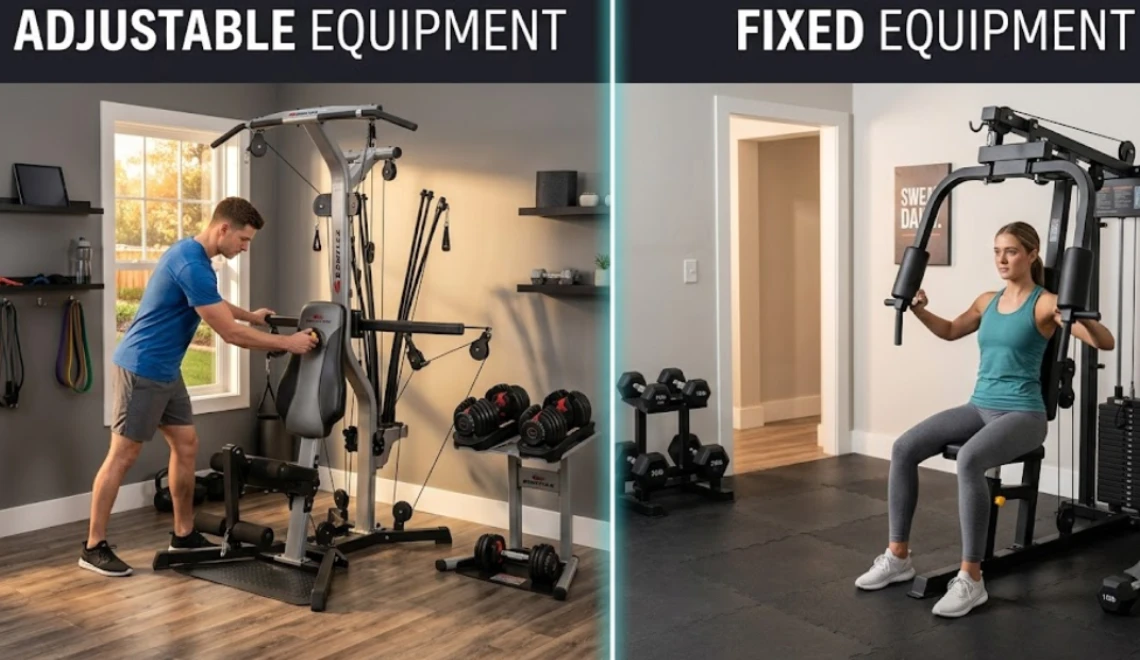
When setting up a home gym, the most basic of all choices that you’ll need to make involves selecting either adjustable or fixed gym equipment. Each equipment type has its own benefits and limitations; whether it’s best suited for you or not comes down to your fitness program, personal preferences, the space and budget that you have at your disposal, and even the direction that your future training aims toward.
The advantage of adjustable equipment is also reflected in the price. Adjustable equipment is one of the most popular options for most people, as it doesn’t take up much space. But if you prefer simplicity, durability, a familiar workout, and the experience of a gym you know you’ll go to again and again, consider fixed equipment.
This Article Is Part of the Fitness Tips Hub
Discover proven fitness strategies, workout plans, strength training techniques, cardio exercises, recovery tips, and healthy lifestyle advice in our Fitness Tips Hub.
What Is Adjustable vs. Fixed Gym Equipment?
Adjustable equipment—Adjustable equipment lets you adjust the weight, resistance, or position of that one workout tool. That’s how dumbbells and benches work. fixed equipment – This equipment’s weight or structure is fixed. That means it cannot be adjusted to increase or decrease the weight or resistance level.
That’s true of all fixed-weight dumbbells, regular benches, kettlebells, and most of the machines you’ll see in the gym.
They both perform the same function, which is to enable you to carry out your resistance workout, though one type differs from another in storage, price, and versatility.
Adjustable vs Fixed Home Gym Equipment – A Side-by-Side Look
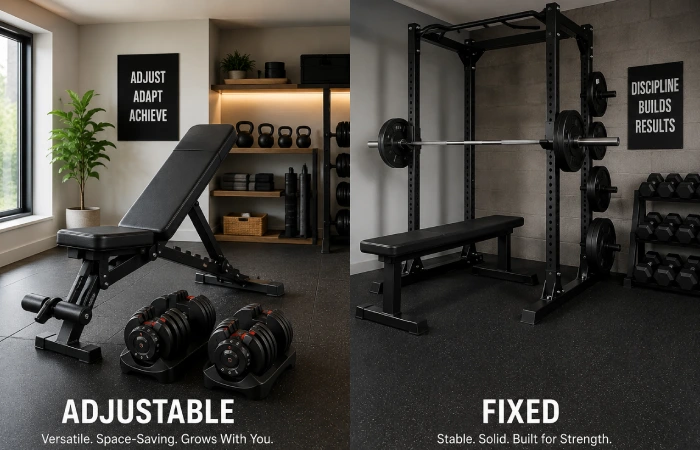
Below, I’ll highlight the key differences in adjustable vs. fixed home gym equipment.
| Feature | Adjustable Equipment | Fixed Equipment |
| Space Required | Low | High |
| Initial Cost | Moderate | Higher (multiple pieces) |
| Weight Options | Multiple in one unit | One weight per item |
| Storage | Easy | Requires more storage |
| Workout Convenience | Slight adjustment needed | Ready to use instantly |
| Portability | Good | Moderate |
| Long-term Expandability | Excellent | Requires additional purchases |
What Is Adjustable Gym Equipment?
Adjustable equipment combines several resistance levels or settings into one product.
Examples include:
- Adjustable dumbbells
- Adjustable workout bench
- Adjustable kettlebells
- Adjustable cable trainers
These products are especially useful for home gyms with limited space.
Key Features
- Multiple weight settings
- Compact storage
- Quick adjustment mechanisms
- Suitable for progressive overload
- Multi-purpose design
What Is Fixed Gym Equipment?
Fixed equipment maintains one specific weight or position.
Common examples include:
- Fixed weight equipment
- Traditional dumbbell sets
- Fixed benches
- Individual kettlebells
- Olympic barbells
Commercial gyms commonly use fixed equipment because it offers quick access and excellent durability.
Key Features
- Always ready to use
- Durable construction
- Simple maintenance
- Reliable weight balance
- Suitable for high-volume training
Adjustable Dumbbells vs Fixed Dumbbells
Adjustable equipment is ideal for home gyms with limited space because it combines multiple weight options into a single unit, while fixed equipment offers greater durability and convenience for users who train at consistent resistance levels. For a more detailed comparison, see “Adjustable vs. Fixed” by Boots.
This is one of the most common decisions for home gym buyers.
| Feature | Adjustable Dumbbells | Fixed Dumbbells |
| Storage | Excellent | Requires rack |
| Weight Changes | Adjustable | Separate pair required |
| Price | Higher upfront | Lower per pair |
| Convenience | Adjustment required | Instant use |
| Space-Saving | Excellent | Limited |
| Progressive Training | Very Good | Excellent |
Adjustable Dumbbells
Ideal for:
- Home gyms
- Apartments
- Beginners
- Intermediate lifters
- Fixed Dumbbells
Better suited for:
- Commercial gyms
- Advanced lifters
- Circuit training
- High-volume workouts
Adjustable workout bench vs. fixed bench.
Another major variation is workout benches.
Adjustable workout bench pros include -flat, incline, decline, flat to incline options, increased workout variety, stores easily, and best for small home gyms
Fixed bench pros include -unwavering stability, very low maintenance construction, and often in a commercial gym
Specifications Comparison
| Equipment | Build Material | Adjustability | Storage | Typical User |
| Adjustable Dumbbells | Steel + Composite | High | Excellent | Home users |
| Fixed Dumbbells | Solid Steel | None | Moderate | Gyms |
| Adjustable Bench | Steel Frame | Multiple Angles | Foldable on some models | Home gyms |
| Fixed Bench | Heavy Steel | None | Permanent | Commercial gyms |
Home Gym Equipment – What’s the Best Choice?
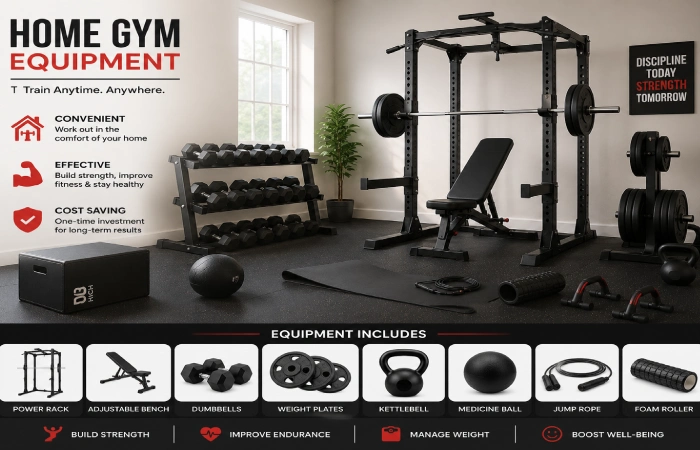
Which Do You Want—Fixed or Adjustable Equipment? – Go with adjustable equipment if:
Have limited space
- Want fewer pieces of equipment
- Are building your first home gym
- Need versatility
- Prefer gradual progression
Choose Fixed Equipment If You:
- Have a dedicated gym room
- Train with heavy weights regularly
- Perform frequent supersets
- Want commercial-style equipment
- Prioritise durability
Workflow: How to Choose the Right Equipment
Step 1 – Assess Your Available Space
Measure:
- Floor area
- Storage space
- Ceiling height
Step 2 – Define Your Fitness Goals
Examples:
- Weight loss
- Muscle gain
- Functional fitness
- General health
Step 3 – Set Your Budget
Consider both current and future equipment needs.
Step 4 – Compare Equipment
Evaluate:
- Weight range
- Build quality
- Warranty
- Expandability
- Ease of use
Step 5 – Buy Gradually
Start with essential equipment before investing in additional accessories.
Performance Expectations
Both adjustable and fixed gym equipment can support effective strength training.
What You Can Expect
- Progressive muscle development
- Improved endurance
- Increased strength
- Better workout consistency
Limitations
- Adjustable equipment requires occasional weight changes during workouts.
- Fixed equipment occupies considerably more storage space.
- Budget-adjustable equipment may wear faster than premium commercial products.
- Results ultimately depend more on training consistency, nutrition, and recovery than on equipment type.
Pros and Cons
Adjustable Equipment
Pros
- Excellent space saving
- Multiple weights in one product
- Ideal for home gyms
- Cost-effective over time
- Easy storage
Cons
- Weight changes take time
- More moving parts
- Quality varies between manufacturers
Fixed Equipment
Pros
- Extremely durable
- Instant access
- Better for circuit training
- Stable construction
- Minimal maintenance
Cons
- Requires more space
- Higher total investment
- Difficult to store
Build Quality & Materials
Good construction means better durability and safety.
- Search for powder-coated steel, solid steel or cast-iron weights, high-density foam cushioning,
- rubber-gripped handles and tight-locking mechanisms.
- Avoid equipment with loose adjustment systems or poor weight-locking mechanisms.
Who Should Buy Adjustable Equipment?
Recommended for:
- Apartment residents
- Beginners
- Intermediate lifters
- Families
- People with limited storage
Who Should Buy Fixed Equipment?
Recommended for:
- Advanced lifters
- Personal trainers
- Commercial gyms
- Dedicated home gym owners
Is the Adjustable Exercise Equipment Real?
Yes. Many enthusiasts and professionals use top of the line adjustable exercise equipment provided by established brands. Make sure your investment complies with industry regulations, and provides warrant protection as well as safe and secure adjustment procedures.
Alternatives
If neither option fully suits your needs, consider:
- Resistance bands
- Suspension trainers
- Kettlebells
- Cable pulley systems
- Functional trainers
These alternatives can complement either adjustable or fixed equipment.
Buying Tips
Before making a purchase:
- Compare adjustment mechanisms.
- Read verified customer reviews.
- Check maximum weight capacity.
- Consider future fitness goals.
- Measure available storage space.
- Verify warranty and replacement part availability.
Cost Comparison
| Category | Adjustable Equipment | Fixed Equipment |
| Initial Purchase | Moderate | Lower per item, higher overall |
| Long-Term Investment | Lower | Higher |
| Storage Costs | Low | Higher |
| Expansion Cost | Minimal | Significant |
Final Recommendation by Use Case
| User Type | Recommended Equipment |
| Beginners | Adjustable |
| Apartment Residents | Adjustable |
| Small Home Gym | Adjustable |
| Dedicated Gym Room | Fixed |
| Commercial Gym | Fixed |
| Heavy Strength Training | Fixed |
| Mixed Family Use | Adjustable |
FAQs
Which is best for beginners, adjustable or fixed gym equipment?
It depends; adjustable weight gym equipment is typically best for beginners since there are a variety of resistance levels on a single piece, avoiding having multiple weights on a stand.
How do adjustable dumbbells compare to fixed?
Both styles will effectively progressively strength train; the difference in is convenience, storage, and cost.
How Do Modifiable Weight Benches Work?
If you’re assembling a home gym, a modifiable bench typically is a more flexible and economical option than specialty workout machines.
Which fixed equipment lasts the longest?
Fixed dumbbells and commercial benches often wear out less than their adjustable counterparts over the years of wear and tear.
What fixed-weight equipment should home gym owners have in small spaces?
Adjustable dumbbells, an adjustable workout bench, resistance band workouts, and a mini cardio machine are an ideal compact space home gym setup.
Conclusion
When deciding between adjustable vs fixed gym equipment, it really comes down to your budget, available space, and desired training goals. Generally, for home gym setups, adjustable equipment is the way to go because of its versatile nature and space-saving qualities. Fixed equipment is ideal for dedicated gym areas and serious lifters.
Home Gym Equipment Hub
Learn how to choose the best home gym equipment with beginner-friendly guides, cardio machines, strength training tools, budget options, space-saving equipment, and buying comparisons.
How to Choose the Best Gym Equipment for Home
Complete Buying Guide →