
Best Chest Exercises for Muscle Growth
Last Updated: June 19, 2026
Introduction
If a person is passionate about gaining a stronger and larger chest is one of the most famous training aims among individuals visiting the gym. No matter whether you’re a beginner who is still learning procedures or an experienced gym person who wants to shape the pecs, the best chest exercises will always play a vital role in maximising the best results of training.
This Article Is Part of the Fitness Tips Resource Hub
Discover proven fitness strategies, workout plans, strength training techniques, cardio exercises, recovery tips, and healthy lifestyle advice in our Fitness Tips Resource Hub.
Chest muscles function in pushing movements and play a vital role in upper body power and aesthetics. A training program that aims for a stronger chest should engage with various chest muscle sets that balance volume along with recovery and result in increased weight.
Chest Muscles Anatomy
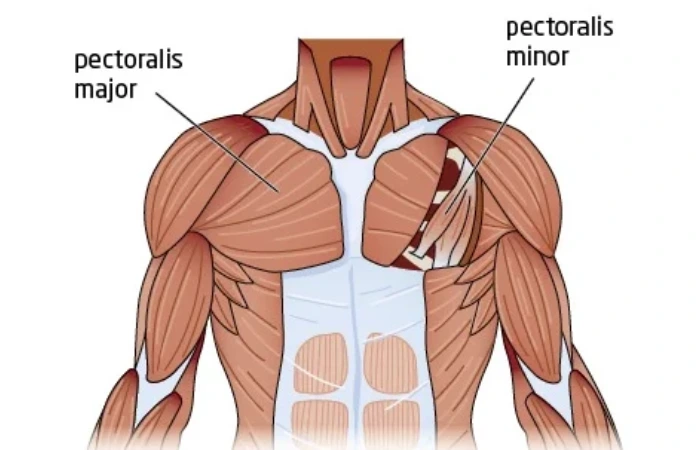
Chest development comprises a mixture of the pectoralis major & minor muscles. Training the chest with multiple and isolating exercises should be performed to provide wide-ranging angles and stimulate the muscle tissues more effectively for power, pressure, and size.
Before picking your exercises, you must get to grips with what these muscles are and how they function.
Understanding chest muscle anatomy can help improve exercise selection and training effectiveness. According to ExRx Exercise Library, combining compound pressing movements with isolation exercises can help target different regions of the chest while supporting balanced muscle development.
Pectoralis Major
The largest chest muscle responsible for pressing and pushing movements.
Pectoralis Minor
A smaller muscle beneath the pectoralis major that assists shoulder movement and stability.
Supporting Muscles
Many chest exercises also involve:
- Triceps
- Front deltoids
- Serratus anterior
- Core muscles
Training these muscles together leads to better all over performance.
Best Chest Exercises for Overall Development
These exercises work best when included in a structured Chest and Triceps Workout Routine.
1. Barbell Bench Press
The barbell bench press is still considered one of the best all-around exercises for the development of your chest.
Benefits include:
- High strength potential
- Progressive overload opportunities
- Recruitment of multiple muscle groups
Recommended Sets:
- 3–5 sets
- 5–10 repetitions
2. Dumbbell Bench Press
It is possible to use a much greater range of movement with dumbbells and also work on strength imbalances.
Benefits:
- Improved muscle activation
- Better movement freedom
- Increased stabiliser muscle involvement
3. Push-Ups
Push-ups require no equipment and remain highly effective.
Benefits:
- Beginner-friendly
- Improves muscular endurance
- Can be modified for different fitness levels
4. Chest Fly
Chest fly variations focus on stretching and contracting the chest muscles.
Benefits:
- Increased muscle isolation
- Improved mind-muscle connection
- Useful for hypertrophy training
Beginners may find it easier to follow these movements within a structured Beginner Chest and Triceps Workout Plan.
5. Upper Chest Exercises for Balanced Development
The upper portion of the chest often requires targeted training.
Incline Barbell Press – One of the most popular upper chest exercises.
Benefits:
- Emphasises the clavicular head of the chest
- Supports balanced chest development
- Improves pressing strength
Incline Dumbbell Press – Has same benefits with larger range of motion.
Low-to-High Cable Fly – This movement targets the upper chest through a unique angle.
Benefits:
- Constant tension
- Improved muscle contraction
- Joint-friendly resistance
Lower Chest Workout Options – Developing the lower chest can improve overall chest shape and fullness.
Decline Bench Press – A classic lower chest workout exercise.
Benefits:
- Targets lower chest fibres
- Allows heavier loading—Reduces shoulder stress for some lifters
- Chest Dips—Bodyweight dips can effectively target the lower chest when performed with a slight forward lean.
- High-to-Low Cable Fly—Provides continuous resistance and strong lower chest activation.
Chest Hypertrophy Workout Principles
An effective chest hypertrophy program requires sufficient training volume and progressive overload for muscle growth to occur.
Key Training Variables
- Weekly volume: 10–20 working sets
- Moderate repetition ranges
- Controlled movement tempo
- Adequate recovery
Sample Chest Hypertrophy Workout
| Exercise | Sets | Reps |
| Barbell Bench Press | 4 | 6–8 |
| Incline Dumbbell Press | 3 | 8–10 |
| Chest Fly | 3 | 10–12 |
| Cable Fly | 3 | 12–15 |
| Push-Ups | 2 | To near failure |
Chest Strength Training Fundamentals
While muscle growth and strength often overlap, chest strength training places greater emphasis on heavier loads.
- Focus Areas
- Progressive overload
- Lower repetition ranges
- Proper technique
- Adequate rest periods
Sample Strength Session
| Exercise | Sets | Reps |
| Bench Press | 5 | 3–5 |
| Incline Press | 4 | 5–6 |
| Weighted Dips | 3 | 6–8 |
| Push-Ups | 2 | Maximum Quality Reps |
Best Chest Exercises
These movements deliver the best results when organized into a structured Chest and Triceps Gym Workout.
| Exercise | Muscle Growth Potential | Strength Development | Equipment Required | Beginner Friendly |
| Bench Press | High | Very High | Barbell | Moderate |
| Dumbbell Press | High | High | Dumbbells | Yes |
| Push-Ups | Moderate | Moderate | None | Excellent |
| Incline Press | High | High | Bench & Weights | Moderate |
| Chest Fly | High | Low | Dumbbells/Cables | Yes |
| Dips | High | High | Dip Station | Moderate |
Chest Workout Workflow

Step 1: Warm Up
Begin with:
- Shoulder mobility exercises
- Light push-ups
- Dynamic arm movements
Step 2: Compound Movements
Perform heavy exercises first:
- Bench press
- Incline press
Step 3: Isolation Exercises
Follow with:
- Fly variations
- Cable work
Step 4: Finisher
End with:
- Push-ups
- High-repetition cable work
Step 5: Recovery
Support recovery through:
- Adequate sleep
- Protein intake
- Rest days
Expectations and Realistic Results
Many people expect dramatic chest growth within a few weeks. However, muscle development takes time.
Factors influencing progress include:
- Training consistency
- Nutrition quality
- Recovery habits
- Training experience
- Genetics
Typical Expectations
| Training Experience | Expected Progress Timeline |
| Beginner | Noticeable improvements in 6–12 weeks |
| Intermediate | Gradual progress over several months |
| Advanced | Slower but steady improvements |
Repetition is a lot more important than changing your exercises every single time.
Common Chest Training Mistakes
Using Excessive Weight
Too much heavy weight and poor form will get you hurt.
Skipping Upper Chest
Many lifters overemphasise flat pressing movements.
Insufficient Recovery
You don’t build muscle when you’re training, but while you’re resting.
Restricted Range of Motion
Partial repetitions may reduce overall muscle stimulation.
Who Should Follow a Structured Chest Programme?
- A structured chest routine can benefit:
- Beginners building foundational strength
- Intermediate lifters seeking muscle growth
- Athletes requiring pushing power
- Fitness enthusiasts for a well-balanced development
The individuals who have shoulder injuries should get medical advice prior to performing intense chest training.
Chest & Triceps Workout Resource Hub
Master chest and triceps training with beginner plans, gym workouts, home workouts, dumbbell exercises, push day splits, and advanced routines.
Common questions are frequently asked
Which are the most suitable exercises for a beginner for chest workout?
Push-ups are really good for newbies. They help you learn how to move your body the way. Dumbbell bench press and machine chest press are also great. These exercises help you build a base of strength. You need that to get stronger over time. Push-ups and dumbbell bench press and machine chest press are all choices. They are simple and easy to do which is perfect, for people who are just starting out with exercise.
How often should chest be trained?
You know most people can benefit from doing chest exercises twice a week.Just make sure you have some rest in, between sessions.
Which are the best upper chest exercises?
The upper chest is an area to work on. One of the ways to do this is with the incline barbell press. The incline dumbbell press is also very good. You can also try low to cable flyes. These upper chest exercises are really effective. The incline barbell press and the incline dumbbell press are great for building the chest. The low, to cable flyes are also good upper chest exercises.
Is it true that with the following lower chest workout will it have a better looking chest?
When you do exercises that work your chest it helps make your chest look better. This is because it makes your chest muscles more even. You get a chest that looks nice and balanced. Your chest is made up of parts and the lower chest is one of them.
How much time does it take to notice results?
Many beginners see their strength go up in a few weeks.. Muscle gains take a lot longer often several months.
Conclusion
The best chest trainings are those which shapes muscles at once and those that aim on exact muscles. They include chest press. Fly movements. You need to challenge your chest muscles over time to help build muscle and strength, this is called overload. To get a rounded chest you need to do different types of chest exercises, these include: Upper chest exercises, chest exercises. You should also have a workout plan that helps your chest muscles grow, this is called a chest hypertrophy workout.
It should include a mix of exercises that target your chest, lower chest, and overall chest development. The goal is to shape a balanced chest in a period of time. An individual should focus more on chest exercises, their muscles, and their development. A good chest workout routine helps.
The thing is, it is not about finding the one exercise for the chest but it is about training the chest consistently. You have to do the exercise for the chest with technique. You have to allow for recovery of the chest. If you do these things for the chest then the chest training can be good. You can keep doing it for a long time. The chest training will be productive and sustainable, for the chest.