
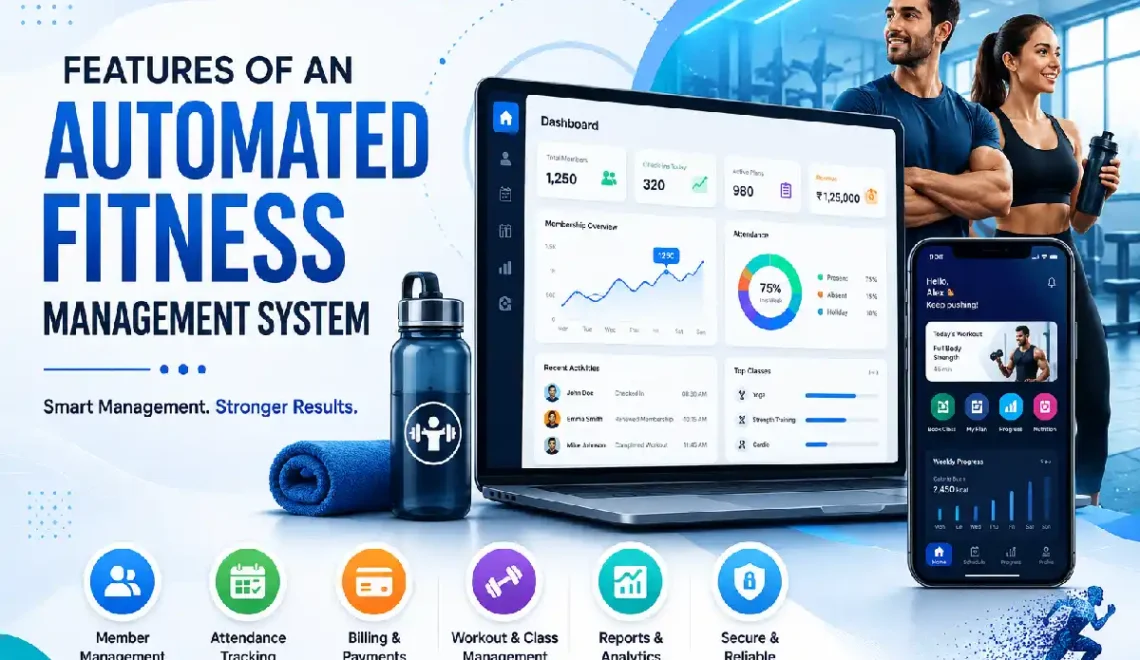
Features of an Automated Fitness Management System
Last Updated: June 21, 2026
Introduction
A gym doesn’t just need you to keep track of memberships. Fitness corporations also have to engage with class timetables, member contact, attendance, train client management, payments, and noting performance. Business management done manually is considered to be quick in becoming time-consuming and is a huge cause of mistakes as a gym business scales up. This is where automated gym management system features are suitable. An automated system would upgrade common procedures, improve customer engagement, and keep the business systematized. It would work fine for any kind of fitness business, whether it is a large gym chain or even a small studio for fitness seekers.
This Article Is Part of the Fitness Technology Hub
Discover the latest fitness technology, including smartwatches, fitness trackers, wearable devices, health monitoring tools, AI-powered workout apps, and smart gym equipment in our Fitness Technology Hub.
What is meant by Automated Fitness Management System?
It is an online portal that was made to manage the gym business activities and merge the activities of the gym into one inclusive dashboard. Fitness businesses are able to manage various operations using a single platform as a replacement of using spreadsheets for manually checking attendance, or recording it in a particular register, or using different methods of payment to collect fees, etc.
The system of automated fitness management aims to take the labor out of gym operations by using software abilities. These systems take part in various applications planned to handle memberships, billing, reporting, class schedules, and communication with associates, in order to boost productivity and generate a more encouraging understanding for employees and members alike.
Common users include:
- Gym owners
- Fitness studio managers
- Personal training centres
- Wellness clubs
- Sports training facilities
- Multi-branch fitness chains
These features are part of a broader Automated Fitness Management System that helps gyms and fitness centers streamline operations.
Key Automated Fitness Management System Features
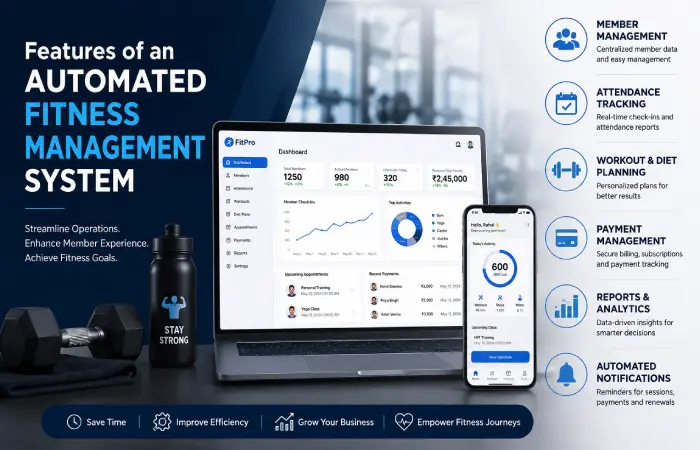
1. Automated Membership System—One of the most important features is membership automation.
Functions often include:
- Online member registration
- Membership renewals
- Digital membership records
- Connection downgrades & upgrades
- Automated reminders for renewal
- Membership freeze management
An automated membership system helps in decreasing administrative working capability and minimises missed renewals.
2. Fitness App Management Tools – Modern systems often include mobile applications for both staff and members.
Common features include:
- Workout tracking
- Attendance monitoring
- Trainer communication
- Class booking
- Progress tracking
- Push notifications
These fitness app management tools improve convenience and encourage regular member engagement.
3. Gym Scheduling Software – Managing schedules manually can become difficult as classes and trainers increase.
Typical scheduling capabilities include:
- Class timetable creation
- Trainer allocation
- Capacity management
- Booking confirmations
- Waitlist management
- Calendar synchronisation
Good gym scheduling software reduces scheduling conflicts and improves facility utilisation.
4. Payment Automation for Gyms – Financial management is a major area where automation provides value.
Features commonly include:
- Frequent billing
- Outflows Auto-renewal
- Invoice generation
- Online payment gateways
- Payment reminders
- Revenue tracking
Payment automation for gyms helps reduce missed payments and simplifies accounting processes.
5. Attendance Tracking
Automated attendance systems may use:
- QR codes
- Mobile check-ins
- RFID cards
- Biometric verification
Attendance tracking helps managers monitor facility usage and identify peak operating hours.
Looking for software that includes these capabilities? Explore our list of the Best Automated Fitness Management Systems available today.
6. Reporting and Analytics
Business intelligence features often include:
- Membership growth reports
- Revenue reports
- Retention metrics
- Attendance statistics
- Trainer performance reports
- Marketing campaign insights
Data-driven reporting supports informed business decisions.
7. Member Communication Tools
Communication features may include:
- SMS notifications
- Email campaigns
- Mobile app alerts
- Promotional notices
- Renewal notices
Constant communication can lead to better member maintenance.
Automated Fitness Management System Workflow

Step 1: Member Registration
Members sign up online or at reception.
Step 2: Activating Membership
Member profile is created and assigned membership benefits automatically by the system.
Step 3: Class Booking
Members make bookings online via the website or mobile app.
Step 4: Recording Attendance
Attendance is automatically logged upon check-in.
Step 5: Automated Billing
Recurring payments are processed according to membership plans.
Step 6: Reporting and Analysis
Management dashboards generate operational and financial reports.
Feature Comparison Table
| Feature | Basic Gym Software | Automated Fitness Management System |
| Membership Management | Manual Updates | Fully Automated |
| Billing | Manual Invoicing | Automated Recurring Payments |
| Scheduling | Limited | Dynamic Scheduling |
| Attendance Tracking | Manual Entry | Automated Check-In |
| Mobile Access | Sometimes Available | Commonly Included |
| Reporting | Basic Reports | Advanced Analytics |
| Member Communication | Limited | Automated Notifications |
| Multi-Location Support | Rare | Frequently Available |
Typical Specifications and Capabilities
| Specification | Typical Capability |
| Cloud Storage | Yes |
| Mobile Application | Android & iOS |
| Payment Gateway Integration | Supported |
| Trainer Management | Included |
| Attendance Monitoring | Included |
| Analytics Dashboard | Included |
| Member Portal | Included |
| Multi-Branch Management | Available in Advanced Plans |
Performance Expectations
When implemented properly, an automated fitness management system may help:
- Reduce administrative workload
- Improve payment collection consistency
- Enhance member communication
- Simplify scheduling processes
- Improve operational visibility
However, results depend on:
- Staff training
- Software configuration
- Member adoption rates
- Business size
- Existing operational processes
Automation increases efficiency but does not remove the management responsibilities entirely. Automation can manage the task efficiently but the management responsibilities are not removed completely.
Advantages and Limitations
Pros
- Reduced manual administrative work
- Centralised business management
- Better reporting capabilities
- Improved member experience
- Enhanced payment tracking
- Scalable for growing businesses
Cons
- Initial implementation effort
- Staff training requirements
- Subscription costs
- Dependence on internet connectivity
- Feature complexity for smaller gyms
Who Should Use an Automated Fitness Management System?
These systems are particularly suitable for:
- Ideal Users
- Medium and large gyms
- Multi-location fitness centres
- Personal training businesses
- Boutique fitness studios
- Wellness centres
- Smaller Operations May Not Need Advanced Features
Very small gyms with limited memberships may not require every advanced feature available in enterprise-level platforms.
How to Evaluate System Legitimacy
Before selecting software, consider:
- Company reputation
- Data security standards
- Customer support availability
- User reviews
- Feature transparency
- Pricing clarity
- Compliance with privacy regulations
A legitimate provider should clearly explain system capabilities and support policies.
Alternatives to Full Automation
Some fitness businesses use combinations of:
- Spreadsheet management
- Basic scheduling tools
- Standalone payment systems
- CRM software
- Attendance applications
While these solutions may reduce costs initially, they often require additional manual coordination.
Buying Tips Before Choosing a System
- Assess Your Business Size
- Choose software that matches your membership volume and future growth plans.
- Review Integration Options
- Check compatibility with:
- Payment gateways
- Accounting software
- Access control systems
- Mobile applications
Test User Experience – Request a demonstration or trial account before purchasing.
Evaluate Reporting Features – Strong reporting capabilities can provide long-term operational insights.
Compare Support Services – Reliable customer support is important during setup and future updates.
Automated Fitness Management System Hub
Explore software features, gym membership tools, AI solutions, billing systems, cloud platforms, and fitness apps.
FAQs
What are the core aspects of automated fitness management systems?
The key features are really important. They usually have things like membership automation and scheduling. You can also track attendance and process payments. There are tools for reporting and communicating with members. The key features include all these things, like payment processing and member communication tools.
Are automated fitness management systems helpful for smaller gyms?
Yes. Even the smaller gyms can see the value in decreasing the work and simplifying the payments for the gyms. The high-level enterprise features may not be as important for the gyms. The gyms want to make things easier, for the gyms.
Are fitness app management systems a must-have?
Not necessarily. However, mobile access has grown in popularity and is becoming critical to how members manage and book their fitness.
How are payments automated for a gym?
The software does a lot of things for us. It collects the membership dues that people have to pay every month. The software also sends reminders to people when they have to pay their bills. It makes invoices for the members. It keeps a record of all the payments that have been made. This record is stored in the system. The software really helps with things like membership dues and payment history and invoices, for the members.
Will scheduling software be beneficial to a personal training studio?
Yes. Scheduling software is really helpful. It keeps trainer schedules. Clients can also book appointments. Track their visits easily. The software sends out confirmations and cancellation notices for appointments. It also sends reminders so clients do not forget their appointments. This makes everything run smoothly. The software helps manage appointments in a way. It keeps everything organized. Scheduling software is a tool.
Conclusion
A working fact of automated fitness management systems is that their purpose is to help the fitness corporations that are looking to advance the efficiency of their businesses and the skills of their members. Features such as automated membership systems, gym scheduling software, fitness application management, and payment automation for gyms will aid in centralizing essential business functions.
However, automation is not a real replacement for solid customer service and management; it is utilised only for improving the downfall of accomplishing business tasks and for offering valuable operational understanding. Identifying the needs of your business, such as how the business will expand and what more important elements the business needs, will all help in assisting the gym owners in shaping the best result for their business.