
Common Weight Loss Mistakes
Introduction
Start Strong and Finish Slow While enthusiasm for a weight loss goal typically peaks at the beginning, as your progress naturally stalls (which it will), you can start to get discouraged. Here are some of the most frequent weight loss mistakes you should be careful to steer clear of to help avoid a plateau and help you stay on track to reach your weight loss goals: Weight loss really entails a whole lot more than just eating less, exercising more. Your sleep patterns and stress levels can have an impact as well. If you aren’t able to break through a weight plateau, just skip doing one of these twelve mistakes commonly made when attempting to lose weight.
This Article Is Part of the Fitness Tips Hub
Discover proven fitness strategies, workout plans, strength training techniques, cardio exercises, recovery tips, and healthy lifestyle advice in our Fitness Tips Hub.
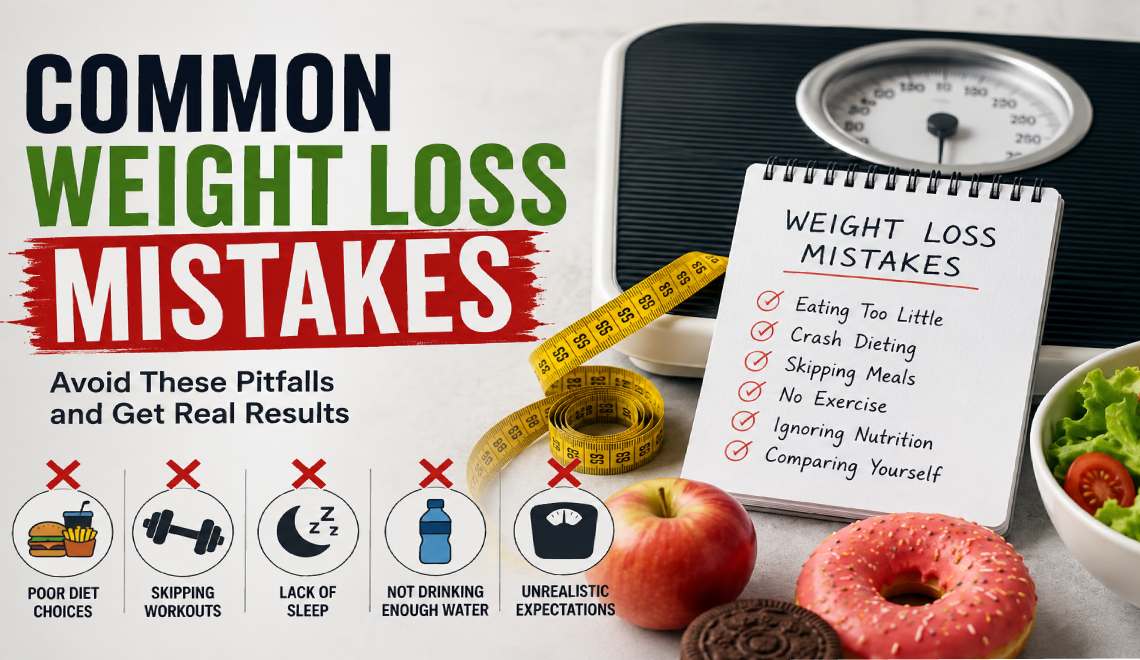
What are the mistakes commonly made during the weight loss plan?
The most frequently committed mistakes are unhealthy eating and exercising habits that can slow down and halt successful weight loss without requiring you to follow a diet plan. Some mistakes will sabotage your progress, whether in preserving your muscle mass or not eating the right calorie amount for success and also for the success of healthy and balanced consuming routines. Avoid doing what a lot of individuals have made the mistake of doing, like skipping meals, crash eating plans, neglecting strength training, and undervaluing meals and then asking for quick outcomes for not being obese.
Weight Loss Mistakes That Slow Progress

Many people unknowingly repeat the same weight loss mistakes.
-
Skipping Meals
Eating light – Skimping breakfast and/or lunch can be tempting, as it can help you shave off calories easily, but in the long run, this leads to a gnawing hunger.
Make sure that all your meals contain good, wholesome foods like:
- Lean protein
- Fibre-rich vegetables
- Whole grains
- Healthy fats
-
Eating Too Little
Severe calorie restriction also poses risks to energy levels, physical performance and ability to get all of the nutrients needed. More often than not, small caloric deficit tends to be more sustainable long term than an extreme restriction.
Eating too few calories can slow your metabolism, increase hunger, and make it harder to maintain long-term weight loss. Understanding a healthy calorie deficit is essential for sustainable results. Learn more about maintaining a safe calorie deficit.
-
Ignoring Portion Sizes
Even nutritious food contains calories.
Common examples include:
- Nuts
- Peanut butter
- Cooking oils
- Cheese
- Healthy snacks
If you become aware of the sizes of servings in order to help to eat fewer calories in addition to in fact you don’t have to get rid of favourite foods.
-
Drinking Calories
Drinks that are full of sugar therefore contains a large number of calories. Examples are:
- Soft drinks
- Sweetened coffee
- Fruit juices
- Milkshakes
- Energy drinks
You can decrease calorie count without taking all the food out, you just have to be sure about the quantity of your food.
Why Am I Not Losing Weight?
One of the most commonly asked question on the internet.
Here are a few reasons for slow results:.
You’re not in a sustained calorie deficit, To lose weight you need to eat less calories than you burn over time.
Too little movement outside of formal exercise, Daily movement, not just workouts, plays a part in total calorie expenditure.
Not enough protein, you need protein to keep muscle tissue, which burns more calories and also to keep you full when trying to lose weight.
Your sleep quality is poor. Poor sleep quality may impact hunger hormones and the food choices you make when you do eat.
You are very stressed – If you have a high-stress job and a busy life, stress can cause you to eat more and make sticking to healthy habits challenging.
How to Break Through a Fat Loss Plateau Why Is Your Weight Stall?
If your weight stays the same despite continuing with healthy eating and exercise habits, it’s likely that you have hit a weight loss plateau.
Possible reasons include:
- Body adaptation
- Reduced calorie needs after losing weight
- Lower daily movement
- Muscle gain offsetting fat loss
- Inaccurate calorie tracking
Plateaus are common and do not necessarily mean your programme has stopped working.
Dieting Mistakes to Avoid
Many dieting mistakes come from following unrealistic plans.
Avoid:
Detox diets
Eliminating entire food groups without medical advice
Excessive fasting
Over-reliance on supplements
Following social media trends without evidence
Instead of that, find yourself an eating style you’ll stick with throughout your life.
Weight loss myths you need to stop believing
There are still myths about weight loss floating around the Internet, too.
-
You can spot reduce.
You cannot just lose weight from one body part through a specific exercise routine. You burn fat overall and it does not come off one body part alone.
-
Carbs are bad for you.
The majority of weight loss myths and diets will have you avoiding carbs like the plague. That is simply not true. The fibre content of whole grains, fruits, and legumes is very high, and the same goes for nutrient content.
-
Sweating helps you lose weight.
The amount you sweat is simply an indicator of how much fluid your body has lost. Your body sweating more is not directly connected to losing more fat.
-
You can burn off the effects of a bad diet by exercise.
While exercise can be incredibly beneficial, you can’t over-exercise to make up for an unhealthy eating regimen. It’s the combo of proper nutrition and regular exercise that will lead to results.
-
Weight loss supplements are all effective.
Weight loss drugs don’t hold a candle to eating a healthy diet and exercising more. The scientific evidence of the long-term effects of weight loss pills is limited at best.
Healthy Habits vs Popular Weight Loss Mistakes
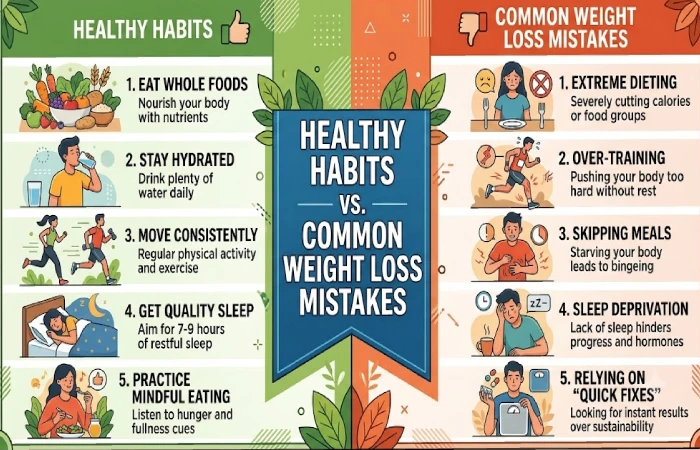
| Healthy Habit | Common Mistake | Likely Outcome |
| Balanced meals | Skipping meals | Increased hunger |
| Moderate calorie deficit | Crash dieting | Difficult to sustain |
| Strength training | Cardio only | Reduced muscle preservation |
| Regular sleep | Poor sleep | Reduced recovery |
| Portion awareness | Mindless eating | Higher calorie intake |
| Consistency | Frequent diet changes | Slower progress |
Healthy Weight Loss Workflow
Morning
- Drink water
- Eat a balanced breakfast
- Take a short walk
Afternoon
- Protein-rich lunch
- Stay hydrated
- Light movement
Evening
- Strength or cardio workout
- Balanced dinner
- Limit sugary snacks
Night
- Relax before bed
- Achieve a goal of completing 7 to 9 hrs of sleep
Effective Tips to Lose Weight
- Set genuine goals.
- Focus on long-term habits.
- Include strength training.
- Increase daily movement.
- Eat enough protein.
- Stay hydrated.
- Monitor progress beyond body weight.\
- Celebrate small improvements.
Expectations Management: Why Progress Isn’t Always Linear
The reality is weight loss isn’t a clean, linear process that will look a bit like this—ups and downs are all a part of it. Hormone shifts, fluid retention, stomach upset, physical activity, and more will all cause your numbers to dip and then climb a bit. While most adults can lose around 1-2 lbs a week as a target, it will change, too.
When your efforts seem to be for nothing, revert back to health and lifestyle habits, and don’t fret about what the scale shows for now.
Long-term changes lead to healthier outcomes more reliably than the strict diets.
Frequent Questions
What are the most frequent weight loss slip ups?
Commonly made weight reduction errors incorporate bypassing nourishment’s, under eating, ignoring portion sizes, trying fad slims down, consuming sugary fluids and expecting quick outcomes.
Why aren’t I dropping weight while exercising?
You may be eating a larger number of calories than you figure you may be, not getting sufficient sleep, be in a fat-burning plateau or underestimate portion sizes.
Exercise alone isn’t adequate to overcome a bad food regimen.
Why do I have a fat burning plateau?
You may be experiencing a fat-burning plateau since your body is becoming acclimated to weight loss, your calorie necessities have gone down and your physical movement level isn’t as high day by day. A minor variation to your food routine and activity routine could help.
Are Carbs bad for weight reduction?
No, complete nourishment carb options for example oats, whole grain rice, produce and also dried beans can also add into a balanced eating routine plan while diet eating, so long as these people come to be consuming all in sufficient quantities.
Is the actual fact that I need to be weighed on a daily basis?
For some individuals the everyday weigh in helps, for other people, measuring once seven days suffices.
Keeping an eye on your weight loss pattern may be a much better option that checking it each day.
Conclusion
Making sure you’re aware of some common weight loss mistakes will also assist in eliminating a lot of frustration, as you make and solidify more effective health habits. Instead of trying miracle products or succumbing to unfounded, trending weight loss diets or myths, focus instead on healthy meals, sufficient rest, moderate exercise and manageable goals for long-lasting, substantial outcomes in your weight loss quest.
Quickest Way to Lose Weight Hub
Explore proven weight loss strategies, including natural weight loss methods, diet plans, effective exercises, belly fat reduction tips, home-based workouts, and common mistakes to avoid for sustainable results.