
Home Workout Without Equipment for Weight Loss
Introduction
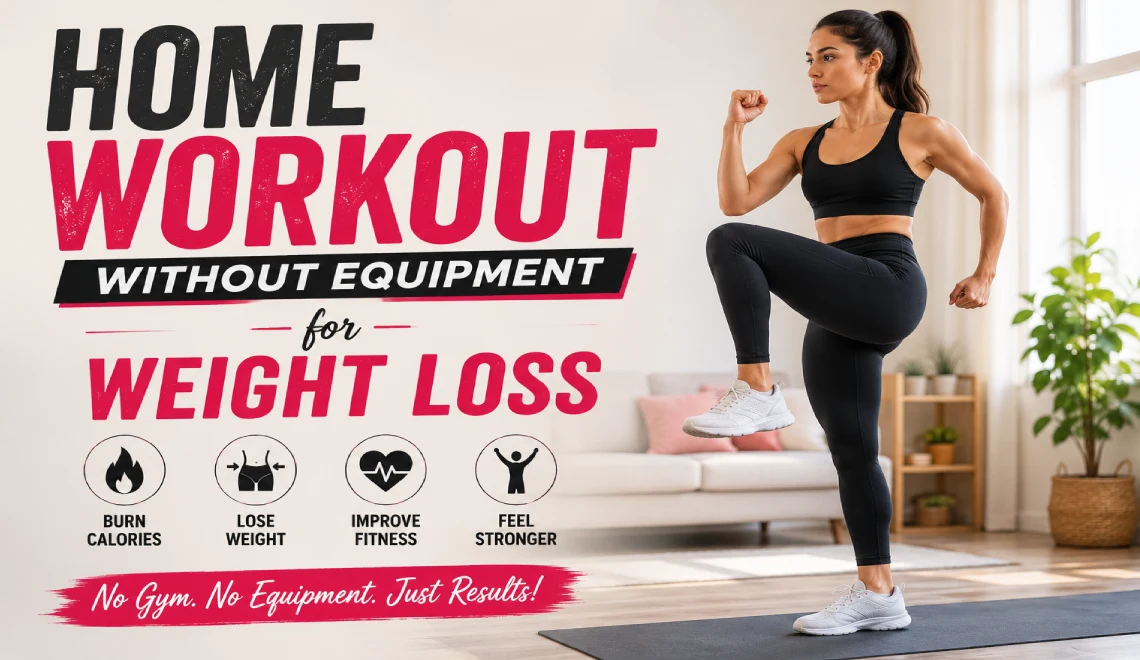
A simple and cost-effective way to incorporate more movement into your life is a no equipment home workout to lose weight. These bodyweight workouts don’t require much space, cost nothing and can easily be modified for various fitness levels. Engaging in bodyweight exercise increases the number of calories you burn throughout the day, enhancing your strength, stamina, flexibility, and total health.
If you are seeking a way to lose body fat without buying any expensive equipment to help the cause, look no further.
You should recognize, though, that not one individual workout will result in significant weight reduction by itself. Only in unison with a healthy food intake, healthy rest and proper amount of hydration coupled with consistency will you see lasting impact to make it worthwhile.
This Article Is Part of the Fitness Tips Hub
Discover proven fitness strategies, workout plans, strength training techniques, cardio exercises, recovery tips, and healthy lifestyle advice in our Fitness Tips Hub.
What is an Equipment Free Home Workout for Weight loss?
Equipment free home workouts is simply planned physical activities that you perform involving only your body weight resistance. The exercises involve combinations of cardio, strength training that help burn a lot of calories and conserve muscle weight too.
Another advantage of these workouts is that they do not require machine workouts.
This means that you do not need any specialized workout equipment, unlike machine workouts, they don’t involve the fixed resistance training, equipment free workouts can be performed any-where and anytime by almost anyone.
Definition at a Glance
- Uses bodyweight only
- Suitable for beginners and intermediate users
- Supports calorie burning
- Improves cardiovascular fitness
- Builds functional strength
- Requires minimal space
Bodyweight Workout for Weight Loss Advantages
Working out with just your body weight for weight loss is more beneficial than you might know.
Helps Sustainable Fat Loss
With the right diet plan in hand, consistent exercise helps to get you into an energy deficit.
Maintains Lean Muscle Mass
If you focus on strength-oriented bodyweight exercises, your body won’t burn up too much of your lean muscle mass as you lose body fat.
Benefits Health of Your Heart
Cardio-based bodyweight exercises will improve the state of your heart health and increase your stamina.
Increases Your Daily activity levels
If staying physically active becomes a challenge during a demanding routine, home fitness has become a simple way for people to include more physical training time in the day’s timetable.
Increases Your Balance and Mobility
The functional exercises in bodyweight workouts strengthen your stabilising muscles and enhance the way that you move.
Calorie-Burning Workouts You Can Do at Home
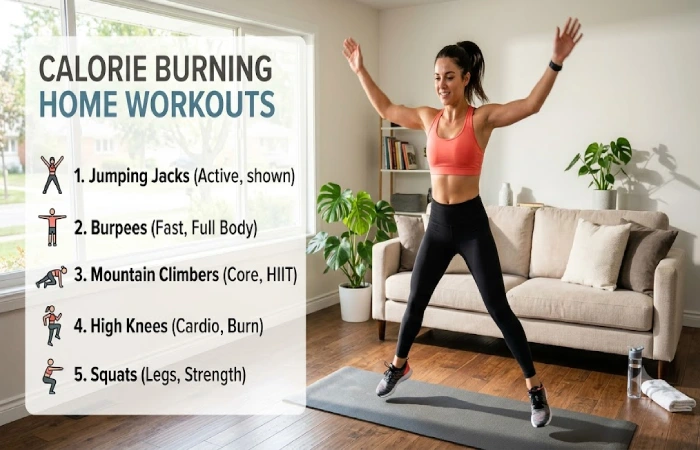
Jumping Jacks
A full body movement great at raising your heart rate.
Targets
- * Legs
- * Shoulders
- * Cardiovascular system
Bodyweight Squats
Strengthen the lower body and increase energy expenditure.
Targets
- * Quadriceps
- * Glutes
- * Hamstrings
Push-ups
Strengthen the upper body, while working your core. Beginners can do incline or knee push-ups.
Mountain Climbers
This may be the best full-body bodyweight cardio exercise and works:
- * Your core
- * Your cardio system
- * Your coordination
Walking Lunges
Good for the lower body and also work on balance. Do these controlled and smooth.
High Knees
Improve cardio and lower body endurance.
Plank
Strengthen:
- * Your core
- * Your lower back
- * Your shoulders
Maintain neutral spine through plank.
Burpees
Combines cardiovascular and strength training into one difficult move. Beginners may leave out jump.
Home Cardio Workout Weekly Plan
| Day | Activity |
|---|---|
| Monday | Full body fat-burning workout |
| Tuesday | Brisk walking (30 minutes) |
| Wednesday | Home cardio workout |
| Thursday | Active recovery or stretching |
| Friday | Bodyweight strength workout |
| Saturday | Light cardio or cycling |
| Sunday | Rest |
This schedule allows adequate recovery while maintaining regular activity.
Home Workout vs Gym Workout for Weight Loss
| Feature | Home Workout | Gym Workout |
|---|---|---|
| Equipment Needed | None | Machines and weights |
| Cost | Free | Membership required |
| Convenience | Excellent | Travel required |
| Calorie Burning Potential | High | High |
| Muscle Building | Moderate | Easier with resistance |
| Beginner Friendly | Yes | Yes |
Step-by-Step Workout Workflow
Step 1 – Warm Up
Spend 5–10 minutes performing light movements such as marching, arm circles, and dynamic stretches.
Step 2 – Complete the Workout
Perform each exercise with proper form rather than maximum speed.
Step 3 – Rest
Take short breaks between exercises and longer breaks between workout rounds.
Step 4 – Cool Down
Stretch major muscle groups for five minutes.
Step 5 – Recovery
Hydrate, consume adequate protein and get sufficient sleep.
The CDC recommends focusing on gradual, sustainable weight loss through healthy eating, regular physical activity, quality sleep, and stress management rather than quick-fix diets.
So, What kind of results are you expecting from this and what do you think you will achieve?
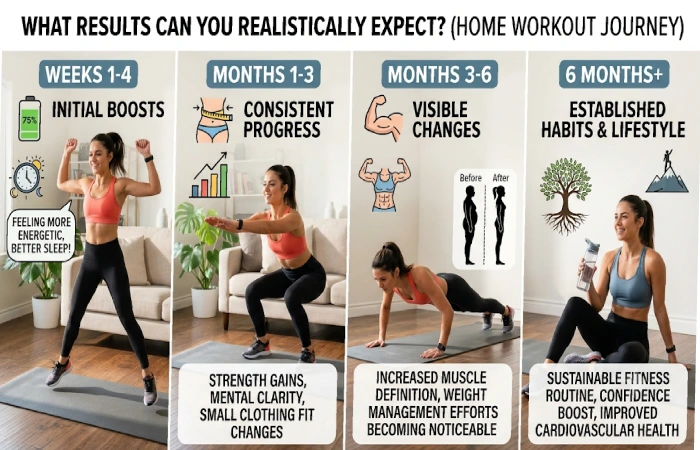
Weight loss does take time.
After 2 Weeks
- Increased energy
- Improved stamina
- Better movement confidence
After 4–8 Weeks
- Better cardiovascular fitness
- Improved muscular endurance
- Possible reduction in body measurements
Then, after 8–12 Weeks
- Noticeable improvements in fitness
- Greater strength
- Sustainable weight loss when maintaining a calorie deficit
Weight loss varies depending on:
- Nutrition
- Age
- Sleep quality
- Stress
- Activity levels
- Medical conditions
Losing the weight gradually over time will generally promote longer-term results.
Mistakes to Stop Making
Avoid these habits:
- Skipping meals
- Exercising without warming up
- Doing only cardio while ignoring strength exercises
- Expecting rapid results
- Sleeping too little
- Being inconsistent
Nutrition Tips for Better Results
Exercise alone rarely leads to significant weight loss.
Focus on:
- Lean protein
- Whole grains
- Fruits
- Vegetables
- Healthy fats
- Adequate hydration
Portion sizes along with drastically limiting highly processed items will also support you on a long term success path.
Pros and Limitations
Advantages
- No equipment required
- Budget-friendly
- Flexible workout schedule
- Suitable for most beginners
- Improves overall fitness
Limitations
- Progressive resistance is limited
- Advanced athletes may eventually require weights
- Nutrition remains essential for weight loss
Who Should Try This Workout?
Ideal for:
- Beginners
- Busy professionals
- Students
- Parents
- People exercising at home
- Anyone wanting to increase daily activity
When should you consult a doctor?
It is advisable for you to seek guidance from your doctor prior to commencing a new exercise regimen if your:
- Have cardiovascular disease
- Experience severe joint pain
- Are recovering from surgery
- Have uncontrolled medical conditions
- Are pregnant or recently gave birth
FAQs
Is an equipment free home workout an effective weight loss strategy?
It can be. An equipment free home workout for weight loss, to some extent, burns extra calories and thus helps weight loss. However, to reap maximum benefit you will need to exercise regularly coupled with proper sleep, healthy diet and a calorific deficit of a manageable level.
Which calorie burning body weight workout can burn highest?
The best ones of high calorie burning (bodyweight exercise) which include jumping jacks, mountain climbers, burpees as well as high knees with many muscles, and high pace can be burned highest amount of calorie.
How many days should I work out?
Many people, especially adults benefit from working out 3-5 days per week depending on their level of fitness and how much time is needed for recovery
Is it possible for beginners to get results losing weight at home?
Yes, beginners do see overall improvements in most of the situations and the body composition has changed more likely in both diet and training program, as along as consistencies in both.
Do I need equipment in order to lose weight?
No, a range of bodyweight workouts can effectively shape up and support your weight loss. You don’t need a lot of gear or even to go to the gym to start your journey.
Conclusion
This is an amazing at home weight loss workout that can be performed using just your human body. If you will incorporate body weight cardio into your daily workout routine, I promise that you can burn extra few hundred calories a day while also boosting your fitness. Focus on making a sustainable workout routine, having realistic goals, and eating a healthy diet rather than the new, trendy “quick fixes.” It’s the simple, daily, healthy practices that will compound over time to reward you with weight loss and improved energy and confidence levels.
Home Workout Without Equipment Hub
Discover the best home workouts without equipment, including full-body routines, beginner-friendly exercises, weight loss workouts, muscle-building plans, 30-minute workout routines, and effective bodyweight exercises you can do at home.