
Full Body Home Workout Without Equipment
Introduction
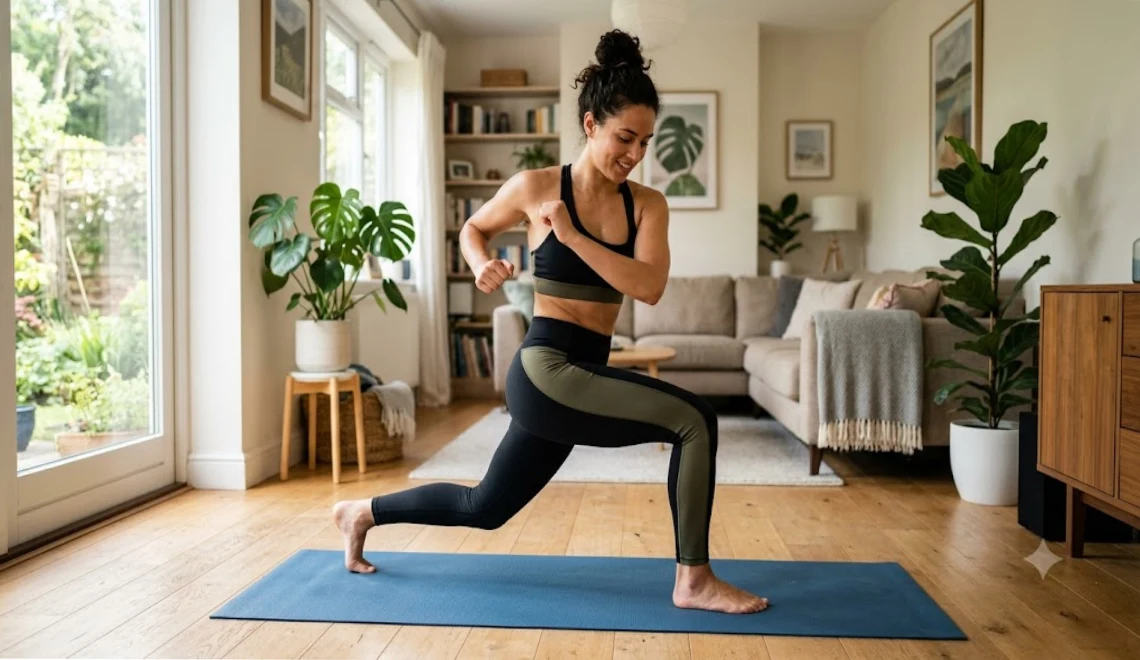
A full body home workout with no equipment is one of the most convenient and inexpensive ways to be sure that you are meeting your physical goals. If you find yourself working out at home or away from the gym, while on the go, or maybe you just like to workout from the comfort of your own home, you can easily create full body workouts from just your body weight and in as little as 30-45 minutes, while boosting muscle strength, flexibility, and cardiovascular health. The greatest benefit to this form of exercise is that you do not require a costly gym membership or exercise machines.
In most cases all that you’ll need is a clear space and a few basic instructions for your full body workout.
Keep in mind that in order to see your body and the results from your workouts improve, it’s necessary to workout regularly, while using proper form, eating the correct foods, allow your body to recover between workouts, and to increase the difficulty of your workouts over time.
This Article Is Part of the Fitness Tips Hub
Discover proven fitness strategies, workout plans, strength training techniques, cardio exercises, recovery tips, and healthy lifestyle advice in our Fitness Tips Hub.
A Full Body Home Workout Without Equipment
A full-body home workout is simply a training routine where you focus on each of the
- Chest
- Back
- Shoulders
- Arms
- Core
- Glutes
- Legs
Instead of machines or dumbbells, exercises rely entirely on bodyweight to create resistance.
This style of training suits:
- Beginners
- Busy professionals
- Students
- Travellers
- People starting a fitness journey
- Individuals building home workout habits
Full Body Bodyweight Workout Benefits
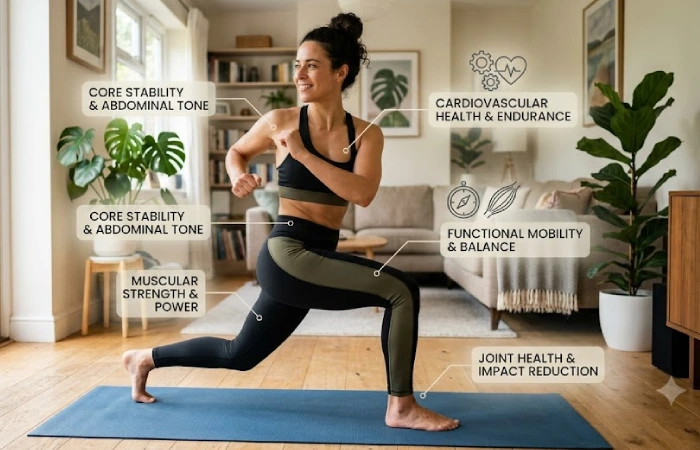
A full body bodyweight workout offers several long-term advantages.
Improves Functional Strength
Bodyweight movements mimic natural daily activities, helping improve overall movement quality.
Benefits for Movement
Exercise helps your joints get the optimal range of motion they are meant to move through.
Burn Calories
Working on compound movements will boost your calorie usage and aid you in shedding some extra pounds along with a healthy eating regime.
Develops muscular endurance
As muscles become trained, they’re more efficient at carrying out repetitive motion and building muscular endurance over time.
Great value and hassle-free
No equipment required. Exercise anywhere, anytime.
According to Harvard Health, body-weight exercises help improve strength, balance, flexibility, and overall fitness while requiring little to no equipment.
Equipment-Free Full Body Workout
No equipment
full body workout routine You will do the first exercise, then move on to the second, and then the third, and so on.
| Exercise | Repetitions |
|---|---|
| Bodyweight Squats | 15 |
| Push-ups | 10–15 |
| Walking Lunges | 12 each leg |
| Glute Bridges | 15 |
| Superman Hold | 30 seconds |
| Plank | 45 seconds |
| Mountain Climbers | 30 seconds |
| Jumping Jacks | 40 |
Repeat the circuit 3–4 rounds.
Rest:
- 45–60 seconds between rounds
- Stay hydrated
- Focus on proper form
Full Body Home Exercises Explained
Bodyweight Squats
Targets:
- Quadriceps
- Hamstrings
- Glutes
Maintaining your chest high, bring down your body to until thighs are almost parallel with the ground.
Push-ups
Targets:
- Chest
- Shoulders
- Triceps
- Core
Beginners may start using knee push-ups.
Lunges
Excellent for:
- Balance
- Single-leg strength
- Hip stability
Try not to let your front knee move much beyond the tips of your toes.
Glute Bridges
Strengthens:
- Glutes
- Lower back
- Hamstrings
Pause briefly at the top of each repetition.
Superman Exercise
Strengthens the posterior chain including:
- Lower back
- Glutes
- Rear shoulders
Lift both arms and legs simultaneously.
Plank
One of the best core stability exercises.
Keep:
- Neck neutral
- Hips level
- Core engaged
Mountain Climbers
Provides both:
- Cardio training
- Core strengthening
Move with deliberate actions instead of hurried ones.
Bodyweight Exercise Routine For Beginners
If you’re new to exercise, begin with:
- 2 workout sessions weekly
- 1–2 rounds initially
- Focus on technique
- Increase repetitions gradually
Weekly Example
| Day | Activity |
|---|---|
| Monday | Full body workout |
| Tuesday | Walking |
| Wednesday | Rest |
| Thursday | Full-body workout |
| Friday | Stretching |
| Saturday | Light cardio |
| Sunday | Recovery |
Total Body Workout at Home for Intermediate Fitness
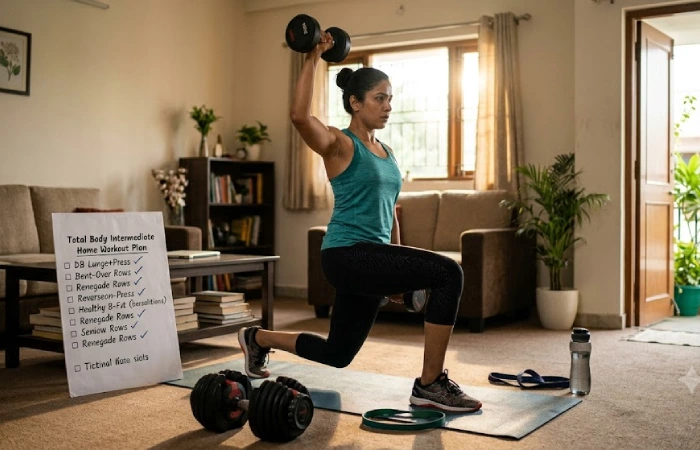
Once comfortable, progress by:
- Increasing repetitions
- Adding another workout round
- Slowing the lowering phase
- Reducing rest periods
- Including single-leg exercises
Progressive overload remains important even without equipment.
Home Bodyweight Workout vs Gym Workout
| Feature | Home Bodyweight Workout | Gym Workout |
|---|---|---|
| Equipment Required | None | Yes |
| Cost | Low | Membership fees |
| Convenience | Excellent | Travel required |
| Strength Progression | Moderate | Easier with weights |
| Beginner-Friendly | Yes | Yes |
| Muscle Building Potential | Good | Higher with resistance |
Simple Workout Workflow
Step 1
Warm up for 5–8 minutes.
Step 2
Perform the full body circuit.
Step 3
Rest between rounds.
Step 4
Cool down with stretching.
Step 5
Stay hydrated and have a complete meal rich in protein.
Performance Outlooks
A realistic timeline helps maintain motivation.
After 2 Weeks
- Better movement coordination
- Reduced stiffness
- Increased confidence
After 4–6 Weeks
- Improved muscular endurance
- Better posture
- Increased workout capacity
Then, After 8–12 Weeks
- Noticeable strength improvements
- Better overall fitness
- Possible body composition changes when paired with healthy eating
Individual results vary depending on:
- Diet
- Sleep
- Exercise consistency
- Age
- Starting fitness level
Mistakes to Avoid
- Skipping warm-up
- Poor exercise form
- Training every day without recovery
- Ignoring flexibility work
- Expecting rapid physical changes
- Not drinking enough water
Pros and Limitations
Advantages
- No equipment required
- Beginner-friendly
- Time-efficient
- Suitable for small spaces
- Improves overall fitness
Limitations
- Harder to maximise muscle growth compared with heavy resistance training
- Progressive overload requires creativity
- Advanced athletes may eventually need external resistance
Nutrition Tips
Support your workouts with:
- Lean protein
- Whole grains
- Fruits
- Vegetables
- Healthy fats
- Hydration
Just as importantly, recovery. Try to get between 7- and 9-hours quality sleep a night.
Who should do this exercise?
Ideal for:
- Beginners
- Office workers
- Students
- Parents
- Frequent travellers
- Individuals with limited space
Who needs to talk to their health professional?
If you are, consult with a qualified health professional before starting any new regimen if you are:
- Have heart disease
- Recently had surgery
- Experience severe joint pain
- Are pregnant
- Have uncontrolled medical conditions
Commonly Asked Questions
Are full body home workouts without equipment effective?
Yes, it will build full-body strength, endurance, and fitness. Consistently perform with proper rest and fueling, and you should expect really good results from these no-equipment home workouts.
Is a bodyweight workout OK for beginners?
Definitely! The best thing about the bodyweight training system for beginners is that exercises can be modified. You can increase intensity gradually as your strength develops.
How many days a week should I work out full body?
Benefits of full-body workouts: Full-body workouts are great for most adults and may be performed twice, three, four, or even 5 days a week, based on your workout experience and level of recuperation ability.
Is bodyweight exercise good for building muscle?
Yes, especially for the novice. Progressive overload via higher repetitions, tempo, and variations of exercises also allows for muscle growth.
How long is each workout session?
Each workout session typically takes 30–45 minutes and includes your warm-up and cool-down.
Conclusion
An equipment-free, full-body home workout is a flexible option to keep up with your fitness plan, no matter how tight your schedule or your wallet might be. Using the power of compound bodyweight movements with the support of recovery and nutrition, you’ll be making consistent progress with strength, endurance, and flexibility right from your own house. Remember to be consistent, concentrate on form before quantity, and raise the resistance little by little as you go.
Home Workout Without Equipment Hub
Discover the best home workouts without equipment, including full-body routines, beginner-friendly exercises, weight loss workouts, muscle-building plans, 30-minute workout routines, and effective bodyweight exercises you can do at home.