
AI and Automation in Fitness Management
Introduction
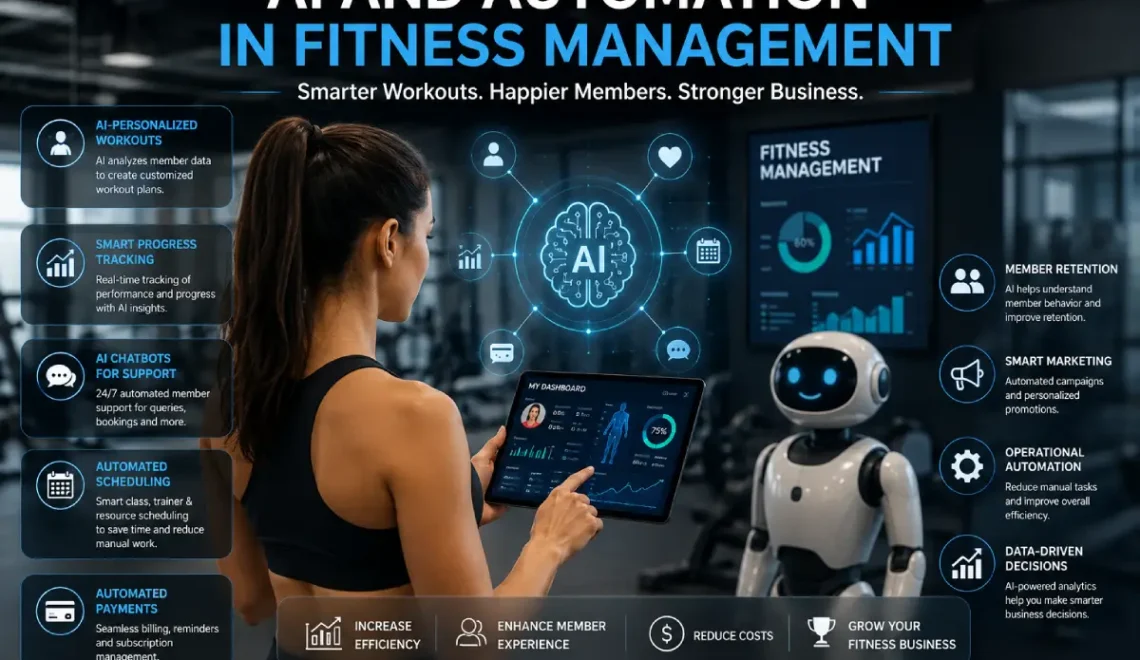
Digital innovations are revolutionizing the fitness industry, helping gyms enhance their processes and member engagement. The rise of the AI fitness management system, integrating artificial intelligence, automation, and data analysis, aims to assist gyms in both their operations and member fitness development.
This Article Is Part of the Fitness Technology Hub
Discover the latest fitness technology, including smartwatches, fitness trackers, wearable devices, health monitoring tools, AI-powered workout apps, and smart gym equipment in our Fitness Technology Hub.
Through applications such as automated workout suggestions and predictive insights for businesses, AI systems help gyms to increase efficiency and offer more personalized solutions to members, while a comprehension of the technology’s pros and cons is crucial before implementation.
AI Fitness Management System: What is it?
An AI fitness management system is a technological platform designed to automate management duties, as well as enhance business decisions through analysis of data and machine learning. Different from traditional systems, AI systems can use trends, identify common patterns and suggest actions based on behavioral and business data.
| Feature | Description |
| Software Type | AI-Powered Management Platform |
| Primary Users | Gym Owners, Trainers, Fitness Businesses |
| Core Technology | Artificial Intelligence & Automation |
| Deployment | Cloud-Based |
| Main Purpose | Operational Efficiency & Personalisation |
| Data Sources | Member Activity, Attendance, Payments, Workouts |
AI Gym Software Features
Modern AI gym software typically combines administrative tools with intelligent automation.
| Feature | Purpose |
| Automated Membership Management | Reduces manual administration |
| Smart Scheduling | Optimises bookings and classes |
| Predictive Analytics | Forecasts trends and performance |
| Automated Communication | Sends reminders and updates |
| Revenue Tracking | Monitors financial performance |
| Member Retention Analysis | Identifies engagement patterns |
| Personalised Recommendations | Supports fitness goals |
These tools can be used to run the business more efficiently while offering members a better experience.
How are smart systems revolutionizing the gym business?
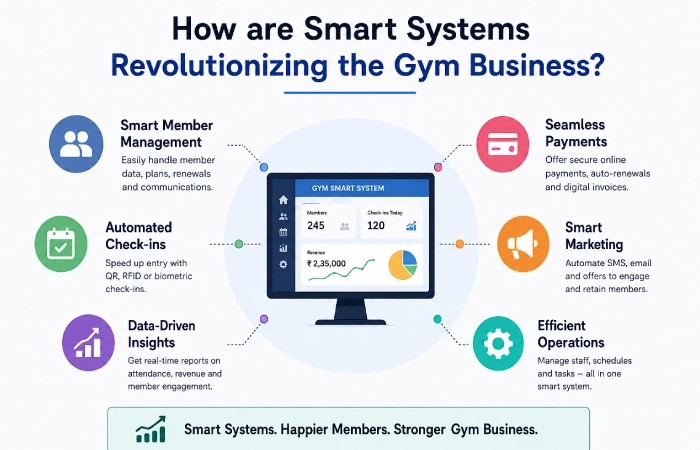
Beyond administrative operations, smart fitness technology can be linked with wearable technology, connected equipment and digital coaching.
| Technology | Use Case |
| Smart Wearables | Activity monitoring |
| Connected Gym Equipment | Performance tracking |
| Mobile Applications | Member interaction |
| AI Chatbots | Customer support |
| Digital Coaching Tools | Personalised guidance |
The success of these tools relies on the quality of data, their implementation, and user participation.
How an AI Fitness Management System Works
- Data acquisition: The system extracts data from membership, attendances, payments, workout, mobile apps.
- Data processing: AI algorithms scan patterns on the behavioral trends and business operation trends.
- Insight generation: The software generates ideas of optimizing opportunities.
- Automated action: Reminders and recommendations and notifications are triggered accordingly.
- Reporting: Management gets dashboards and summaries.
- Machine learning: The algorithm continuously optimizes recommendations.
All this helps businesses achieve more with less work on administration.
Automated Workout Tracking Capabilities
One of the most popular uses of AI in fitness is automated workout tracking.
| Function | Benefit |
| Exercise Logging | Reduces manual data entry |
| Progress Monitoring | Tracks performance trends |
| Goal Analysis | Supports fitness objectives |
| Activity Recognition | Detects workout patterns |
| Personalised Feedback | Provides tailored insights |
With this technology, members could also gain a better idea of where they are within the training program.
The trends impacting fitness tech
The way forward for AI-powered fitness platforms is dictated by several fitness tech trends:
| Trend | Impact |
| Predictive Analytics | Improved decision-making |
| Wearable Integration | Enhanced tracking accuracy |
| Virtual Coaching | Expanded accessibility |
| AI-Powered Personalisation | Custom fitness experiences |
| Automated Administration | Greater operational efficiency |
Many of these trends are expected to continue evolving over the coming years.
Traditional Software vs AI Fitness Management Systems
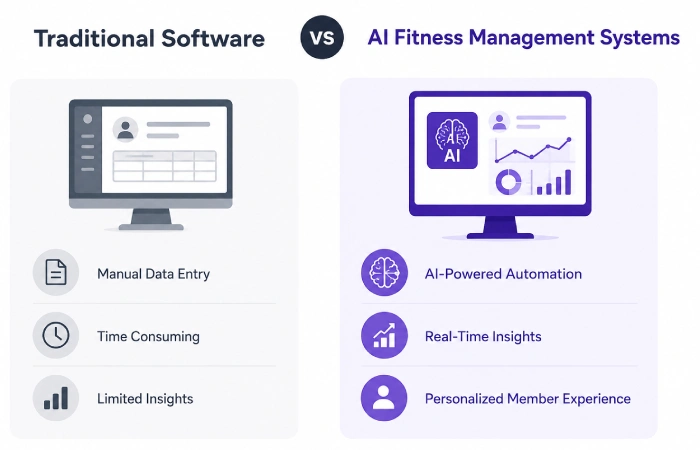
| Factor | Traditional Software | AI Fitness Management System |
| Data Analysis | Basic | Advanced |
| Automation | Limited | Extensive |
| Personalisation | Low | High |
| Member Insights | Basic Reporting | Predictive Analytics |
| Administrative Efficiency | Moderate | Higher |
| Decision Support | Manual | Data-Driven |
AI Systems generally offer a more comprehensive set of analysis functions but can require a more complex implementation and maintenance.
Expectations
AI technology can provide valuable support, but realistic expectations are important.
What Businesses Can Expect
| Potential Outcome | Reality |
| Reduced Administrative Tasks | Common Benefit |
| Better Reporting | Often Significant |
| Faster Member Communication | Frequently Achievable |
| Improved Retention | Possible, Not Guaranteed |
| Automatic Business Growth | Unrealistic |
AI aids in the decision making process, but cannot replace good business management.
Artificial intelligence, wearable technology, and digital fitness solutions continue to reshape the health and fitness industry. The American College of Sports Medicine (ACSM) regularly publishes research, fitness technology trends, and evidence-based guidance related to exercise science, digital fitness innovations, and emerging health technologies. Learn more at https://www.acsm.org/
Benefits and Limitations
| Benefit | Explanation |
| Automation | Reduces repetitive tasks |
| Better Insights | Supports informed decisions |
| Personalisation | Tailored member experiences |
| Scalability | Suitable for growing businesses |
| Operational Efficiency | Improves workflow management |
| Limitation | Explanation |
| Initial Investment | Implementation costs |
| Data Dependency | Quality data is essential |
| Staff Training | Learning period required |
| Privacy Considerations | Data protection obligations |
| Technology Complexity | Ongoing management may be needed |
Knowing the limitations allows organisations to better deploy AI systems.
What is it good for people who have these constraints?
Ideal Users
- Large fitness centres
- Multi-location gym chains
- Boutique fitness studios
- Personal training businesses
- Corporate wellness providers
May Not Be Necessary For
- Very small gyms
- Facilities with limited technology adoption
- Businesses operating successfully with simple management systems
- The return on investment often depends on operational complexity and business scale.
Alternatives to the AI-based management of fitness
| Option | Suitable For |
| Standard Gym Software | Basic management needs |
| Spreadsheet Systems | Small operations |
| Booking Applications | Appointment management |
| CRM Platforms | Customer communication |
May be less expensive, but tend to offer lower quality automation and analytics.
Purchase advice when looking at AI solutions:
- Clear out the operational goals.
- Review the privacy and security measures of the solution.
- Make sure it will integrate with existing solutions.
- Review the reporting and analytical functionality.
- Test mobile compatibility.
- Consider staff training requirements.
- Review vendor support services.
- Sum all of the total ownership costs.
Choosing a platform solely based on the advertising message may result in difficulty with implementation.
Automated Fitness Management System Hub
Explore software features, gym membership tools, AI solutions, billing systems, cloud platforms, and fitness apps.
Common Questions
-
What is AI fitness management system?
An AI fitness management system is a type of software which utilizes AI to automate various aspects of running a gym, analyse data and ensure personalized experience for gym members.
-
How is AI fitness software beneficial for a fitness business?
This system aids in streamlining operational work, data analysis, and in driving member engagement.
-
How accurate is an automatic workout tracker?
Automatic workout tracker accuracy depends on the devices and devices.
-
What is the commonly used smart fitness technology that is used along with the AI fitness management system?
Commonly used smart fitness tech include wearable devices, gym machines, smart phone apps, and digital coaching.
-
Can an AI fitness management system replace gym staff?
No, a fitness management system can automate several functions but human staff support is essential for customer interaction and business management.
Conclusion
AI fitness management system falls into an expanding niche of technology developed to enhance the gym business, member experience, and business decision-making through automated processes, predictions and intelligent fitness devices. Careful planning and reasonable expectations need to be met while implementing the AI solution to achieve efficient, yet insightful fitness business operation.