
Fitness Management System for Personal Trainers
Introduction
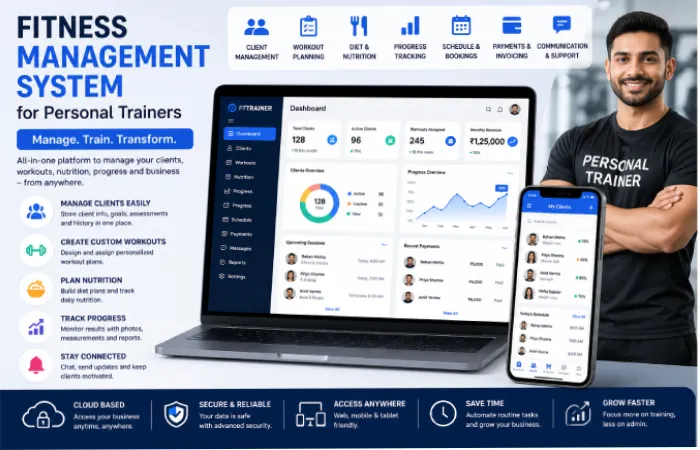
When a personal training business starts to grow, managing clients, workout schedules, appointments, and the tracking of progress can start to become more of a problem. The use of fitness management systems can really help personal trainers simplify and stay organized with these day-to-day management aspects of the business by offering simple-to-use computer software that will make it that bit easier to manage each client.
This Article Is Part of the Fitness Technology Hub
Discover the latest fitness technology, including smartwatches, fitness trackers, wearable devices, health monitoring tools, AI-powered workout apps, and smart gym equipment in our Fitness Technology Hub.
Whether you are working as a sole trader or running your own small training studio or coaching online, most trainers are using some form of management software to ensure that their business is run smoothly and that each client’s experience of the business is the same, so why not discover more about these systems and find one that fits?
A Fitness Management System for Personal Trainers
What does it mean? A fitness management system is a niche software program for fitness professionals. Trainers will be able to take most of the work they currently do across separate spreadsheets, instant messaging applications, payment software, and calendars and do it through a single platform.
A personal trainer business management software system is one software platform integrating schedule, client management, exercise programming, communication, payment, and reporting into a single location. It will streamline trainers’ businesses while enabling customer interaction and progress tracking.
Common users include:
- Personal Independent trainers
- Online fitness coaches
- Gym-based trainers
- Fitness studios
- Strength and conditioning coaches
- Sports performance coaches
The goal is to reduce administrative workload while improving service delivery.
Key Features of Trainer Management Software
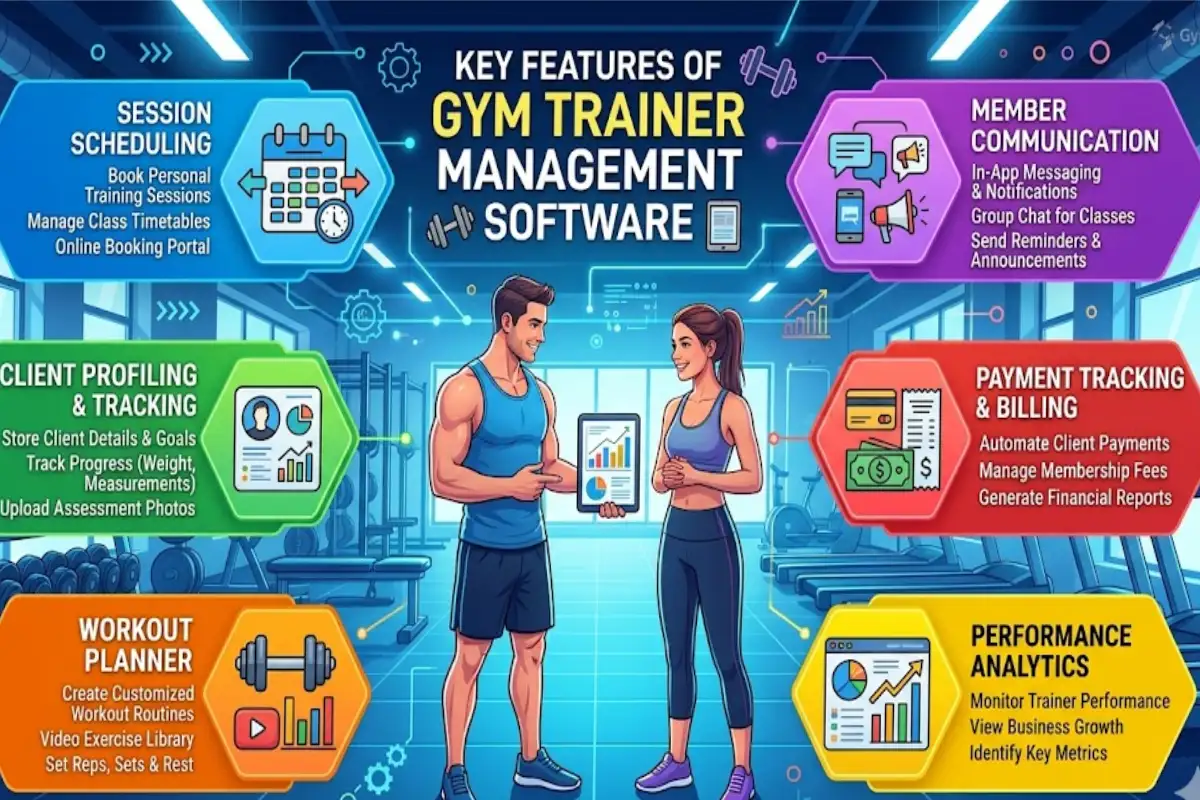
Modern trainer management software typically includes a wide range of business and coaching tools.
Client Profile Management
Trainers can store:
- Contact information
- Health history
- Fitness goals
- Progress records
- Assessment results
Centralized records help improve client organization and communication.
Workout Programme Builder
Many systems allow trainers to:
- Create workout templates
- Assign exercises
- Track completion rates
- Monitor progression
This feature is particularly useful for both in-person and remote coaching.
Progress Tracking
Common tracking metrics include:
- Weight changes
- Body measurements
- Strength improvements
- Workout adherence
- Performance benchmarks
- Visual reports often help clients stay motivated.
Billing and Payment Management
Many platforms include the following:
- Membership billing
- Invoice generation
- Payment reminders
- Subscription management
This can reduce manual administrative work.
Personal Trainer Scheduling App Features
A personal trainer scheduling app helps manage appointments and availability.
Scheduling Benefits
Features may include:
- Online booking
- Calendar management
- Session reminders
- Automated confirmations
- Waitlist management
These tools help reduce missed appointments and scheduling conflicts.
Client Self-Booking
Many systems allow clients to:
- View trainer availability
- Book sessions online
- Reschedule appointments
- Receive automated notifications
This creates a more convenient user experience.
Online Coaching Software for Remote Trainers
The growth of digital fitness services has increased demand for online coaching software.
Remote Coaching Capabilities
Online coaching tools may support:
- Virtual training programmes
- Video exercise demonstrations
- Progress updates
- Messaging systems
- Nutrition tracking
This allows trainers to work with clients across different cities and countries.
Example Workflow
| Stage | Action |
| Client Registration | Creates account |
| Initial Assessment | The trainer gathers information |
| Programme Creation | Workout plan assigned |
| Progress Tracking | Client logs workouts |
| Feedback Review | Trainer evaluates results |
| Programme Updates | Plan adjusted as needed |
This workflow supports continuous coaching and accountability.
Fitness Client Tracking: Why It Matters
Effective fitness client tracking helps trainers make informed coaching decisions.
Without progress data, it becomes difficult to evaluate whether a program is working.
Common Metrics Tracked
| Metric | Purpose |
| Body Weight | General progress |
| Body Fat Percentage | Composition tracking |
| Strength Records | Performance measurement |
| Attendance | Consistency monitoring |
| Workout Completion | Adherence evaluation |
| Nutrition Logs | Lifestyle assessment |
Tracking helps identify trends and allows programs to be adjusted appropriately.
Trainer CRM Platform vs Traditional Management Methods
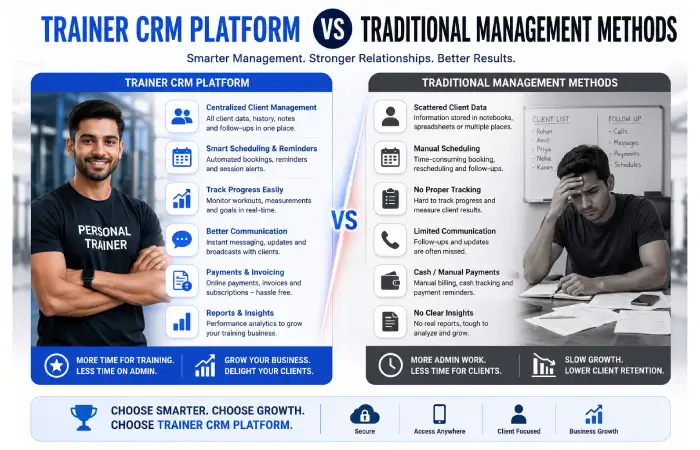
A trainer CRM platform provides more structure than manual tracking methods.
Comparison Table
| Feature | Trainer CRM Platform | Manual Methods |
| Client Records | Centralised | Multiple files |
| Scheduling | Automated | Manual |
| Communication | Integrated | Separate apps |
| Reporting | Automated | Time-consuming |
| Billing | Built-in | External tools |
| Scalability | High | Limited |
As your client base grows, the advantages of using a digital system, as opposed to a spreadsheet or paper-based system, often outweigh the effort.
Key features to search for in a fitness management software:
- Client management
- Scheduling tools
- Workout programming
- Progress tracking
- Mobile accessibility
- Payment integration
- Useful Advanced Features
- Nutrition coaching
- Habit tracking
- Video exercise libraries
- Automated messaging
- Business analytics
Not every trainer requires every feature, so selecting based on actual business needs is important.
Expectations: What Software Can Realistically Improve
A fitness management system can significantly improve organization and efficiency, but realistic expectations are important.
What It Can Help With:
- Lessening administrative burden.
- Enhancement of client communication.
- Organising schedules
- Tracking progress more effectively
- Scaling coaching services
- What It Cannot Replace
- Coaching expertise
- Client motivation
- Professional qualifications
- Personal relationships
- Programme design knowledge
Software is a tool that supports coaching rather than replacing it.
Pros and Cons of Fitness Management Systems
Advantages:
- Improved organisation
- Centralised client records
- Time savings
- Better scheduling management
- Enhanced reporting
- Easier business growth
Limitations:
- Monthly subscription costs
- Learning curve for new users
- Dependence on internet connectivity
- Feature overload in some platforms
Software that fits business size and needs can reduce some of these limitations.
Technology continues to play an increasingly important role in personal training and fitness coaching. The National Strength and Conditioning Association (NSCA) provides professional education, coaching resources, and evidence-based guidance for fitness professionals looking to improve client outcomes and coaching practices. Learn more at https://www.nsca.com/
Who should implement a fitness management system?
- Ideal Users
- Independent personal trainers
- Online coaches
- Fitness consultants
- Small training studios
- Multi-trainer fitness businesses
- May Not Need Advanced Systems
- Trainers with only a few clients
- Hobby coaches
- Occasional fitness consultants
Smaller operations may initially manage with simpler solutions before adopting full management platforms.
Selecting a Suitable Platform
Step 1: Determine the Need of Business
This step requires the coaching provider to consider the type of services they offer and accordingly choose the best platform according to business need. The coaching providers must decide if they require scheduling, online coaching, or a payment process. The client management can be another requirement.
Step 2: Assess Features
When we look for any software tool, the best way is to have a comparison with existing processes. By comparing existing practices, coaching providers may evaluate new features that they can integrate into the coaching workflow.
Step 3: Look for Mobile Support
If the coaching providers wish to manage client details and take appointments, a mobile-friendly interface is crucial since most clients communicate through their mobile devices. Mobile coaching can be facilitated through mobile devices as well.
Step 4: Evaluate Scalability
When you are looking for coaching management software, you need to think about what your business will need as it grows. The coaching management software must be able to handle coaches and more clients. You have to make sure the coaching management software can support the growth of your business and handle all the coaches and clients.
Step 5: Look at Support & Security
Proper and timely support is vital if you have any query or problem while using any tool. It is equally important that the platform helps to keep your data safe and confidential.
Automated Fitness Management System Hub
Explore software features, gym membership tools, AI solutions, billing systems, cloud platforms, and fitness apps.
Normally asked questions
Tell me, what exactly is a fitness management system for a personal trainer?
A fitness management system for personal trainers is a software tool that offers comprehensive client, appointment, workout, and business management along with easy communication from a single place.
Is trainer management software appropriate for independent trainers?
Yes, it is! Many systems were built for individual personal trainers and small coaching businesses.
Can on-line coaching software replace the role of the trainer in a live environment?
No online coaching software can’t fully replace live one-on-one interaction when you need guidance.
Online coaching software is a tool; it can’t replace human interaction.
Why is fitness client tracking essential?
The purpose of the system is to assess results, increase the client’s responsibility, and optimize training plans with a scientific approach.
What elements should a trainer CRM software feature?
Client tracking, appointment scheduling, interaction between client and coach, training programs creation, progress analysis reports, payment features are key functions
Conclusion
Fitness management software for personal trainers can make business running, client managing, and coaching more effective and efficient. Clients can book appointments, track progress, take online programs, and pay for services all through one integrated software. Although it is not a supplement to coaching skills or clients’ commitment, the software could decrease administrative tasks and manage workout sessions in a more ordered way.